The Forgotten Window: Adolescent Girl Nutrition in Kenya
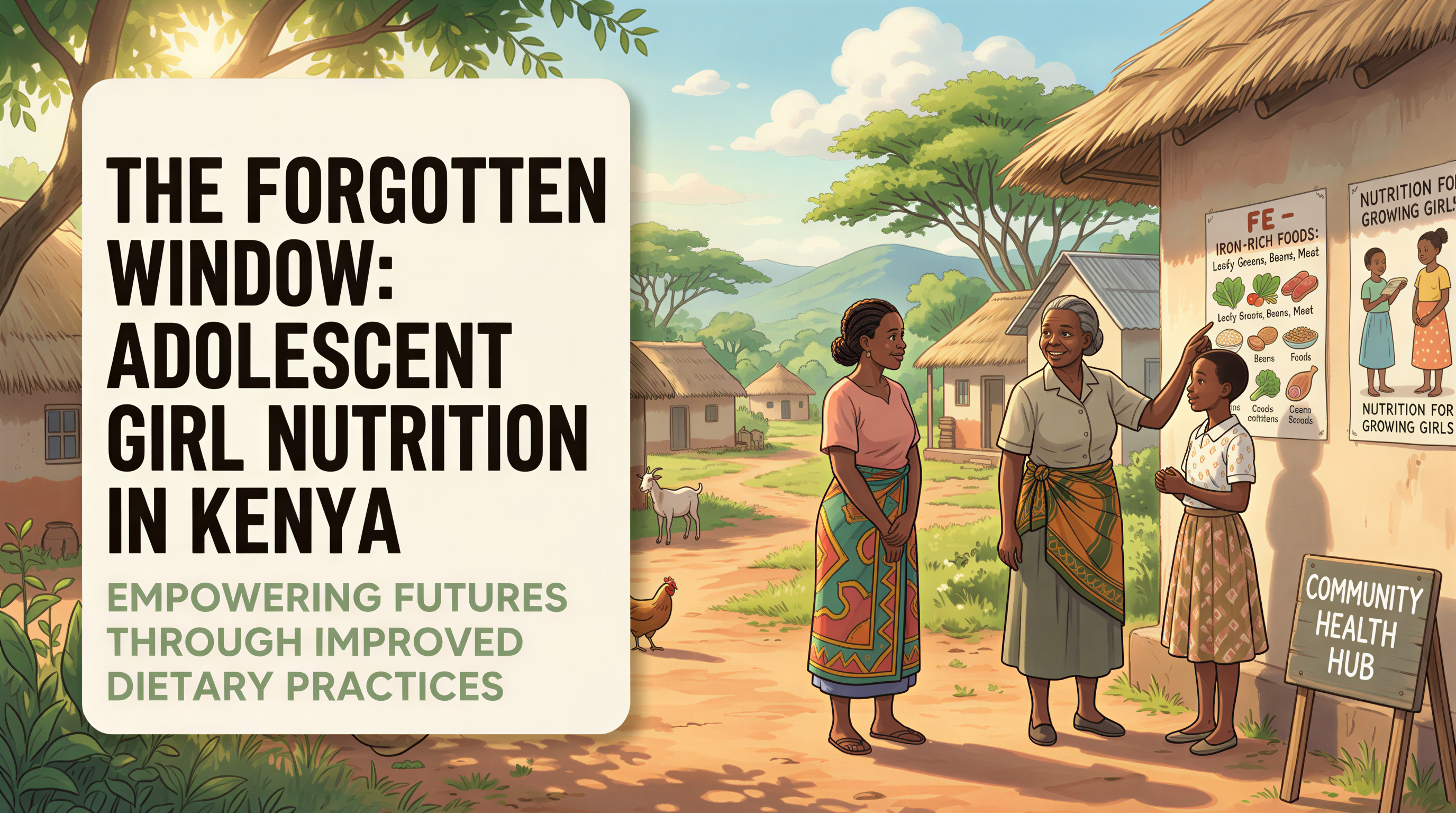
A 14-year-old in Kitui starts her period.
Nobody mentions iron. They just hand her pads.
Her mother — busy, kind, untrained on this — does not know to add omena to the week. Her teachers — overworked, untrained on this — do not know that her concentration will dip in the next month. The clinic — focused on under-fives and pregnant mothers — does not see her unless she is already pregnant.
She enters a quiet six-year nutrition gap that the system has built around her.
Then, at twenty, she becomes a pregnant mother. The clinic finally sees her. Her child is born small. We call it stunting. We call it hidden hunger. We rarely call it what it actually is: the inevitable result of six years of skipped nutrition between the under-five window and the antenatal one.
This is Kenya's quietest nutrition gap. It is also one of the most fixable.
Table of Contents
- The Demographic, Briefly
- What's Missing Right Now
- What An Adolescent-Girl Nutrition Programme Should Do
- Why This Is Strategically The Highest-Leverage Investment
- What To Do This Week
The Demographic, Briefly
Adolescent girls in Kenya — defined here as ages 10–19 — number around five million. About half are sexually active by 18. Around 15% will be pregnant by 19. Around 8% are married before 18, with the rate higher in some ASAL counties.
Their nutritional demands across these years are some of the highest of any non-pregnant life stage:
- Iron needs jump sharply at menarche
- Calcium and protein needs spike to support bone and muscle accretion
- Caloric needs rise with the growth spurt
- Folate, B12, and zinc needs all climb
A 14-year-old girl who is iron-deficient at menarche, who is then pregnant at 18, is the most at-risk pregnancy any country can have. Her body is still growing while it grows another body. Her stores are already low. Her child is statistically more likely to be stunted before they are born.
The system, structurally, knows this. The system, in practice, does not act on it.
What's Missing Right Now
Six structural gaps.
1. The 5-to-15 nutritional silence.
Most county and national nutrition strategies are built around two windows: the first 1,000 days, and antenatal care. Between these — roughly age 5 to whenever the first pregnancy is detected — there is no formal nutritional touchpoint. Children disappear from the nutrition system at age 5 and reappear, sometimes, at the first ANC visit.
That gap is around fifteen years for the average woman. Fifteen years where her diet, her micronutrient status, and her health behaviours are not measured by anyone.
2. School health programmes underuse the moment.
Kenya has school health programmes. Most focus on deworming, vaccinations, and HIV awareness. Nutrition shows up sporadically — usually around iron supplementation in some counties, often interrupted by stockouts.
A simple, cheap, evidence-led intervention exists: weekly iron-folate supplementation (WIFS) for adolescent girls. WHO recommends it. Two countries — India and Indonesia — have shown population-level reductions in adolescent anaemia by running it through schools. Kenya has piloted but not scaled.
3. The puberty conversation skips nutrition.
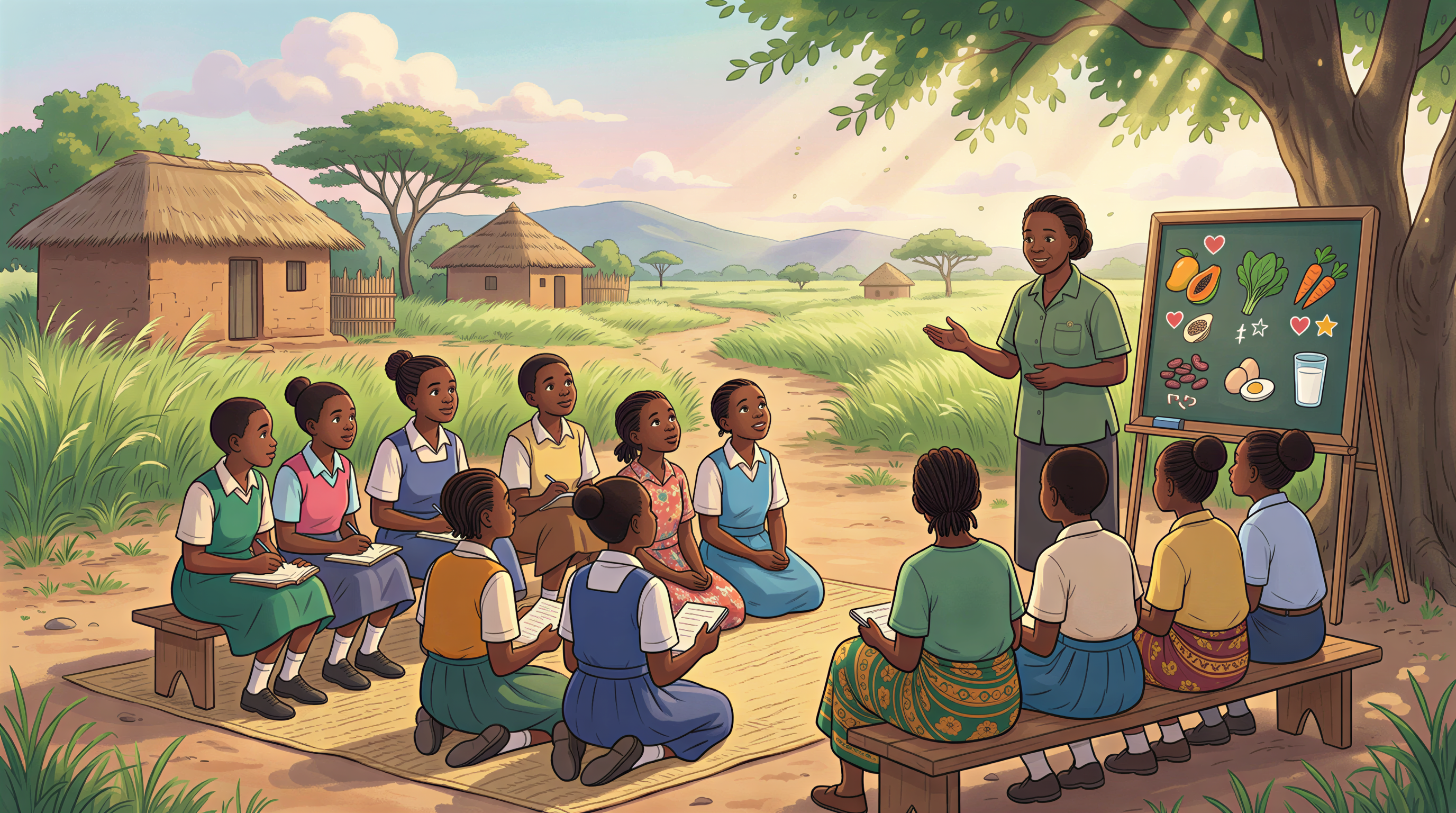
When adolescent girls in Kenya receive education about menstruation, the conversation is overwhelmingly hygiene-focused: pads, cleanliness, privacy. The nutrition conversation — what to eat to support iron loss, why fatigue is not "laziness," which foods help — is largely absent. We hand out pads and pretend the rest of the body did not change.
4. Rural and urban patterns diverge.
Rural adolescent girls are most at risk of macronutrient inadequacy (not enough food, not enough protein, not enough calories). Urban adolescent girls are increasingly at risk of both — calorie surplus from UPFs combined with micronutrient deficiency. The same age group, two different problems, no national strategy that addresses either properly.
5. The marriage-and-pregnancy threshold catches the system off-guard.
In high-prevalence early-marriage counties, a 16-year-old can be pregnant before any nutrition intervention has reached her. By the time she shows up at ANC, her body has been depleted for years. The IFA tablet is doing remedial work for a stock that should have been built five years earlier.
6. Adolescent-specific food preferences are ignored.
Programmes that work for under-fives (porridges, fortified blends) and pregnant women (supplements, counselling) are not designed for teens. A 15-year-old does not want a fortified porridge. She wants what her friends are eating. The few programmes that have engaged adolescents directly — through schools, through peer educators, through social media — have shown the engagement gap is fixable. Just not by recycling toddler programming.
What An Adolescent-Girl Nutrition Programme Should Do
Five components, all cheap, all proven.
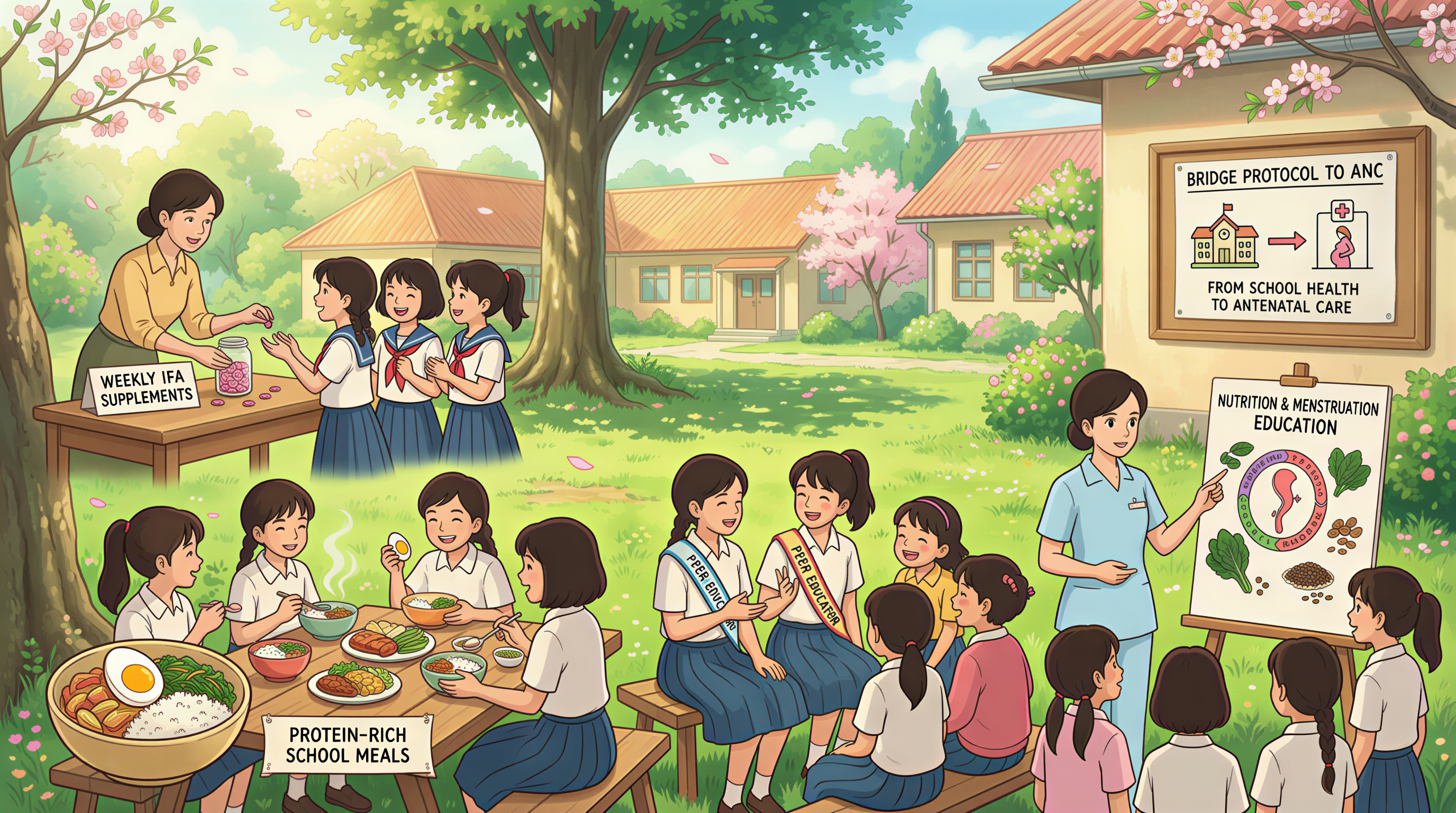
1. School-based weekly iron-folate supplementation.
Once a week, supervised, in schools, free. India's experience shows this is one of the highest-return public health interventions available. The cost per girl per year is low.
2. School meals that meet protein and micronutrient floors.
Existing school feeding programmes deliver mostly carbohydrates. Adolescent girls need a protein and iron component — even simple additions like an egg, a portion of beans, or omena, twice a week, would shift status meaningfully.
3. Peer educator networks.
Trained adolescent girls themselves, supported by health workers and teachers, conducting nutrition conversations with their peers. Peer-led nutrition is more effective than adult-led nutrition in this age group, in study after study.
4. Nutrition integrated into menstruation education.
Whenever pads or hygiene curricula are delivered, fold in: foods that support iron loss, signs of anaemia, when to seek care. Marginal cost: zero.
5. A bridge protocol from school health to ANC.
The young woman who leaves school at 17 should not disappear from the system. A simple county-level register that tracks her into community health volunteer follow-up, into pre-conception care, and into ANC at the first pregnancy. Information continuity is cheap. Loss-to-follow-up is expensive.
Why This Is Strategically The Highest-Leverage Investment
If I were running Kenya's nutrition strategy and I had one extra billion shillings a year, I would not put it into expanding under-five interventions. Those are saturated and well-funded.
I would put it into adolescent-girl nutrition.
The math is brutal in our favour. Every percentage point reduction in adolescent-girl anaemia translates into:
- Reduced maternal mortality at first pregnancy
- Reduced low birth weight
- Reduced child stunting in the next generation
- Improved school completion rates
- Improved cognitive performance in school
- Improved labour market participation in early adulthood
The under-five investment is necessary. The adolescent investment is load-bearing for the next generation of under-fives. We are paying for stunting twenty years from now by failing to feed teenage girls today.
It is also the most under-funded nutrition window on the donor map. There are very few major adolescent-girl-nutrition programmes in Kenya at scale. The proposals that exist are usually small, time-limited, and pilot-flavoured.
This is the gap I keep pointing at in funder meetings. It is also the gap most of the donor question conversation eventually arrives at.
What To Do This Week
For parents reading this:
- If your daughter is 12+, ask her clinic about iron status. A simple Hb test costs KSh 200–400.
- Add omena, beef liver, or eggs to your weekly menu.
- Have the conversation. Iron, fatigue, food. She is old enough.
For schools and teachers:
- If your school has a feeding programme, ask whether it includes a protein and iron component for adolescent girls. If not, raise it at the BoM.
- Fold a 10-minute nutrition module into your menstruation education curriculum. The materials are free.
For policy and programme people:
- Adolescent-girl nutrition is the highest-leverage intervention you are not yet pitching. Pitch it.
For more on the maternal end of this continuum, see maternal nutrition in Kenya and anemia in pregnancy.
The 14-year-old in Kitui is the most important child in Kenya's nutrition strategy.
We have not yet noticed.