Nutrition-First 1000 Days: Building Kenya’s Health from the Start
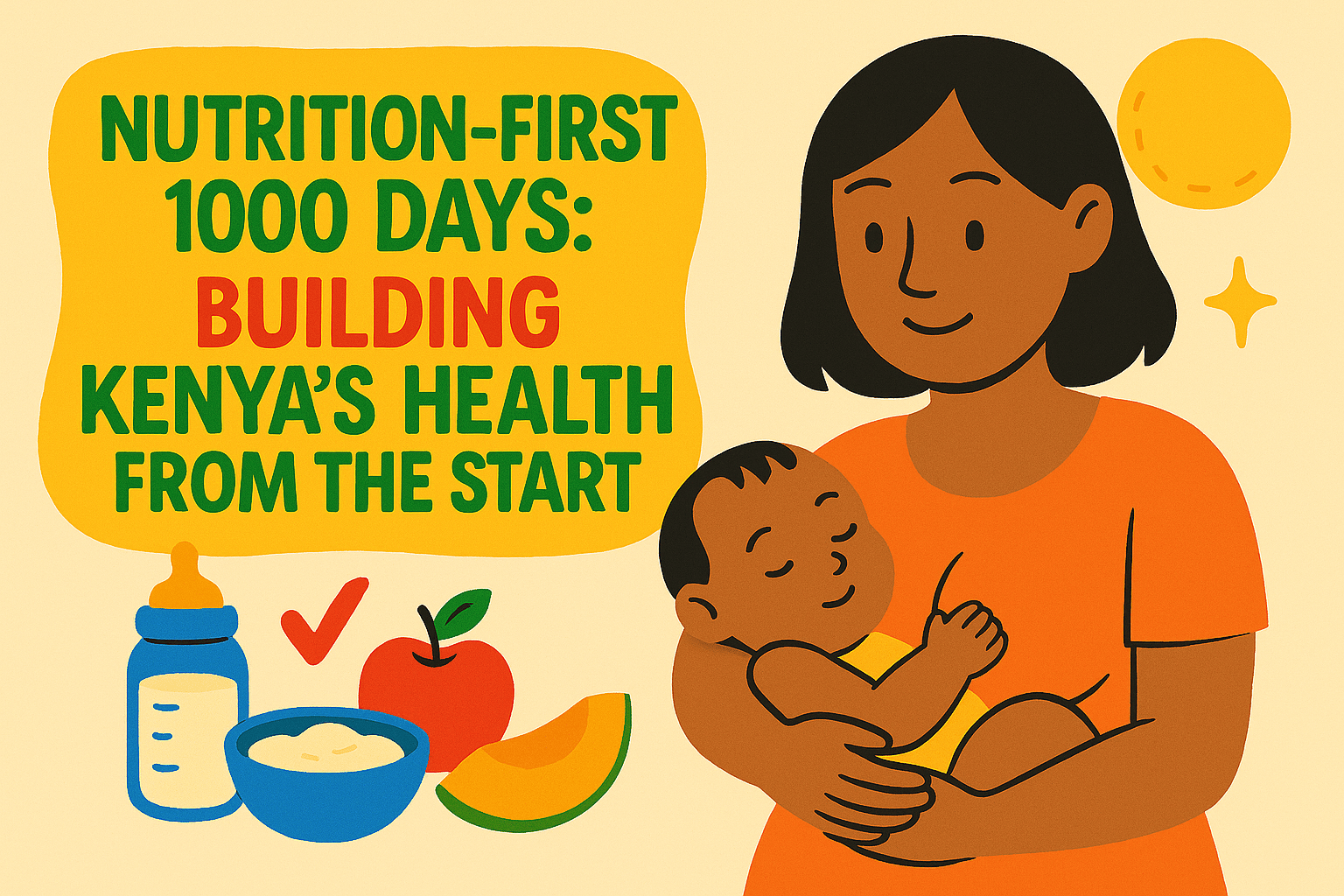
You’re holding a newborn in your arms. She’s impossibly small, her fingers barely curling around your thumb. The future feels like a wide, open plain—full of possibility, but also uncertainty. In that moment, you know every choice matters, but one stands above them all: what she eats, and when.
What if I told you there’s a countdown already ticking? Not from her first cry, but from the day she was conceived. A countdown of 1,000 days—each one a brick in the foundation of her brain, her body, her immunity, and her ability to learn.
Miss too many bricks, and cracks form. Lay them well, and you’re building a future that’s strong enough to carry her dreams.
Table of Contents
- The Science of Early Development — Why the First 1000 Days Matter
- The Non-Negotiable Nutrients — Building Blocks of a Healthy Start
- Kenyan Solutions, Kenyan Context — Lessons from Turkana & Marsabit
- The Cost of Delay — and the Power of Now
- From Knowledge to Action
The Science of Early Development — Why the First 1000 Days Matter
From conception to a child’s second birthday, the human brain is on overdrive. Neural connections form at a rate we’ll never experience again. Organs mature, immune systems calibrate, and growth patterns are locked in.
Globally, research is clear: nutrition during this period is the single most powerful lever we have to prevent stunting, boost cognitive development, and shield against chronic diseases later in life.
In Kenya, the stakes are high. Malnutrition affects 1 in 4 children under five, with the highest rates in ASAL counties like Turkana and Marsabit. This isn't just about hunger—it's about invisible losses in learning potential, income generation, and health decades later. Read more about maternal nutrition and its impact on child development.
The Non-Negotiable Nutrients — Building Blocks of a Healthy Start
Think of these as the “construction materials” for a thriving body and mind:
- Protein — the scaffolding for muscle and brain development.
- Iron — oxygen transport and cognitive performance; without it, learning suffers before school even begins.
- Essential fatty acids — wiring the brain for memory, focus, and emotional regulation.
- Vitamin A — fortifying the immune system against infections that can derail growth.
These nutrients aren’t luxuries. They’re life-shaping essentials.
Kenyan Solutions, Kenyan Context — Lessons from Turkana & Marsabit
Here’s the thing: you can’t just import a foreign diet plan and expect it to work in Lodwar or Laisamis.
Over the past few years, we’ve worked side-by-side with mothers, grandmothers, and community health promoters to create culturally resonant feeding practices that align with global standards but rely on local foods.
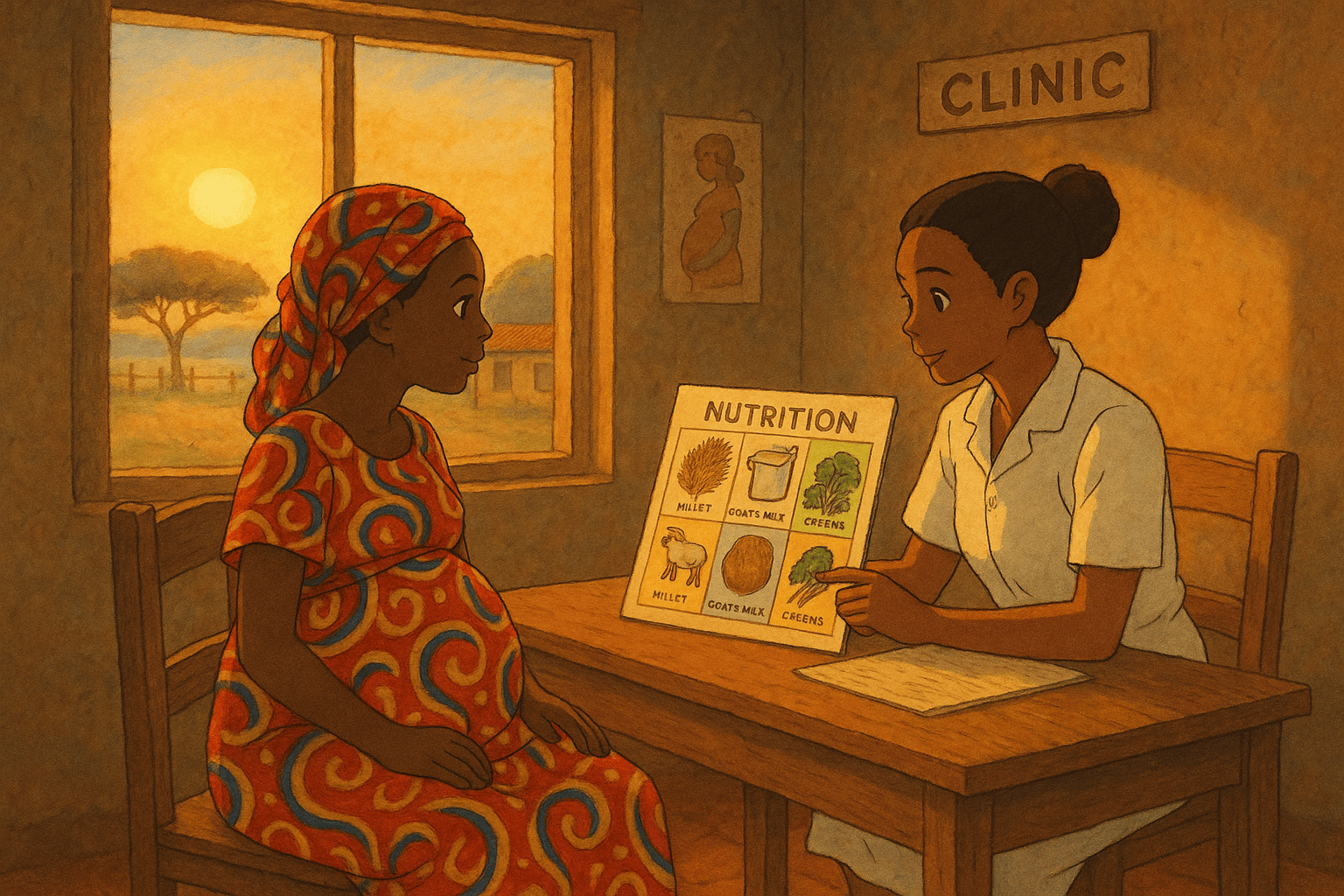
In Turkana, this meant enhancing porridge with ground simsim (sesame) and cow's milk to boost protein and fat. In Marsabit, it meant promoting goat's milk and leafy greens that thrive in kitchen gardens—even in semi-arid soil. These traditional foods offer powerful nutrition backed by modern science.
When families own the solution—when it feels familiar and possible—they stick with it. That’s how you shift generations.
The Cost of Delay — and the Power of Now
The first 1000 days aren’t a suggestion; they’re a deadline. You can’t “catch up” on brain growth at age five. You can’t redo immune programming in adolescence.
But the good news? Every antenatal visit, every exclusive breastfeeding month, every fortified meal counts. Each day is an opportunity to lock in health, learning, and resilience.
From Knowledge to Action
If you’re a policymaker: push for maternal nutrition programs and child feeding support that reach the most remote wards.
If you’re a health worker: make the 1000-day message part of every clinic conversation.
If you’re a parent or guardian: remember that the food you give in these early days is more than a meal—it’s the architecture of your child’s future.
The countdown is already ticking. Let’s make every day count.