Anemia in Pregnancy: Beyond "Eat More Iron"
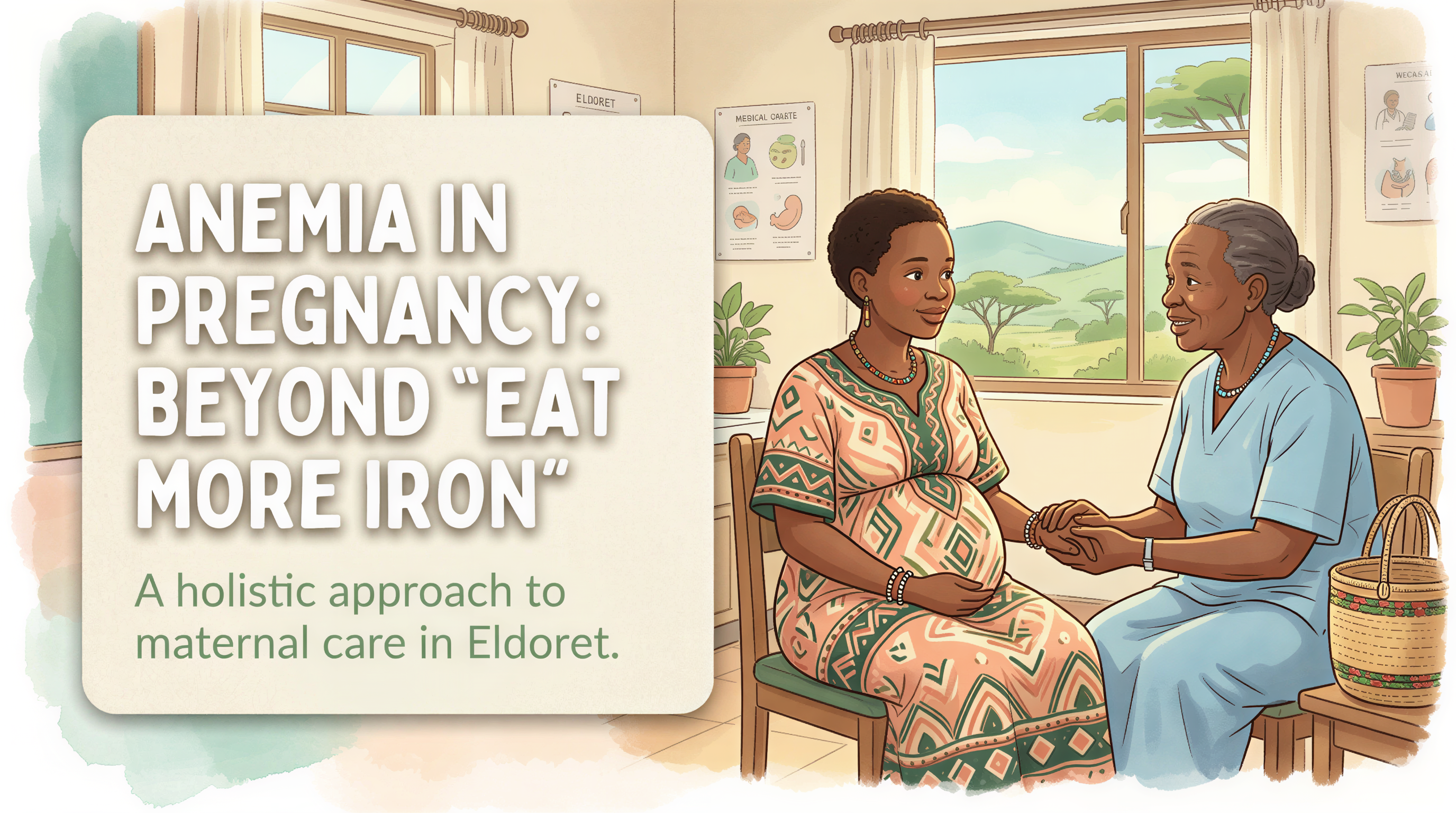
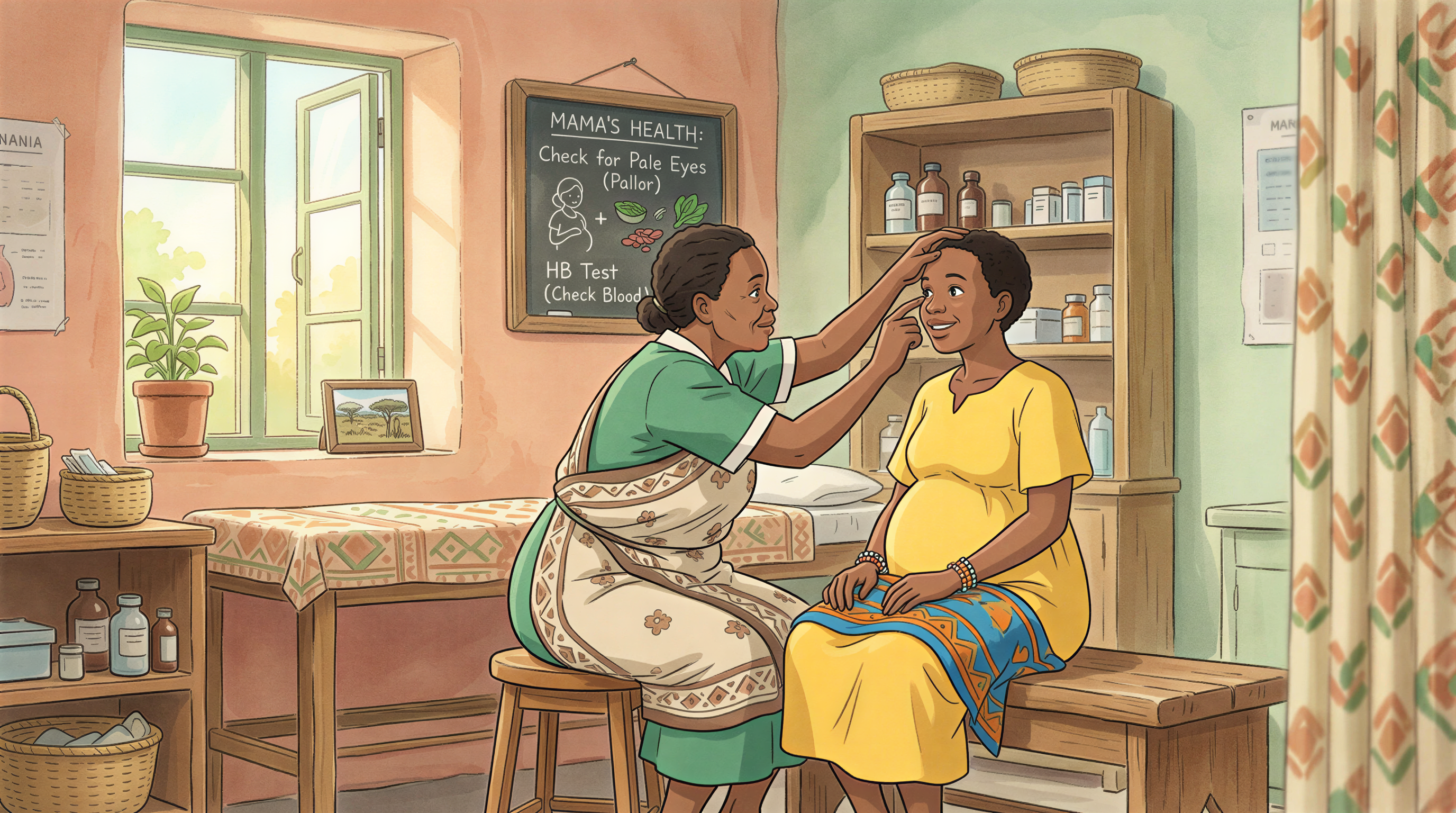
A clinic in Eldoret. The midwife pulls down the young mother's lower eyelid.
The colour says everything. Pale. Almost grey at the edges.
She is thirty-two weeks pregnant. This is her third antenatal visit. On her chart, in the handwriting of the previous nurse, three words: iron supplements given.
She has been taking them. She is still anaemic.
If you are a clinician in Kenya — or a pregnant woman who has been told to "just take iron" — you have lived this scene. The prescription pad has been wrong, or at least incomplete, for a long time.
Table of Contents
- The Numbers, Briefly
- Why "Eat More Iron" Doesn't Solve It
- What The Plate Should Actually Have
- What A Better ANC Conversation Looks Like
- For The Mother Reading This
- Why I Wrote This
The Numbers, Briefly
According to the most recent KDHS, around 41% of pregnant Kenyan women are anaemic. In ASAL counties the rate exceeds 50%. Among adolescent mothers it climbs higher still. Anaemia in pregnancy is associated with low birth weight, preterm delivery, postpartum haemorrhage, and maternal mortality — Kenya loses several hundred mothers a year to causes anaemia worsens.
We know this. We have known it for decades. And the standard intervention — daily iron-folate (IFA) supplementation from the first ANC visit — has not moved the national needle the way it should.
It is time we asked why.
Why "Eat More Iron" Doesn't Solve It
There are five reasons IFA alone fails so often in Kenya, and only one of them is about the iron itself.
1. Adherence is poor — and we don't ask why.
About 40% of women dispensed IFA in Kenya never finish the course. The standard explanation is "side effects" — nausea, constipation, dark stools. The honest explanation is also: stigma (the dark stools are read as illness), forgetting, stockouts at the clinic mid-pregnancy, and the absence of any counselling about what the tablets are actually for.
We give the tablet. We do not give the conversation.
2. The iron we give doesn't absorb when given alongside tea.
Tannins in chai bind to non-haem iron and cut absorption by up to 60%. The classic Kenyan instruction — "take after breakfast" — usually means take with milky chai. The tablet enters the body and leaves it.
The fix is mundane and almost never told: take the tablet with water and a vitamin C source (an orange wedge, lemon water, a tomato), away from tea by at least an hour.
3. Parasitic load is silent and large.
Hookworm and schistosomiasis are widespread in lakeside, coastal, and humid highland counties. A pregnant woman with a hookworm burden is bleeding microscopic amounts into her gut every day. No amount of iron tablets out-runs that. WHO recommends presumptive deworming in the second trimester in endemic areas. Many Kenyan clinics still don't do it.
4. Malaria reactivates in pregnancy.
In endemic counties, asymptomatic malaria is one of the largest unmeasured contributors to maternal anaemia. IPTp (intermittent preventive treatment in pregnancy) is on the protocol. Coverage is uneven.
5. The food alongside is missing.
A 60 mg iron tablet works best when the diet contains a steady supply of bioavailable iron from food and the cofactors (vitamin C, B12, folate) to use it. In a household where the pregnant mother is eating the smallest portion at the table — which is still common — the tablet is doing most of the work alone.
This is the part we change at the kitchen table, not the clinic.
What The Plate Should Actually Have
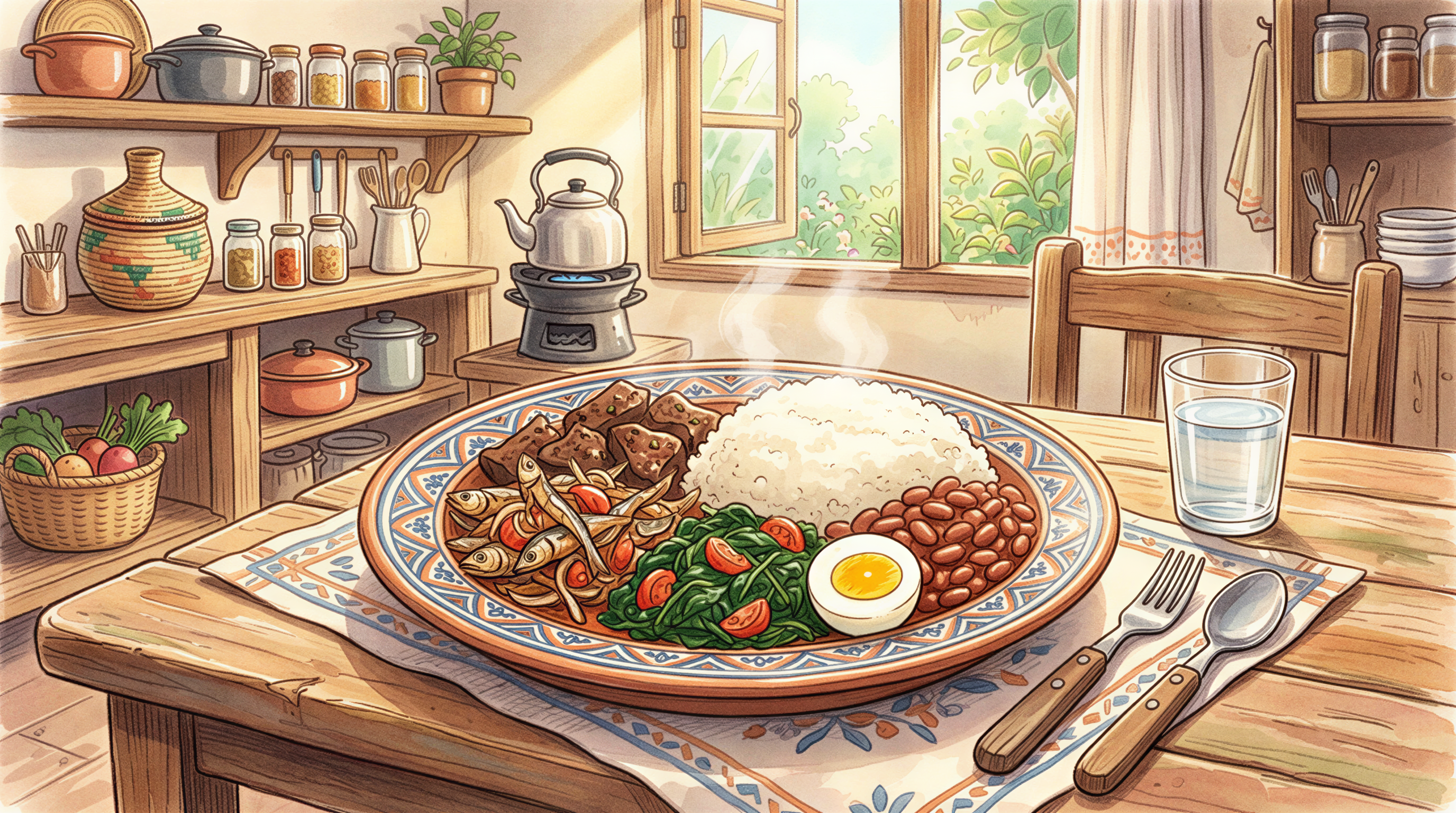
I'm going to skip the textbook list. Here are the foods that move the needle in a Kenyan kitchen, in order of accessibility:
- Omena. 100 g a couple of times a week. Bone-in, dried, cheap, dense in iron and B12.
- Beef liver. Once a week. Yes, just once. The bioavailable iron in liver is unmatched.
- Kunde, managu, terere. Indigenous greens, higher iron than sukuma, plus folate.
- Beans, mbaazi, ndengu. Plant iron — paired with vitamin C to convert.
- Eggs. Protein and a modest iron contribution. Cheap and consistent.
- Fortified maize flour. When the fortification actually happened — see the fortification piece.
What to reduce, gently: tea with meals. Coffee with meals. Calcium supplements in the same hour as the iron tablet.
What A Better ANC Conversation Looks Like
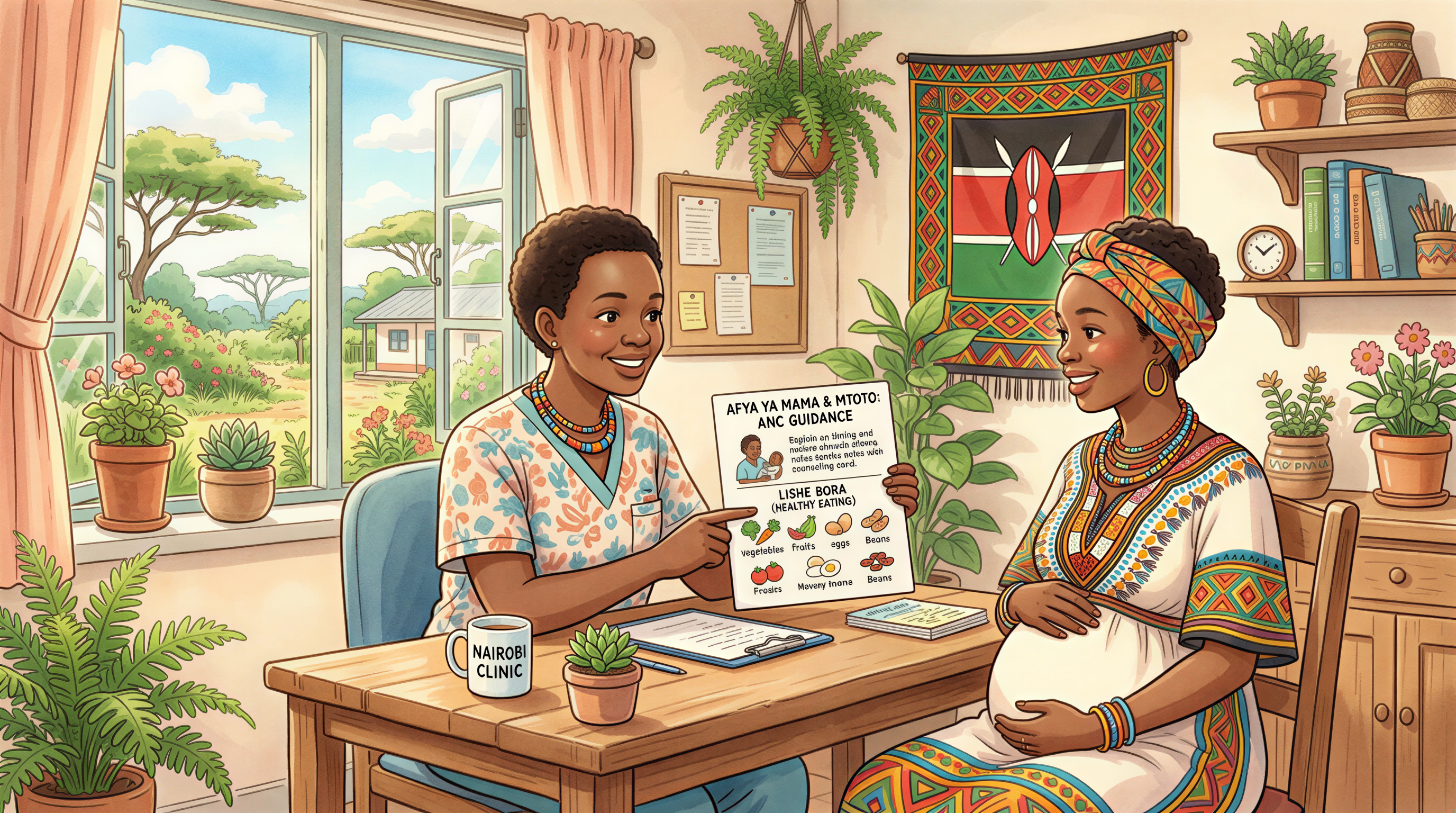
If I could rewrite the IFA dispensing moment, this is what would happen:
- Ask first. "Have you taken these before? How did you feel?" Most women have a story. We never ask.
- Explain the dark stools before the woman experiences them. Two sentences. Nobody does this.
- Demonstrate the timing. "Take this with water, not chai. Have a slice of orange or a tomato with it. Wait an hour before tea." Show, don't tell.
- Screen for parasites and malaria by default in second trimester. Not "if symptomatic." By default in endemic counties.
- Talk about portions at home. Pregnant women in Kenya often eat last and least. Husbands and mothers-in-law are more often allies than obstacles when this is named directly.
- Re-check Hb at 32 weeks. If it hasn't moved, escalate — IV iron is now feasible at county level for severe cases and dramatically more effective than another month of the same tablet.
This is not new clinical content. It is a conversation we are not yet having at scale.
For The Mother Reading This
If you are pregnant and you have been told you are anaemic, three things to do this week:
- Take the tablet with water and a vitamin C source. Orange, lemon water, fresh tomato. Never with tea or coffee. Wait an hour either side.
- Add omena or beef liver to your week. Once or twice. Not a lecture, just an addition.
- Ask your clinic about deworming and malaria treatment if you haven't been screened. You have a right to ask.
For broader context, see maternal nutrition in Kenya.
You are not failing the iron. The iron has been failing because we have been giving you only half the prescription.
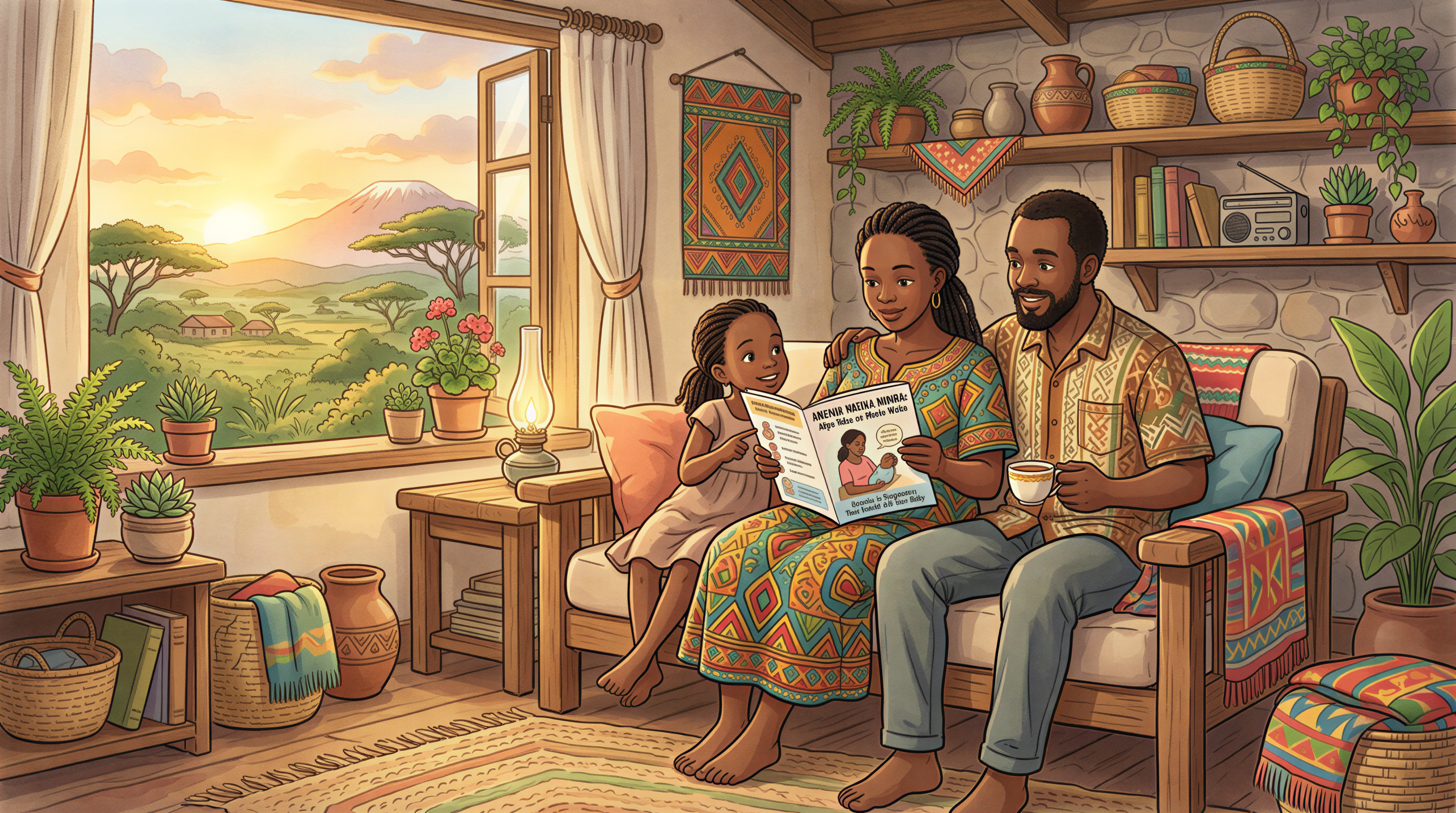
Why I Wrote This
Because I have watched too many anaemic mothers leave clinics with the same advice that did nothing the previous month. Because the gap between what the textbook says and what the prescription pad delivers is wider than any of us writing protocols want to admit. And because the fix is not a bigger budget — it is a longer conversation.
Five extra minutes per ANC visit, applied across half a million pregnancies a year, would do more than the next iron-tablet procurement cycle.
The clinic has the tablets. We are running short on the conversation.