The Donor Question I Keep Getting (and the Honest Answer)

Every donor meeting eventually arrives at the same question.
It is asked differently each time. Sometimes politely, by a programme officer who already knows the answer. Sometimes sharply, by a trustee who is sceptical of NGOs as a category. Sometimes obliquely, in a written follow-up that uses the words "evidence base" and "scalability" in the same sentence.
The question is always: "What's actually working?"
Here is how I used to answer it. Here is how I answer it now. The difference is the article.
Table of Contents
- The Old Answer
- What Changed
- The New Answer
- What This Means For Other Partnerships People Reading
- The Caveat
- Why I'm Telling You This
The Old Answer
I gave the old answer for my first three years on the partnerships side.
It went something like this:
"We're seeing strong indicators across our priority counties. Stunting reduction is on track. CHV training has reached 1,400 community health volunteers. Caregivers report improved feeding practices. Our community kitchens model is being scaled to two new wards. We're particularly excited about our integrated nutrition-and-WASH approach which is showing synergistic effects."
This is the answer most early-career partnerships people give. It is also the answer the donor's compliance officer wants to hear, which is one reason it has survived this long. It uses the right vocabulary. It maps neatly onto the logframe. It does not embarrass the organisation.
It is also slightly dishonest. Not in the lying sense. In the flattening sense.
The reality of any working nutrition programme is that some parts work, some parts do not, some parts are too early to tell, and some parts are just busy. The old answer collapses all of that into a tidy success story because that is what the donor's quarterly report demands.
I was good at the old answer. I won grants with it.
I do not give it any more.

What Changed
Three things changed.
1. I sat in enough donor meetings to realise the donor knows.
The good donors — and this is the part that took me years to see — already know the old answer is partial. They have read fifty proposals this year. They have heard the same three success stories from twelve organisations. They are not as naive as the old answer assumes.
The donors who reward the old answer are not the donors you want long-term. They are the ones who want a clean dashboard for their board meeting. Their funding cycle is two years. Then they move on. The honest donors stay. They build relationships. They re-fund.
If you give the same answer to both groups, you select for the worse partners.
2. I sat across from too many programme officers who had read past the executive summary.
There is a particular kind of question that gives this away. It sounds like: "On page 14 of your last report, your enrolment in cluster B dropped by 40% — what happened?"
The answer to that question cannot be a logframe sentence. It has to be something like: "There was a community dispute over the venue. We moved sites. The new venue had access issues for women coming from the eastern part of the ward. We're correcting it. We expect Q3 numbers to recover but I won't pretend to know yet."
That is the honest answer. The donor who asked the page-14 question is the donor you want.
3. I realised the old answer was costing the field.
This is the bit I want to push hard on. When every NGO gives the cleaned-up version of its results, the sector as a whole misrepresents what is working. Donors who pool reports across grantees see a uniform pattern of success and conclude that current approaches are working. They keep funding the same approaches. The approaches that are actually working a bit, and not working a bit, get described as broadly working, and the iteration that the field needs to do quietly does not happen.
Honest reporting is a public good. Dishonest reporting privatises the credit and socialises the failure to learn.

The New Answer
Now, when I am asked what's working, I answer something like this:
"Three things are clearly working. Two things are not. Two things are too early to tell. Here is a quick walk through what we've actually seen."
Then:
Working clearly: the CHV-led growth monitoring at month-six-and-twelve checkpoints, where uptake jumped from 41% to 78% over 18 months. The school meals programme in two wards, where attendance rose by a measurable amount and we have a school-by-school dataset. The IFA-distribution-with-counselling combination at three of our seven ANC sites — the others are slower because the staffing model differs.
Not working: our complementary feeding cooking demonstrations in one specific cluster (cultural mismatch with the local food calendar — we underestimated this and we should have done formative research). Our SMS-based behaviour change campaign for caregivers, where opt-in rates were a quarter of what we projected and the messages were apparently being read by husbands rather than mothers in roughly half the households.
Too early to tell: our integration of WASH and nutrition messaging at the household visit (we like the design but we have only six months of data). Our work with private pharmacies on micronutrient supplementation (interesting model, not yet at scale).
The donor who hears this answer asks better questions. The donor who is annoyed by this answer is the donor I would rather not have.

What This Means For Other Partnerships People Reading
If you are early in your career and reading this with a mix of recognition and anxiety, three things.
1. The honest answer is professionally safe at most reputable funders.
You will not lose your job for telling the truth about a programme. You might lose a grant from a funder who was going to cut you anyway. The good funders — who, again, will be the longer-term partners — actively reward the honest answer.
2. The old answer ages badly inside your organisation.
Internal credibility is built over years. The colleague who said we're going to crush this metric in 2023 and quietly missed by 60% in 2024 is the colleague nobody asks for predictions in 2026. The honest answer compounds.
3. The honest answer is also a recruiting tool.
The best programme staff want to work for organisations that talk about what isn't working. They have been burned by the old-answer culture. They notice immediately when an org speaks honestly about its own results. Honest reporting is a competitive advantage in a tight talent market.

The Caveat
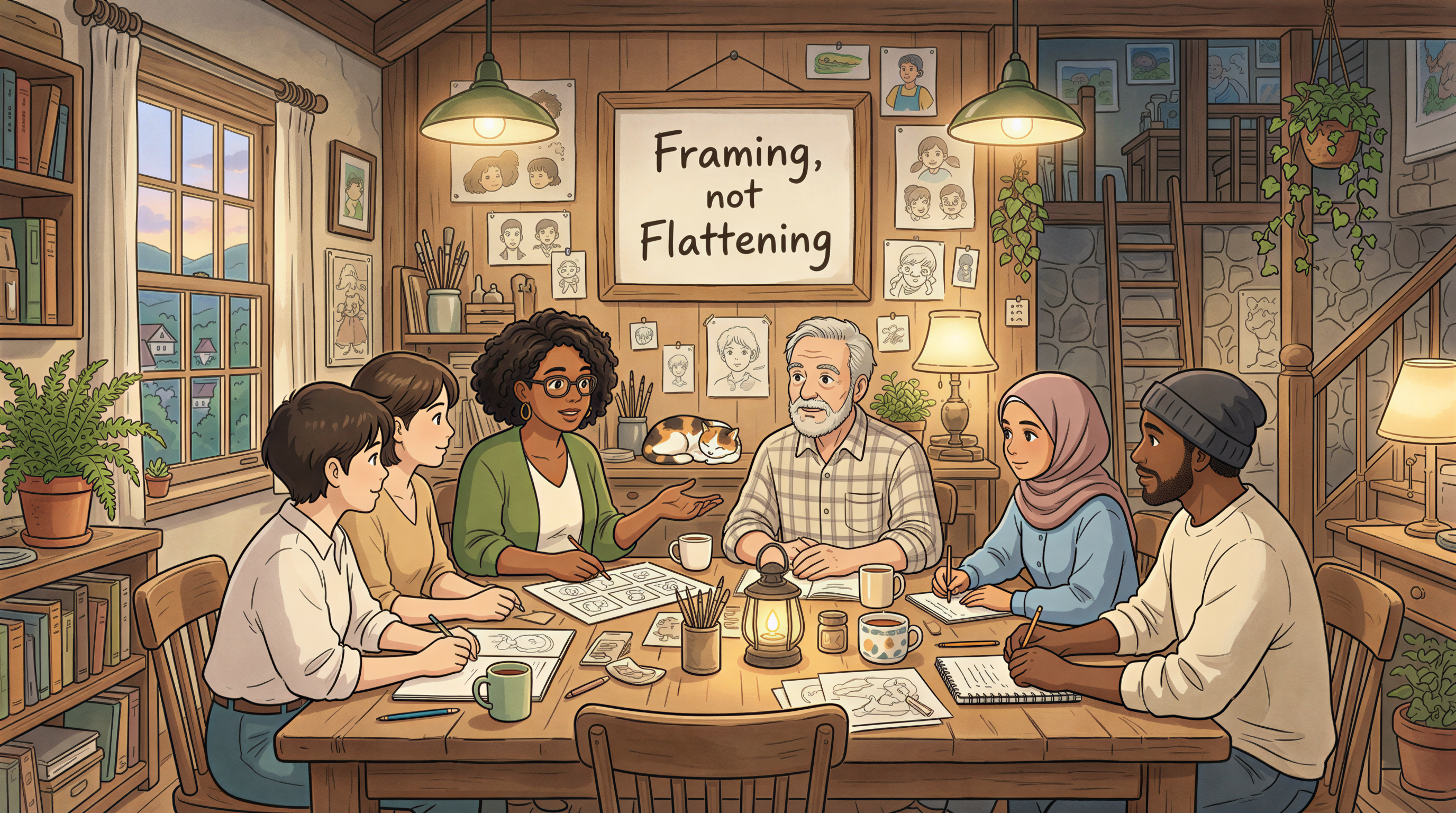
There is one place the old answer is sometimes appropriate: when honesty would be misused to harm a community or a partner who is not in the room. If reporting that "the kitchen model failed in Ward X" would lead to defunding the ward when the failure was actually a contractor problem, the honest answer needs framing, not silencing.
But framing is not flattening. The discipline is to write the honest paragraph, then ask: "Is there a way this paragraph misleads?" If yes, fix it. If no, send.
Most honest paragraphs survive that test. Most flattened paragraphs do not.
Why I'm Telling You This
Because the donor question I get most often deserves a better answer than the one the sector has been giving for twenty years. Because I believe the honest version helps mothers, children, and the field — even when it does not help any specific quarterly report. And because too many of my younger colleagues are still being taught the old answer as the default.
For the related thinking on why I moved into this work, see why I left clinical work for partnerships.
If you are the next programme officer who asks me what's working: I will tell you. Three things. Two not. Two too early. Then we can have a real conversation. That conversation is where the next decade of better nutrition programming actually happens.
The old answer was for the boardroom. The new answer is for the field.
I work for the field.