Strength Training Protein: How Much, From Where, In Kenya

A 2 kg tub of imported whey protein costs more than a kanga ya beef.
So.
The single most-asked question I get from gym-going Kenyans in their twenties and thirties is some version of: how much protein do I actually need, and where do I get it without going broke?
This is the honest answer. From a Kenyan kitchen, on a Kenyan budget, with the maths laid out.
Table of Contents
- How Much Protein Do You Actually Need
- The Cost-Per-Gram Table
- A Lifter's Day, From The Kenyan Kitchen
- The Whey Protein Question
- The Specific Foods That Earn Their Place
- What I Tell First-Time Lifters
- What I'd Tell A Younger Me
How Much Protein Do You Actually Need
The numbers, briefly:
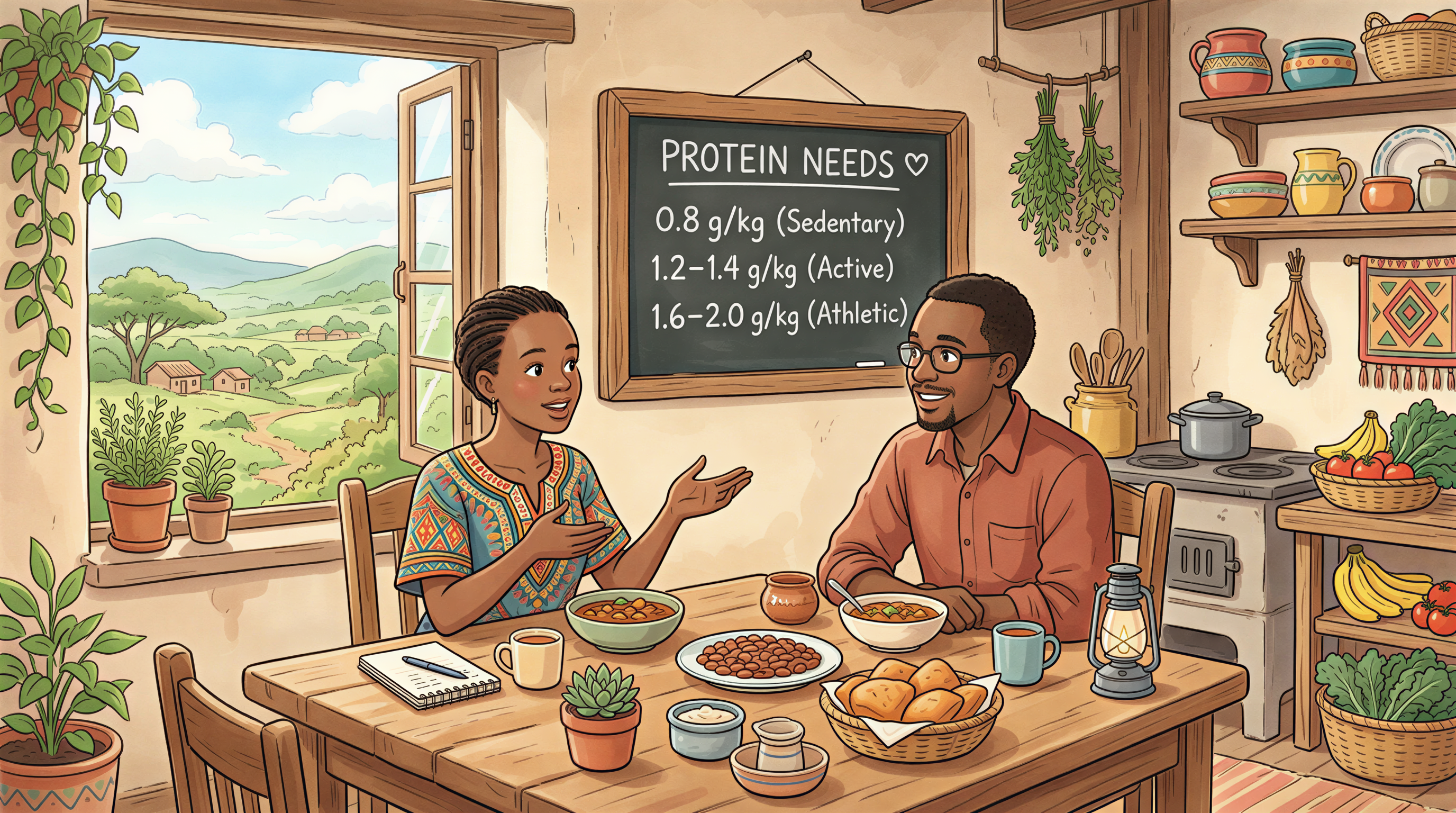
- Sedentary adult: 0.8 g per kg body weight per day
- Recreational gym-goer (3 sessions a week): 1.2–1.4 g per kg
- Serious lifter trying to build muscle: 1.6–2.0 g per kg
- Endurance athlete in heavy training: 1.4–1.7 g per kg
For a 75 kg man lifting three to four times a week, that's 120–150 g of protein a day. For a 60 kg woman lifting twice a week, around 75–90 g.
Those numbers feel intimidating until you realise that two eggs (12 g), a 200 g chicken thigh (40 g), a cup of beans (15 g), and some omena at lunch (20 g) gets you to ~87 g without trying. The Kenyan kitchen is more protein-friendly than the gym influencer market wants you to think.
The Cost-Per-Gram Table
This is the table that should be posted in every Nairobi gym and is in none.
| Source | Protein per 100 g (cooked) | Approx cost per 100 g cooked | Cost per gram of protein |
|---|---|---|---|
| Eggs | 12 g | KSh 30 (about 2 eggs) | KSh 2.5 |
| Beans (kidney) | 9 g | KSh 25 | KSh 2.8 |
| Omena (dried) | 28 g | KSh 50 | KSh 1.8 |
| Chicken thigh | 25 g | KSh 70 | KSh 2.8 |
| Beef stew meat | 28 g | KSh 90 | KSh 3.2 |
| Beef liver | 27 g | KSh 50 | KSh 1.9 |
| Tilapia | 22 g | KSh 80 | KSh 3.6 |
| Greek yoghurt | 9 g | KSh 80 | KSh 8.9 |
| Whey protein (imported) | 25 g (per 30 g scoop) | KSh 200/scoop | KSh 8.0 |
| Beyond Meat (imported) | 18 g | KSh 350 | KSh 19.4 |
The cheapest gram of protein in Kenya is omena. Then beef liver. Then eggs and beans (effectively tied). Then chicken thigh and beef.
Imported whey is mid-range — not exceptional. Imported plant-based meat is the most expensive option per gram of protein available in any Nairobi supermarket. By a factor of five.
You can build a 130 g per day protein habit on omena, eggs, beans, chicken thigh, beef liver, and an occasional fish for under KSh 350 a day. That is roughly the cost of one scoop of whey in a Westlands gym smoothie.
A Lifter's Day, From The Kenyan Kitchen
This is a real day for a 78 kg male client of mine training four days a week.
| Meal | Foods | Protein |
|---|---|---|
| Breakfast 7 AM | 3 eggs, 1 slice brown bread, half avocado | 22 g |
| Mid-morning 10 AM | Greek yoghurt + banana | 12 g |
| Lunch 1 PM | Chicken thigh (200 g) + brown rice + sukuma | 42 g |
| Pre-workout 4 PM | 1 boiled egg + 1 chapati + tea | 8 g |
| Post-workout 6 PM | 200 ml milk + 1 banana | 8 g |
| Dinner 7:30 PM | Beans (1 cup) + ugali + kachumbari + 1 boiled egg | 22 g |
| Total | ~114 g |
114 g for a 78 kg lifter is on the lower-mid end of his range. To push to 140 g, add 100 g of omena to lunch (28 g), and you are home.
Cost of the day, supermarket prices: about KSh 450. With sokoni shopping discipline, KSh 350.
Not a single imported supplement. Not a single weighed scoop.

The Whey Protein Question
Should you buy a tub?
Buy whey if:
- You are training seriously (4+ sessions a week, strength-focused)
- You travel often and need a portable protein source
- You consistently fall 20+ g short of your daily target despite eating well
- You can absorb the cost without trade-offs in real food
Don't buy whey if:
- You are training 2–3 times a week recreationally
- You eat eggs, beans, fish, and meat at most meals
- You're tempted to use it as a shortcut around eating real meals
- It will replace a lunch — that's a downgrade, not an upgrade
In my private practice, I tell most beginner-to-intermediate lifters to skip whey for the first six months. Eat real food. Hit your protein from the kitchen. If at six months you're still falling short, then add a scoop a day. The KSh 6,000 a tub stays in your pocket. The protein hits your muscle either way.

The Specific Foods That Earn Their Place
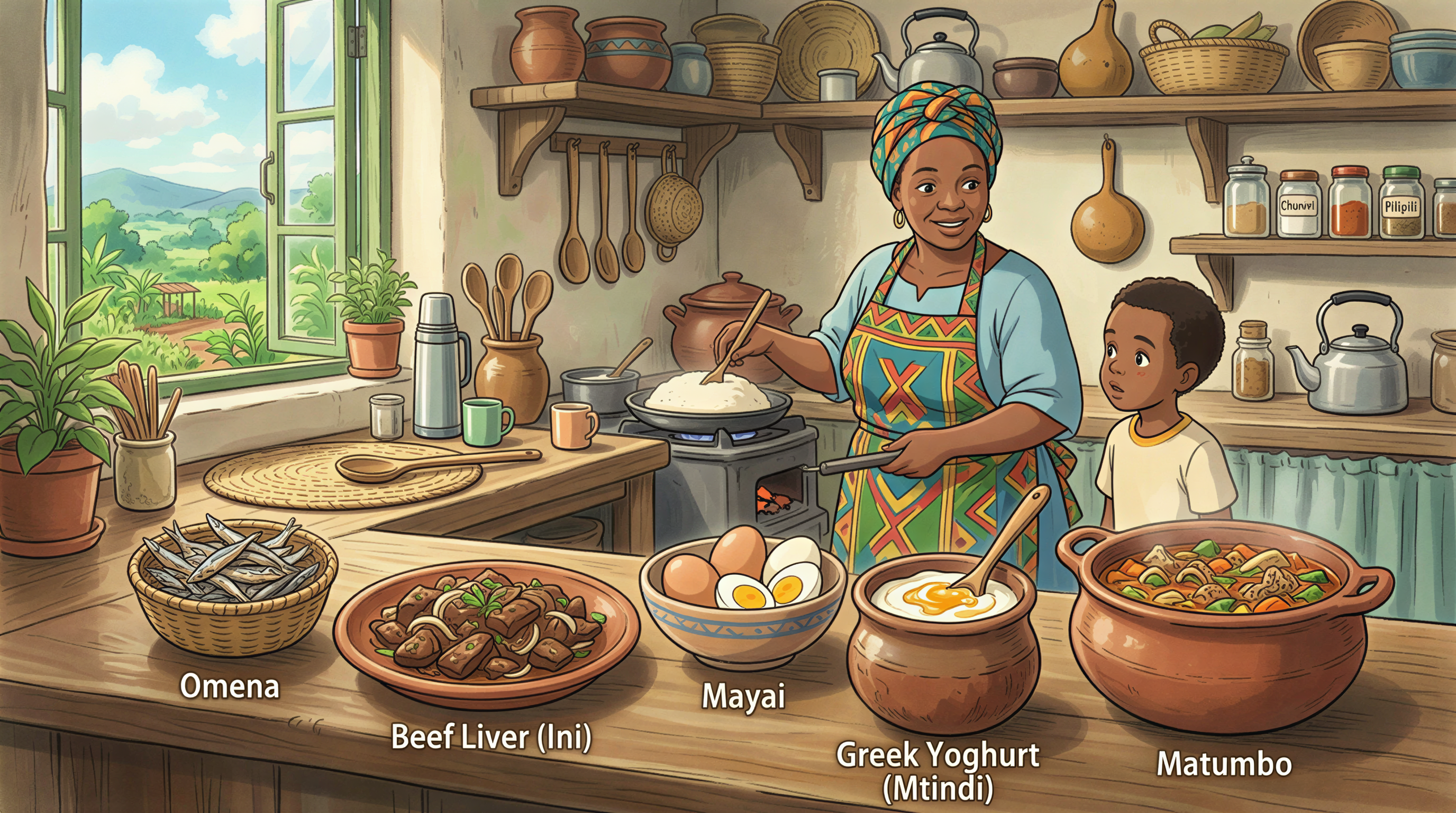
Five Kenyan foods that deserve more credit in lifting circles.
1. Omena.
The most underrated muscle food in Kenya. 28 g protein per 100 g, plus calcium, plus omega-3s, plus B12. KSh 220 buys 500 g of dried omena, roughly five servings. About KSh 45 per serving for nearly the protein of a 200 g chicken thigh.
The texture takes getting used to. So did chicken breast, once.
2. Beef liver.
100 g a week, max. The protein is excellent (27 g), the iron is unmatched, the price is half of stew meat. The vitamin A content is so high you should not exceed 100–150 g a week, especially for women planning pregnancy. But once a week is non-negotiable for any lifter.
3. Eggs.
The swiss-army protein. Cheap, complete amino acid profile, infinitely versatile. 6 g per egg. Two at breakfast and two more in the day adds 24 g for KSh 60.
4. Greek-style strained yoghurt.
Yes, it's expensive. But for post-workout recovery, the casein-whey mix is uniquely well-suited to the muscle protein synthesis window. One small tub three days a week, in your training schedule.
5. Beef tongue and tripe (matumbo).
Underrated, cheap (KSh 350–400 per kg), high in protein, and traditionally Kenyan. If you can get over the cultural cringe a generation of urbanites has internalised wrongly, it deserves a Sunday spot.
What I Tell First-Time Lifters
Three rules.
1. Hit protein at every main meal, not in one giant lunch.
Muscle protein synthesis responds more to four meals of 30 g each than one meal of 120 g. Spread it.
2. Eat enough total food.
You cannot build muscle on a calorie deficit and protein alone. Many beginner lifters under-eat carbs and fats and then complain protein "doesn't work."
3. Sleep before supplementing.
Eight hours of sleep beats every supplement on the market. If you are sleeping six hours and supplementing creatine and whey, your KSh 8,000 a month would be better spent fixing your sleep first.
What I'd Tell A Younger Me
If I had stepped into a Kenyan gym at 22 with what I know now: skip the supplement aisle entirely for the first year. Build the kitchen. Cook on Sundays. Eat omena three times a week. Eat eggs daily. Eat beef liver weekly. Sleep eight hours. Train three times. Track nothing.
You will be stronger, leaner, and KSh 70,000 richer than the friend who bought the tub.
For the foundational eating philosophy, see eating well on a Nairobi salary and what I actually eat in a week.
The Kenyan kitchen is a gym kitchen. It always was. We just stopped noticing because the imported tub was louder.