School Meals That Matter: Why Feeding Programs Change Everything
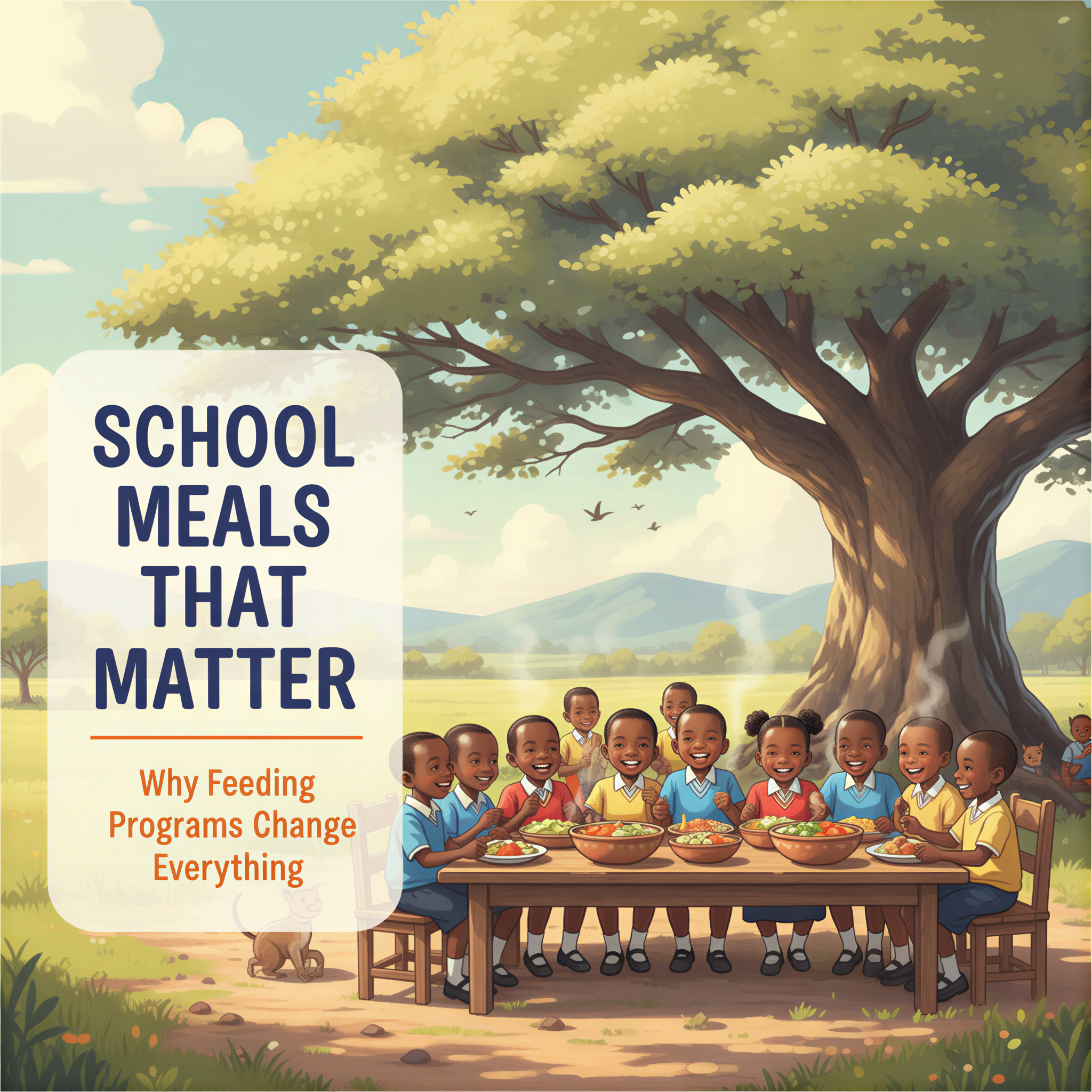
A teacher in Turkana notices something strange.
Every afternoon, around 2 PM, some children fall asleep at their desks. Others grow restless, unable to focus. But there's a pattern—it's always the same children.
The ones who didn't eat lunch.
In a region where families struggle to put food on the table, school meals aren't a luxury. They're the difference between a child who learns and a child who survives the school day.
Table of Contents
- What Happens When Children Don't Eat
- The Power of One Meal
- What Works: Lessons from Kenya
- The Nutrition Gap in School Meals
- How Communities Are Stepping Up
- What Parents Can Do
- The Cost of Inaction
- What Needs to Change
- The Meal That Changes Everything
What Happens When Children Don't Eat

An empty stomach doesn't just cause hunger. It causes:
Short-term:
- Difficulty concentrating
- Irritability and restlessness
- Fatigue and sleepiness
- Headaches
Long-term:
- Lower test scores
- Higher dropout rates
- Hidden hunger and malnutrition
- Stunted growth and development
A child learning on an empty stomach is like a car running on fumes. They might move, but they won't get far.
In Kenya, an estimated 2 million primary school children go without a meal during the school day. In ASAL counties like Turkana and Marsabit, the number is even higher.
The Power of One Meal
When schools provide meals, everything changes.
Attendance jumps. Families who can't afford food at home will send children to school when they know a meal is waiting. In some programs, enrollment increased by 28%.
Learning improves. Well-fed children score higher on tests, participate more in class, and miss fewer days to illness.
Health gets better. School meals can be designed to address specific nutrient gaps—adding iron-rich foods, vitamin A-rich vegetables, and protein sources.
Girls stay in school. When resources are scarce, families often keep girls home to help with chores. Free school meals reduce this pressure.

What Works: Lessons from Kenya
Kenya has one of Africa's largest school feeding programs. Here's what's working:
1. Home-Grown School Feeding
Instead of importing food, schools buy from local farmers. This:
- Supports the local economy
- Provides fresher, more familiar foods
- Creates markets for smallholder farmers
- Teaches children where food comes from
2. Kitchen Gardens
Many schools grow their own vegetables—sukuma wiki, spinach, tomatoes. Students learn nutrition while supplementing the school meal.
3. Fortified Porridge Programs
In ASAL regions, UNICEF and WFP provide fortified porridge mixes that address micronutrient deficiencies while being easy to prepare.
4. Community Involvement
The most successful programs involve parents. Mothers rotate cooking duties. Fathers contribute firewood. Communities take ownership.

The Nutrition Gap in School Meals

Not all school meals are equal. Many programs provide calories but miss critical nutrients.
A typical school meal:
- Ugali or rice
- Beans
- Weak tea
What's missing:
- Vegetables (vitamin A, folate)
- Fruits (vitamin C, fiber)
- Animal foods (iron, zinc, B12)
- Fats (energy, nutrient absorption)
A meal of ugali and beans fills stomachs. But without vegetables, fruits, or animal foods, children still develop hidden hunger.
Better options:
- Add sukuma wiki or pumpkin leaves (from school garden)
- Include a spoonful of oil in the food
- Add eggs once or twice a week
- Serve fruit when in season
Small additions make big differences.
How Communities Are Stepping Up
In Kitui, mothers formed a rotating schedule. Each day, two mothers come to school to cook. They bring firewood and vegetables from home.
In Kilifi, a school partnered with a local fish cooperative. Twice a week, children get omena—a protein-rich fish that's affordable and locally sourced.
In Nairobi's informal settlements, churches and NGOs fill the gap. Feeding programs in Kibera serve thousands of children daily, often providing the only reliable meal they'll get.
These aren't government programs. They're communities deciding that no child should learn hungry.

What Parents Can Do
Even when school meals exist, parents play a critical role:
Advocate for better meals. Join the school committee. Ask what's being served. Push for vegetables and variety.
Support the program. If the school asks for small contributions (firewood, vegetables), participate if you can.
Send children with breakfast. Even a simple breakfast—porridge with milk, banana, boiled egg—gives children energy for the morning.
Pack a healthy snack. A boiled egg, fruit, or groundnuts can bridge the gap if school meals are irregular.
Talk to your children. Ask what they ate. Were they still hungry? Did they have enough?
The Cost of Inaction
Every child who goes hungry at school loses more than a meal. They lose:
- Hours of learning
- Cognitive development
- Future earning potential
- Health that's hard to regain
We know that the first 1000 days matter. But the school years matter too. This is when knowledge builds, habits form, and futures take shape.
A well-fed generation is a generation that can lift communities out of poverty. A hungry generation stays trapped.
What Needs to Change
Policy level:
- Expand school feeding to all public primary schools
- Prioritize ASAL and underserved regions
- Include nutrition standards, not just calorie targets
- Support home-grown school feeding
School level:
- Start kitchen gardens
- Diversify meals beyond ugali and beans
- Train cooks on nutrition basics
- Monitor what children actually eat
Community level:
- Organize parent contributions
- Partner with local farmers
- Hold schools accountable
- No child left unfed
The Meal That Changes Everything
Back in Turkana, that same teacher now watches a different scene.
A feeding program started three months ago. Every child gets porridge in the morning and githeri with vegetables at lunch.
The afternoon sleepers are awake. The restless ones are calm. Test scores are climbing.
One meal. One change. Generations of impact.
School meals aren't charity. They're investment—in children, in communities, in Kenya's future.
Let's make sure every child has a seat at the table.