The First 1,000 Days — A Partnerships Perspective
I've been on the implementer side of the first 1,000 days conversation.
I've been on the funder side.
They don't talk to each other.
The first 1,000 days — from conception to a child's second birthday — is, by some distance, the most studied, most evidenced, most rhetorically agreed-on window in maternal and child health. There is more consensus on this window than on almost any other public health intervention point. The framing is correct. The science is correct. The economics is correct.
And yet, twelve years into the global "first 1,000 days" movement, Kenya's stunting rate has barely moved. Why?
This is the partnerships director's view of the question. The clinician's view I had at twenty-three. The funder's view I now sit closer to. And the gap between them I now see, painfully, every week.
Table of Contents
- The View From The Bedside
- The View From The Proposal
- What I See Now From Both Sides
- The View From My Desk
The View From The Bedside
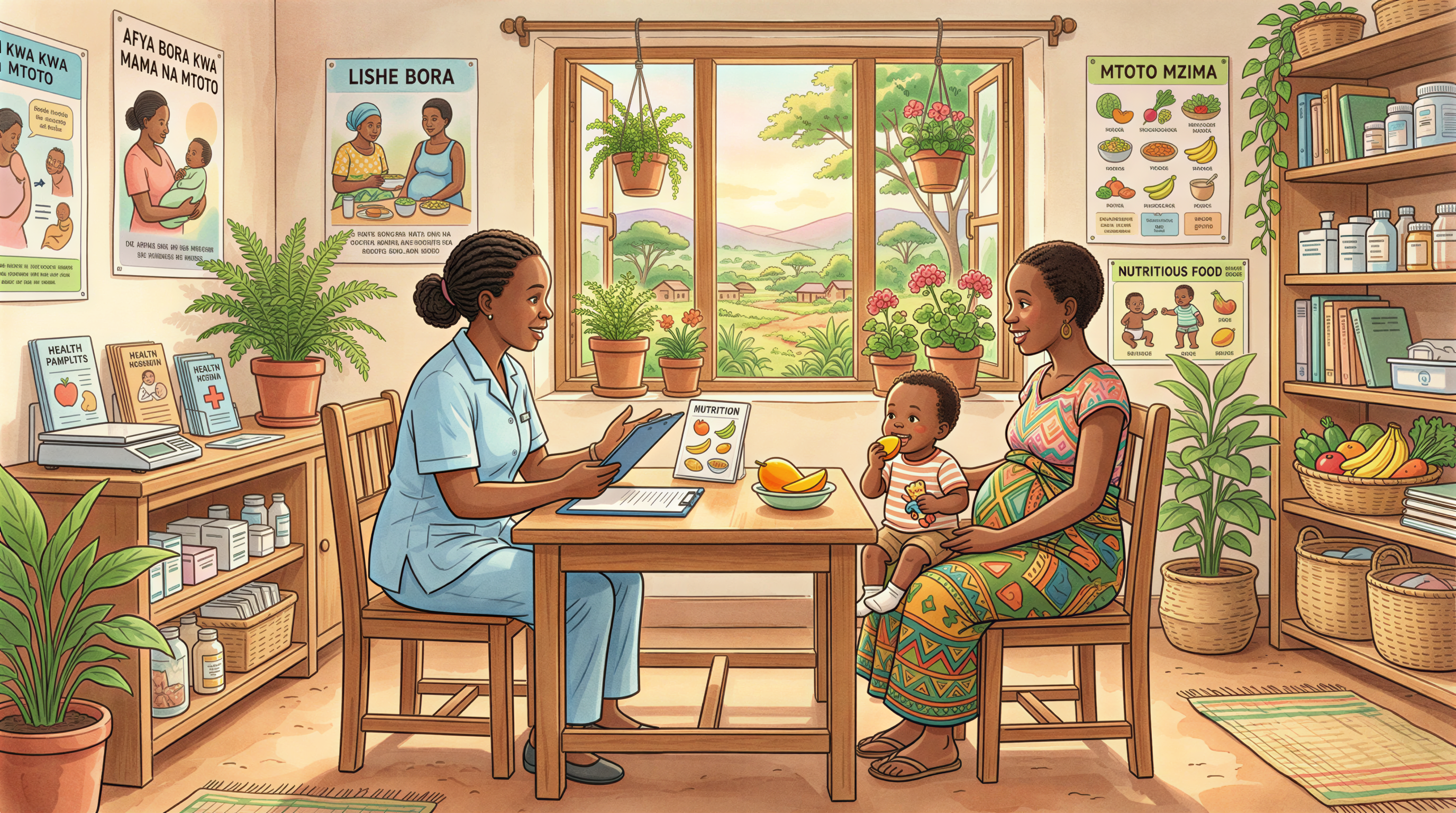
When I was a clinical intern, the first 1,000 days framing was a guide. It told me where to focus my energy as a clinician with limited time and limited tools.
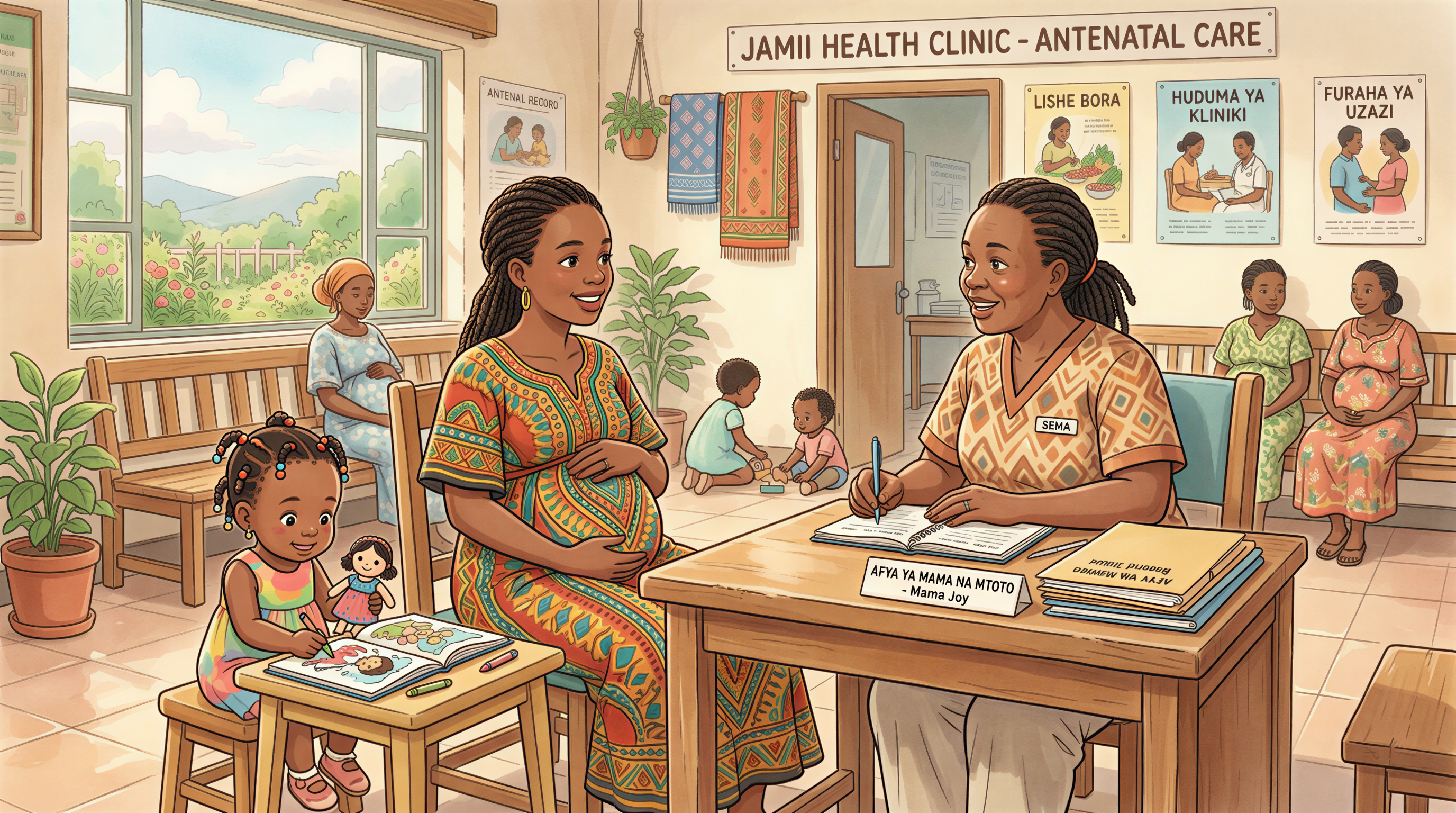
A pregnant woman in front of me at antenatal care: work on her iron, her diet, her micronutrient status. A six-month-old at growth monitoring: work on her complementary feeding, her exclusive breastfeeding through to that point, her micronutrient supplementation. A 14-month-old with mild wasting: stabilise, support, follow up.
The frame organised my work. I knew what to do, with this patient, in front of me, in the next twenty minutes.
The frame did not tell me — and I did not realise at the time — how the work I did at the bedside would or wouldn't add up to the population-level outcome the same frame was claiming to deliver. I assumed it would. So did most of my colleagues. We were doing the right work. The numbers should follow.
The numbers did not follow at the rate the frame promised. The reasons took me years to understand.
The View From The Proposal
When I moved to the partnerships side, I started writing 1,000-day proposals. The frame was the same. The vocabulary had shifted: "high-impact nutrition-specific and nutrition-sensitive interventions, delivered to scale, in the highest-burden counties, with measurable indicators..."
The proposals were funded. The programmes ran. The reports landed.
A few things became visible from this side that the bedside had not shown me:
1. The frame had become a procurement template.
Donors wanted "1,000-day programmes." Implementers responded with "1,000-day programmes." Counties absorbed them. The frame, originally a clinical organising principle, had become a category in a procurement system. Programmes were designed to fit the category. Sometimes the category fit the local need. Sometimes it did not, and the design had to bend the local need to fit the category.
2. The interventions inside the frame were not all equivalent.
The 1,000-day frame contains, in standard global guidance, a set of perhaps 10–15 interventions. Different ones have very different cost-effectiveness in different contexts. Vitamin A supplementation in a high-deficiency area is among the highest-return public health interventions in the world. SAM treatment is high-impact but high-cost per child. Behaviour change communication via SMS, in many implementations, has been disappointing. The frame treats them as a portfolio. Most programmes treated them as a sequence.
The right design starts with the local nutrition profile and chooses the highest-leverage intervention mix for that context. The procurement-template approach often instead delivered a similar mix to every county.
3. The 1,000 days frame quietly excluded the windows around it.
This is the gap I have written about repeatedly. The frame's clarity — focus from conception to age two — has produced an unintended consequence: programming and funding for adolescent girls, pre-pregnancy women, and 2-to-5-year-olds has been chronically smaller than the frame allows for. The clinical evidence supports a wider frame. The funding architecture has held the narrower one.
4. Cross-sectoral integration was promised and rarely delivered.
The "nutrition-sensitive" interventions — water, sanitation, agriculture, education — were always described as part of the package. In practice, they sat in different ministries, with different funding cycles, and the integration that was meant to make the 1,000-day frame work as a system rarely happened at scale. The clinic ran the clinical interventions. The water sector ran the water interventions. The education sector ran school programmes. They did not, in most counties, coordinate around the 1,000-day window in a way that would let them compound.
5. The political incentive misfit.
A county nutrition programme cannot show population-level stunting reduction within a political cycle. The lag between intervention and outcome at the population level is 3–5 years for proximate indicators, 15–25 years for the human-capital impact. No politician, donor programme officer, or NGO board reasonably operates on that horizon. So programmes get evaluated on intermediate indicators that are easier to move (coverage, training, programmatic outputs) — and the actual outcome the frame is trying to shift remains a lagging signal everyone watches but nobody is held accountable for.
This is not malice. It is structural mismatch.
What I See Now From Both Sides
Three things I would not have seen from either side alone.
1. The 1,000 days frame is correct and incomplete.
Correct in that this window is, in fact, the highest-leverage intervention point. The clinical and economic evidence is strong.
Incomplete in that the frame, as currently funded, has inadvertently de-prioritised the windows around it (adolescence, pre-pregnancy, 2-to-5), under-invested in the cross-sectoral determinants (water, sanitation, education, household income), and trained programmes to operate inside discrete intervention bundles rather than across whole-system coordination.
A more honest framing: the 1,000 days is the most intensive intervention window in a lifecourse where the surrounding windows also need investment, all of which only work as a system.
2. The implementer-funder gap is the thing.
Implementers see the local. Funders see the portfolio. Neither, alone, sees the system.
The implementer says "this complementary feeding intervention is working in this ward, but the WASH gap in the same ward means children are still getting diarrhoea that wipes out the nutritional gain." The funder says "complementary feeding interventions across our portfolio are showing modest impact; we will fund more of these."
The implementer's specific knowledge does not reach the funder's portfolio decisions. The funder's portfolio decisions do not reach the implementer's local design choices. The gap between the two is where most of the underperformance lives.
I have spent the last few years trying to be a bridge across this gap. I have, mostly, failed at being it. The gap is structural, and a single partnerships director cannot solve a structural gap by enthusiasm.
What might solve it: independent intermediary institutions whose job is specifically to translate implementer learning into funder strategy and back. We have a few. We need many more. They are chronically under-funded because nobody's mandate covers them.
3. The next decade has to look different from the last one
If the first 1,000 days frame produced a stalled stunting curve through the 2010s and into the early 2020s — and I think the data supports this reading — then the next decade needs a wider, more integrated, more systemic frame.
What that would look like:
- The first 8,000 days as a more honest framing. Adolescence to early adulthood, with the 1,000 days as the most intensive sub-window
- Cross-sectoral budget consolidation so that water, education, social protection, and health are funded as a system, not as separate columns
- Multi-decade political-economy commitments that survive election cycles
- Independent measurement and accountability so that the lag between intervention and outcome doesn't excuse incumbent performance
- Honest assessment of the previous decade so we don't repeat the design mistakes
This is uncomfortable for the field. It implies that the 1,000 days movement, despite its real and meaningful contributions, did not produce the outcomes its framing promised, and that the next phase has to acknowledge this.
I think we are intellectually ready for this conversation. I am not yet sure we are politically ready.
The View From My Desk
I write proposals these days. I sit in donor meetings. I review reports. I argue, occasionally, with colleagues about what the next funding cycle should prioritise.
The first 1,000 days remain a good frame. They will remain in our proposals. They should.
But quietly, in the side conversations, in the WhatsApp groups of partnerships directors who have done this for a while, the conversation has shifted. The frame is necessary. It is not sufficient. The next decade needs more.
I would like to be brave enough to say this in the proposals themselves. Most days I am not. The polite version pays the bills.
This article is my way of saying it where the proposal can't.
For the broader picture, see why I left clinical work for partnerships, the donor question I keep getting, the funding letter I'd write if I were brave, and stunting.
The first 1,000 days made the case for the most cost-effective nutrition window we know. The next 1,000 articles I write will be about what to do with that case in a country, in a continent, where the case has not yet produced the outcome it should have.
The bedside taught me to see the patient. The desk taught me to see the system. Neither, alone, was enough. The work of the next decade is the integration.
I am still figuring it out. So is everyone else worth listening to.
That is the honest place to end. Thank you for reading.