Climate Adaptation: What Real Kenyan Food Security Policy Would Look Like
We don't have a food security strategy.
We have a relief reflex.
Every drought, the Kenya Food Security Steering Group reconvenes. Every flood, the Ministry mobilises. Every season, donors top up the emergency response. Every cycle, the same counties reappear on the priority list.
This is not adaptation. It is a pattern of well-coordinated response to a problem we know is coming, every time, and that we have never properly invested in preventing.
If climate change is the largest single threat to Kenyan food security over the next thirty years — and the evidence says it is — then a country that responds with reflexes instead of strategy is, by design, going to lose.
Here is what real adaptation would look like. And what is in the way.
Table of Contents
- What We Are Adapting To
- The Three Pillars Of A Real Adaptation Strategy
- What's In The Way
- What Would Move The Needle
- What This Means
What We Are Adapting To
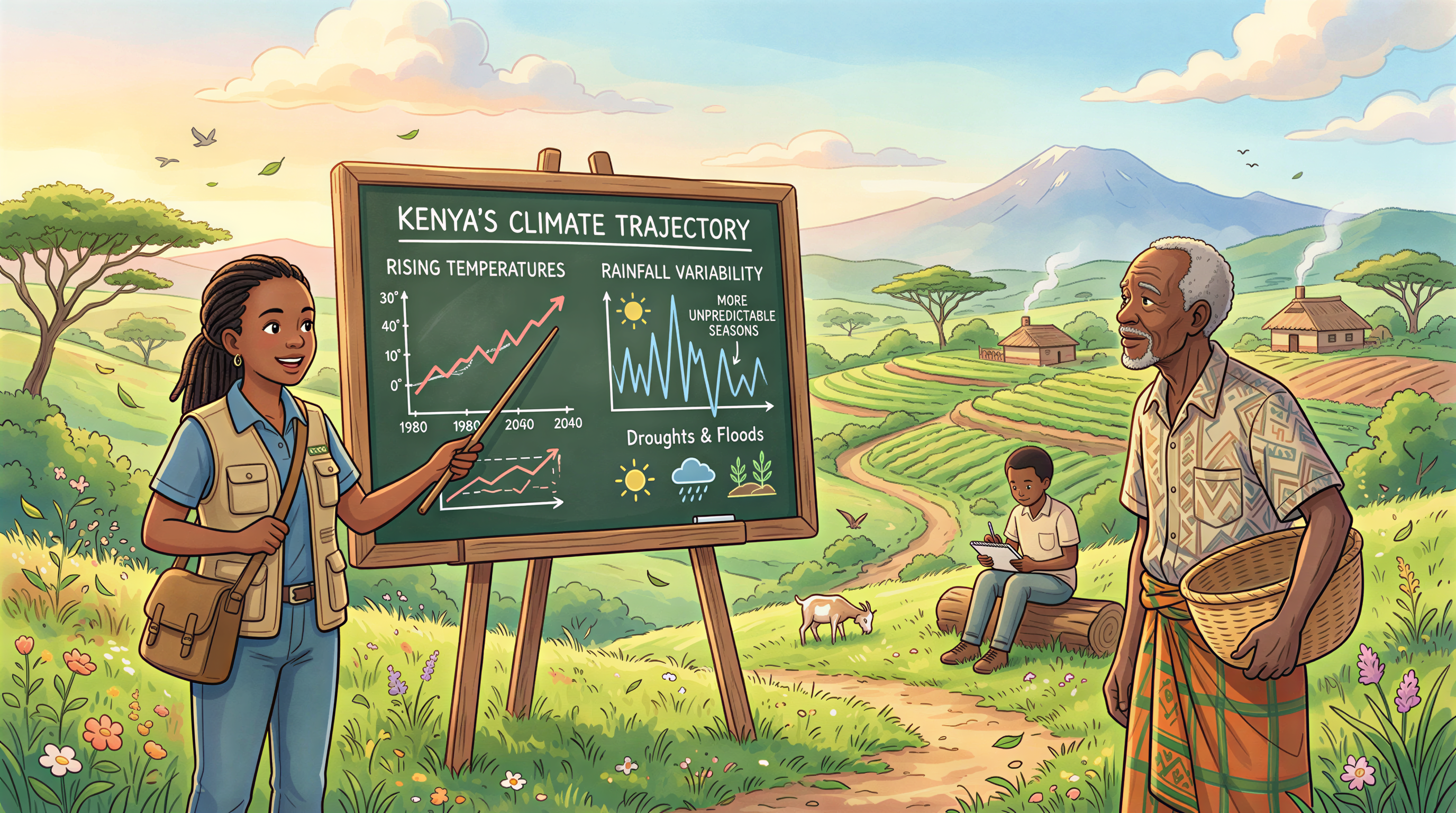
The Kenyan climate trajectory, in plain numbers:
- Average temperature has risen by ~1.0°C since 1960
- Rainfall variability has increased markedly since the early 2000s
- Drought frequency in ASAL counties has roughly doubled since 1980
- The "long rains" have become shorter and less reliable
- Flash floods are more frequent in some highland and coastal counties
- Pest pressure (desert locusts in 2020, fall armyworm continuously) has intensified
These are not future projections. They are observed history. The future is more of the same, faster.
The food system implications are also observable:
- Maize yields per hectare have stagnated despite better seed and fertiliser
- Livestock losses in pastoralist counties spike with each drought cycle
- Fish stocks in Lake Turkana and parts of the coast are pressured by temperature and runoff
- Food prices spike around climate events with predictable lag — see food inflation
- Stunting and wasting in ASAL counties track climate variability strongly
We know all of this. We have known most of it for a decade. We have not yet built a strategy that engages with it at the scale the data demands.
The Three Pillars Of A Real Adaptation Strategy
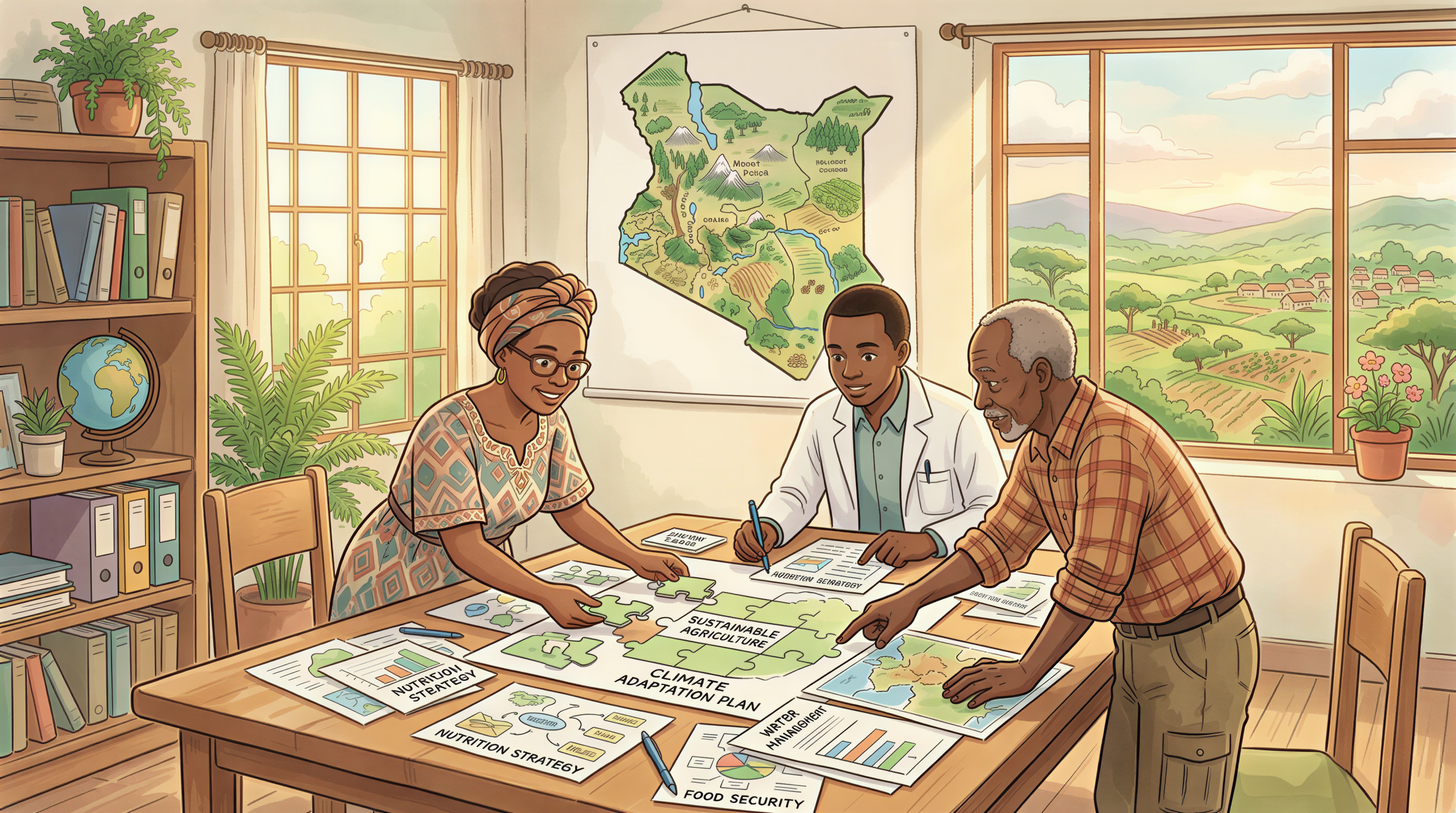
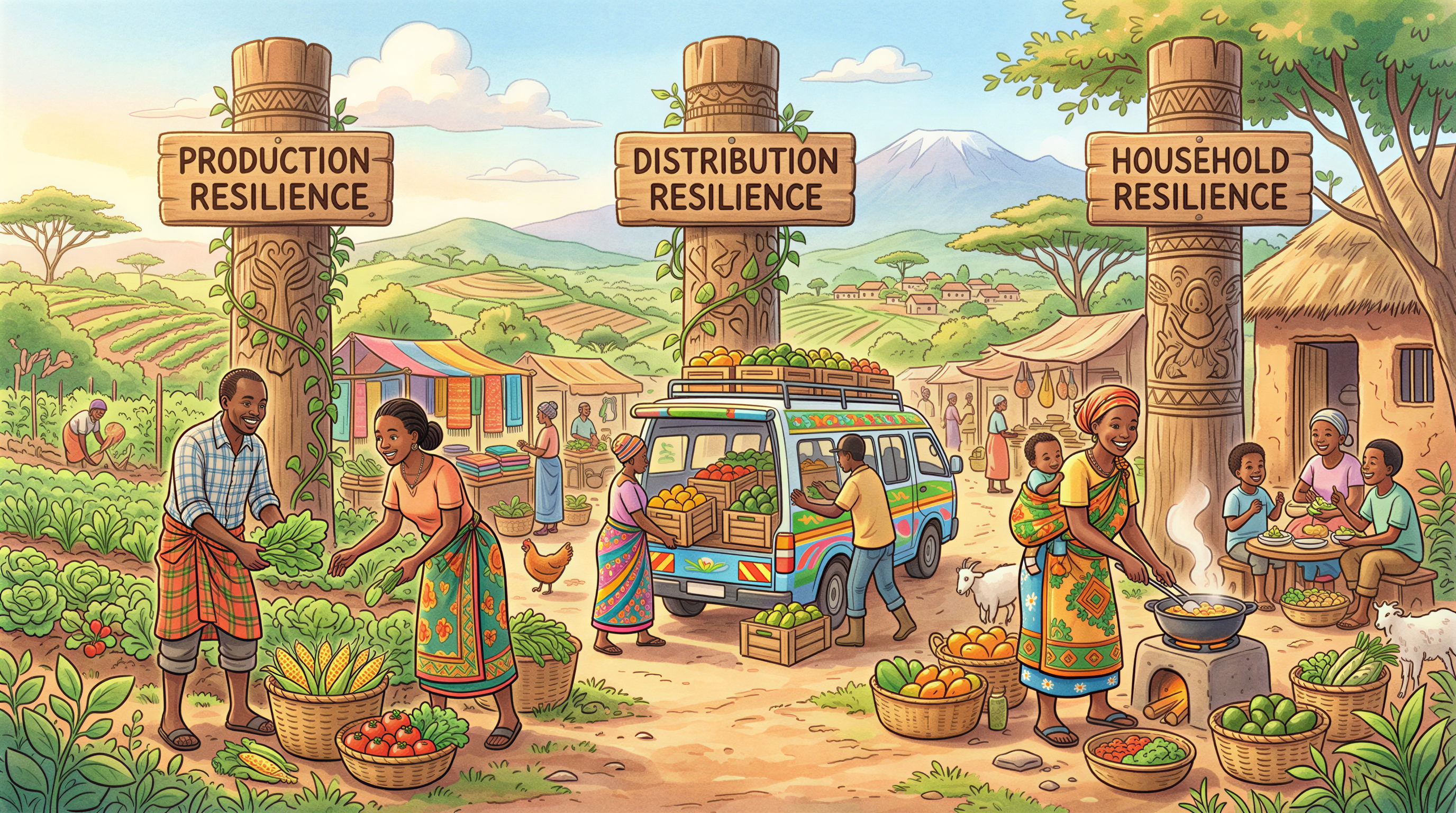
A working Kenyan climate-food adaptation strategy would have to do three things, simultaneously, sustained for at least 15 years.
Pillar 1: Production resilience
The agricultural system needs to be re-engineered for variability, not optimised for any particular climate baseline.
Concrete components:
- Climate-adapted seed systems. Drought-tolerant maize, orange-fleshed sweet potato, climate-resilient beans, indigenous cereals (sorghum, finger millet, pearl millet). Most of these varieties exist in research stations. Distribution to smallholders is patchy.
- Diversified cropping systems. Move smallholders from maize-only to maize-plus-sorghum-plus-cassava-plus-beans systems. Risk-distributed by design.
- Livestock genetics and management. Better-adapted indigenous breeds, improved veterinary services, fodder systems that survive dry seasons.
- Smallholder irrigation at appropriate scale. Sand dams, drip irrigation, water harvesting at the village level — not Galana-Kulalu mega-farms.
- Indigenous vegetables. Already covered in the AIV piece — these are climate-adaptation infrastructure as much as nutrition assets.
Pillar 2: Distribution and market resilience
Even good production fails if markets and distribution can't smooth shocks.
Components:
- Strategic grain reserves that work — multi-year, transparent, automatic on price triggers
- Working cold chain for perishables, especially camel milk, fish, and dairy
- Storage at the smallholder and aggregator level — hermetic bags, post-harvest training, village-level cooled storage
- Transport corridors that withstand disruption — most acute in northern counties
- Functional market information systems so that smallholders are not making blind decisions during price volatility
Pillar 3: Household and community resilience
The most under-funded pillar, despite being the most directly nutrition-relevant.
Components:
- Fortification compliance (as discussed) — when households shift to cheap carbs during shocks, fortified ones must actually deliver the nutrients
- Cash transfers indexed to food inflation so the most vulnerable households are not silently de-funded by every shock
- Community-level water and storage infrastructure — sand dams, household-scale rainwater harvesting
- Kitchen gardens at scale — see the AIV piece on cheap, climate-resilient household-level food production
- Nutrition counselling that engages with what households can actually access during shocks, not what the textbook recommends in normal years
A strategy that does all three pillars — production, distribution, household — is real adaptation. Anything less is a press release.
What Currently Exists And Why It Isn't Enough
Kenya does have climate-related policy infrastructure:
- The National Climate Change Action Plan
- The National Adaptation Plan
- Various agriculture sector strategies
- County climate change funds (mandated by 2018 legislation)
- Donor-funded climate-smart agriculture programmes
What's missing is integration with the food and nutrition strategy. The climate plans tend to live in agriculture and environment ministries. The nutrition plans live in health. The cash transfer plans live in social protection. School feeding lives in education. Each plan has a climate annex; none of them is the climate strategy.
A real strategy would force these to coordinate. The current architecture forces them not to.
What's In The Way
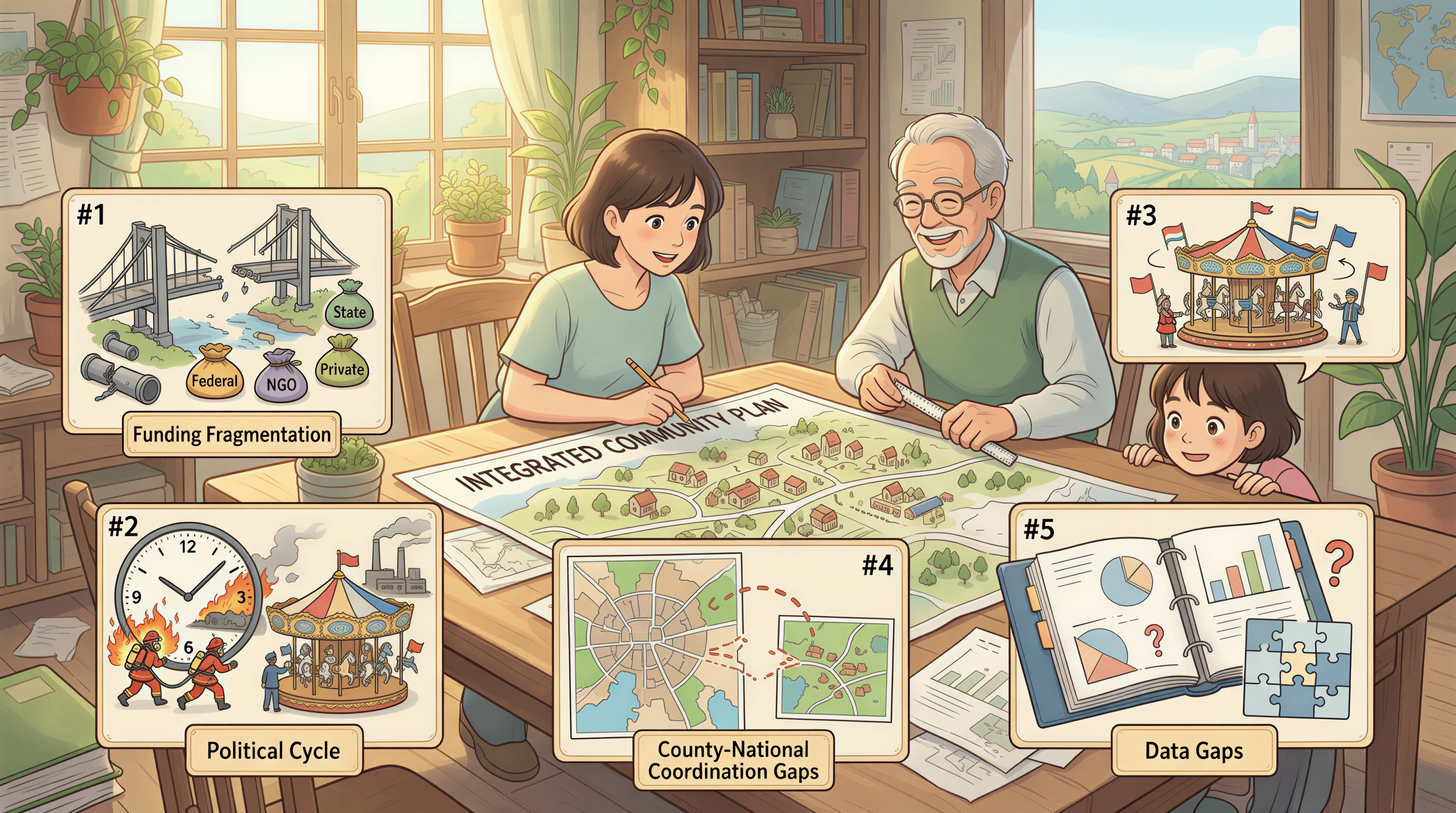
Five things, in rough order of difficulty.
1. Funding fragmentation.
Climate, agriculture, nutrition, and emergency response are funded by different ministries with different cycles, different M&E systems, and different reporting requirements. A coherent multi-year strategy that drew from each would require Treasury-level coordination that is currently rare.
2. The crisis-response funding bias.
Donors and government both find it easier to mobilise around an active drought than around a 15-year prevention strategy. The political optics of crisis response are stronger than the political optics of prevention. We are paying for this asymmetry every cycle.
3. The political cycle.
Five-year political cycles in a 30-year adaptation challenge. Each administration questions, restructures, or quietly defunds the previous one's flagship programmes. Continuity has been rare. Climate adaptation requires durable policy across administrations — which Kenya has not yet built the infrastructure for.
4. The county-national coordination gap.
Devolution moved much of the implementation to counties. Climate adaptation requires national-level coordination of county-level action. The bridges that would let this happen well have been built unevenly.
5. The data and evidence gap.
We have less granular data on climate-food interactions than we should, especially at county level. Investments in monitoring, modelling, and evaluation are chronically below what good adaptation policy requires.
What Would Move The Needle
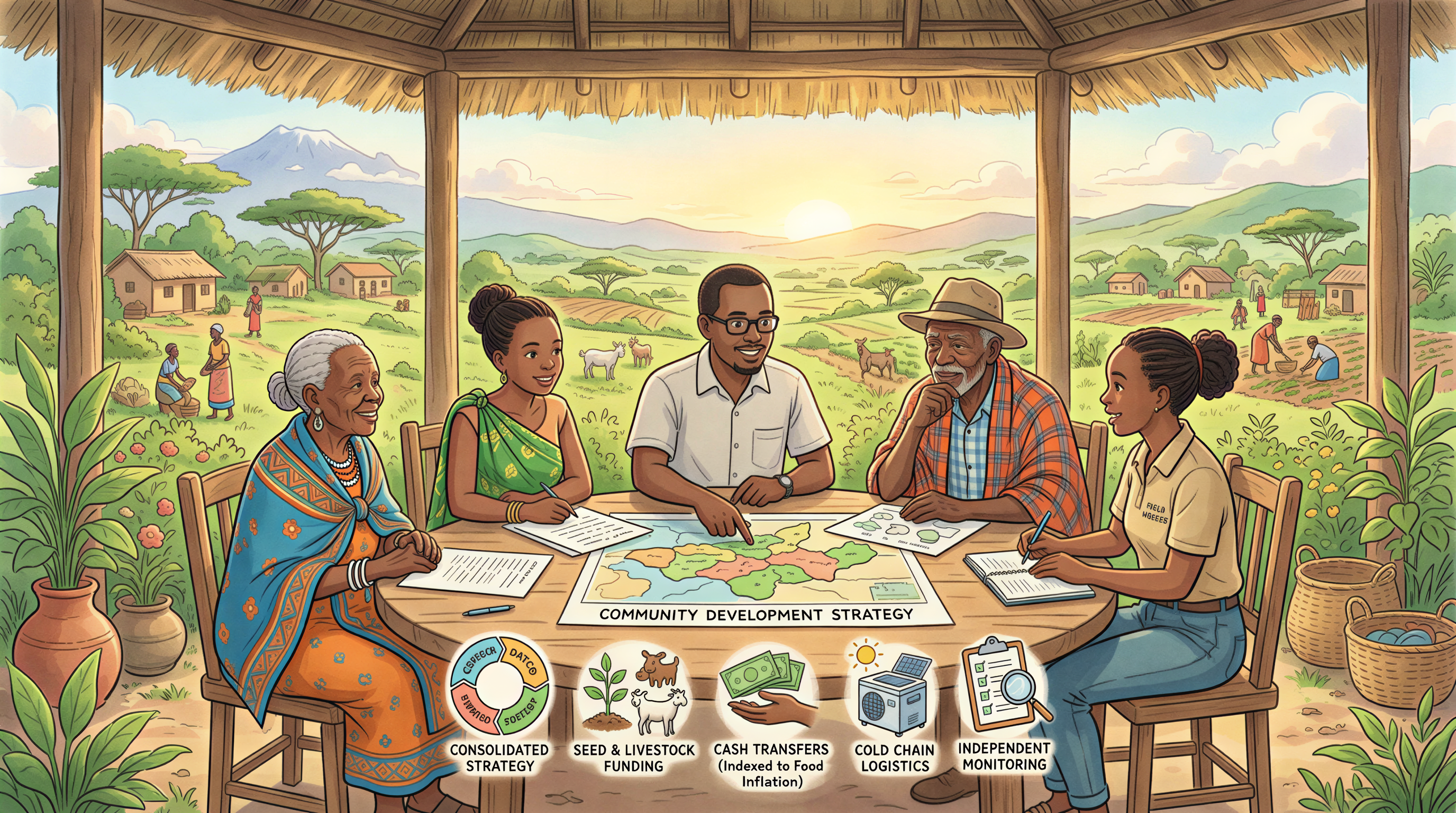
Five interventions, ranked by feasibility.
1. A consolidated national climate-food adaptation strategy.
Across ministries. Multi-year. Costed. With public county-level scorecards. Currently nonexistent in coherent form.
2. Earmarked, multi-year funding for climate-resilient seed and livestock systems.
Not annual budget cycles. Five-to-ten year commitments at scale.
3. Index existing cash transfers to food inflation.
Already discussed. Cheap. Politically possible. Currently not done.
4. Build the cold chain.
A national cold chain investment programme covering pastoralist counties, fish-producing regions, and high-perishable horticultural belts. A genuine infrastructure programme, not a series of pilot projects.
5. Independent monitoring and adaptive management.
A standing climate-food adaptation oversight body — possibly hosted by KIPPRA or another independent institution — that publishes annual public reports on adaptation progress against measurable targets.
This is not exotic. The components exist as scattered programmes today. What's missing is the coherent strategy, the multi-year commitment, and the political will to integrate across ministries.
What This Means
Kenya is in a slow-motion food security crisis driven by climate. The crisis is not arriving. It is here. The pattern of seasonal emergency responses is the management strategy we have actually chosen, even if no document says so explicitly.
A different path is possible. It would not require a larger total budget, just a smarter allocation across ministries, with multi-year commitment and honest measurement. The technical components exist. The political will is what is missing.
For the related thinking, see stunting, the food inflation piece, Galana-Kulalu, and the nutrition budget reality.
A country that responds and never adapts will spend forever responding. We can keep doing that. Or we can build something durable.
We have been late at this for a decade. We are not yet late beyond saving — but the window is real, and not infinite. The adaptation we don't fund this decade is the famine we will fund the next.
That trade is not difficult. It is just unfamiliar.