Camel Milk and the ASAL Nutrition Story Nobody Funds Properly
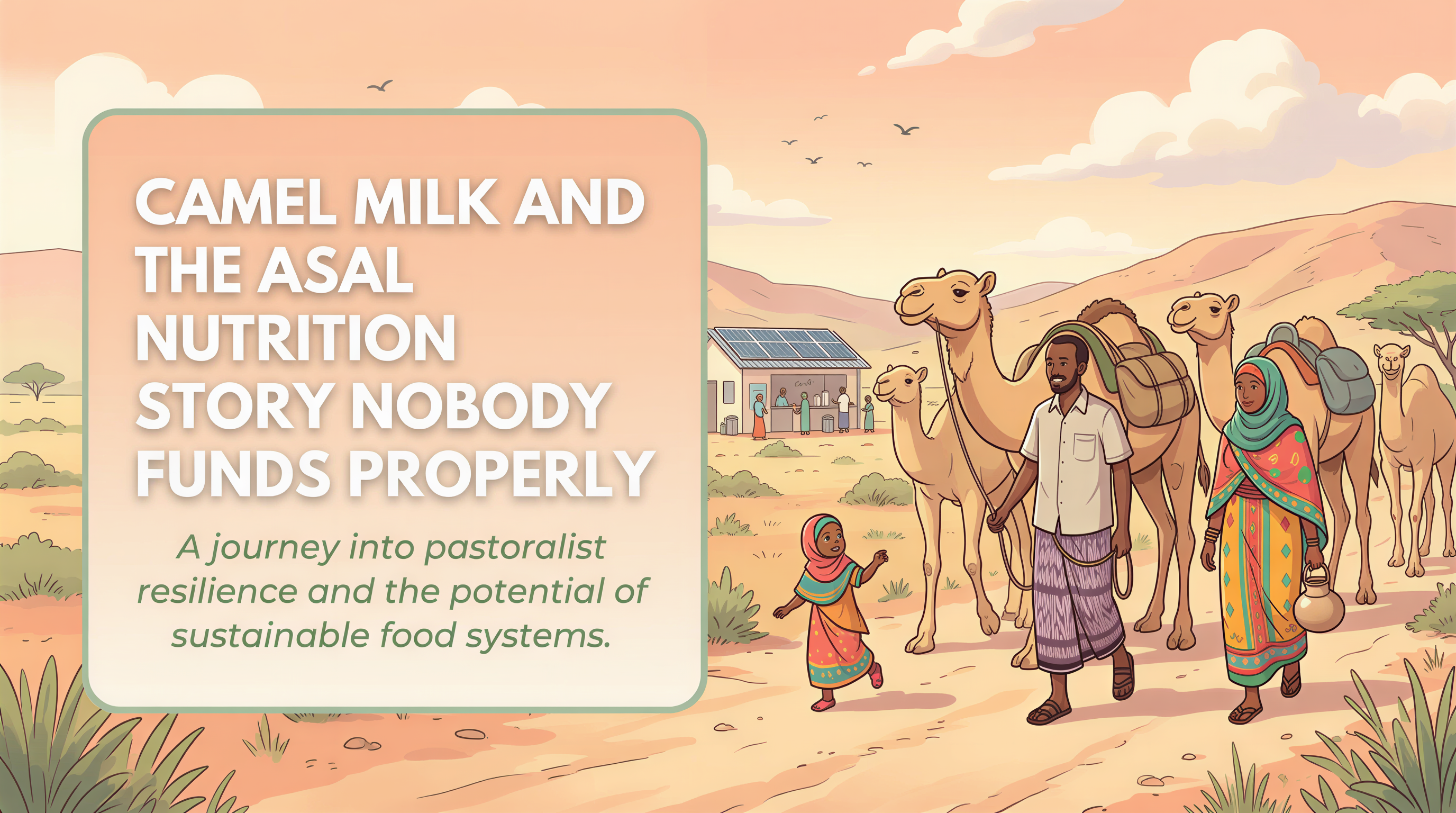
A single Somali camel can produce 5 litres of milk a day in good conditions.
That milk has more vitamin C than cow's milk, comparable protein, lower lactose, and a clinical literature linking it to improved outcomes in diabetes, allergies, and severe acute malnutrition recovery.
It is also a food that feeds millions of pastoralists in Kenya's ASAL counties — and whose supply chain breaks every dry season because the cold storage that would carry it from the herd to the urban market has never been seriously funded.
Camel milk is a story about a public health asset hiding in plain sight, in a part of the country donor templates were not built to fund. This is the story.
Table of Contents
- The Camel Milk Reality
- Why Camel Milk Doesn't Reach Most Of Kenya
- What A Serious Camel Milk Programme Would Do
- Why It Hasn't Been Funded Properly
- What This Means
The Camel Milk Reality
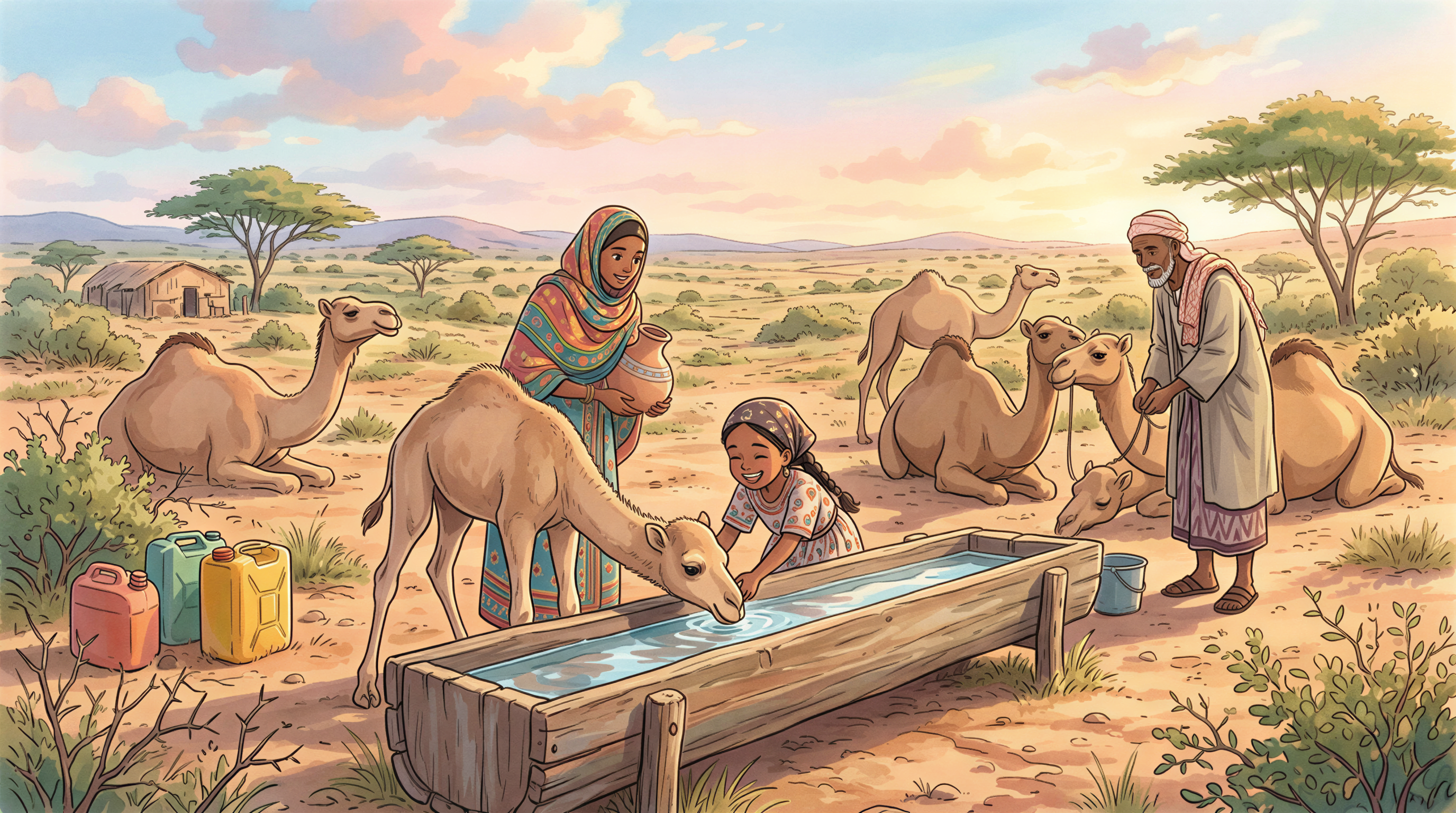
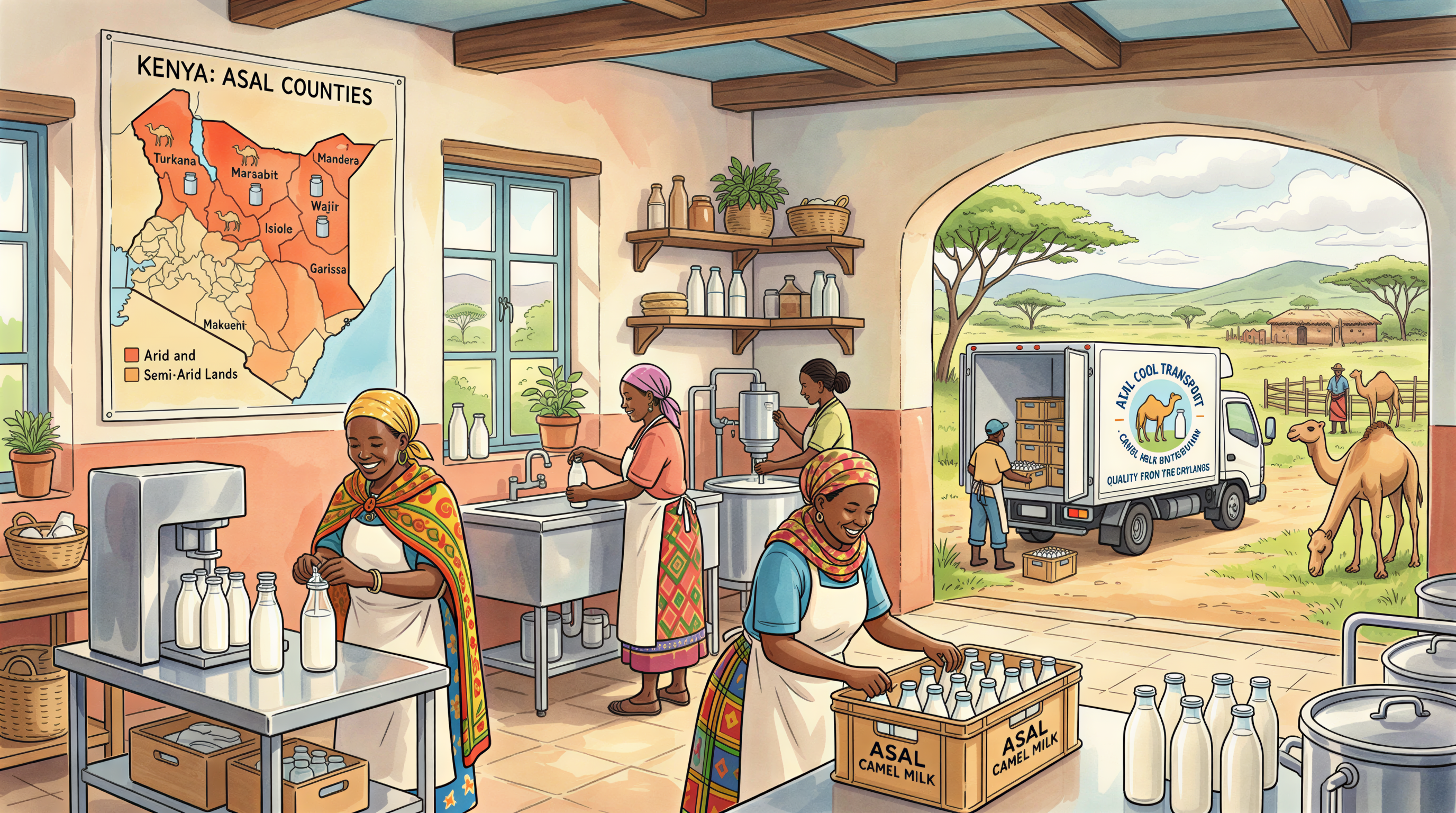
Kenya has roughly 4–5 million camels — most of them in the northern ASAL counties (Marsabit, Wajir, Mandera, Garissa, Isiolo, Samburu, parts of Turkana). The country is among the largest camel populations on Earth.
Camel milk production is large but mostly informal. A pastoralist family might milk 5–15 camels twice a day, producing 25–100+ litres. Most of that goes directly into household consumption. Surplus is sold raw, locally, often through women-run informal markets.
The nutritional profile, briefly:
- Protein: ~3.5 g/100 ml (similar to cow's milk)
- Fat: ~3.5 g/100 ml, with a higher proportion of unsaturated fats
- Vitamin C: 3–5x higher than cow's milk — uniquely useful in arid environments where fresh fruit is hard to access
- Lactose: marginally lower; camel milk is often tolerated by people with mild lactose intolerance
- Minerals: higher zinc, copper, iron than cow's milk
- Insulin-like proteins: preserved in camel milk in a form not seen in cow's milk; contributes to glycaemic effects under study
For an ASAL child whose food environment is constrained, regular access to fresh camel milk is a remarkably complete intervention. For an urban diabetic, there is emerging clinical interest. For a recovering SAM child, several pilot studies have shown camel milk performs as well as or better than F-100 in some settings.
This is not a marginal commodity. It is a serious nutritional asset with limited national integration.
Why Camel Milk Doesn't Reach Most Of Kenya
Five reasons. Each illustrative of a broader ASAL development pattern.
1. The cold chain is missing.
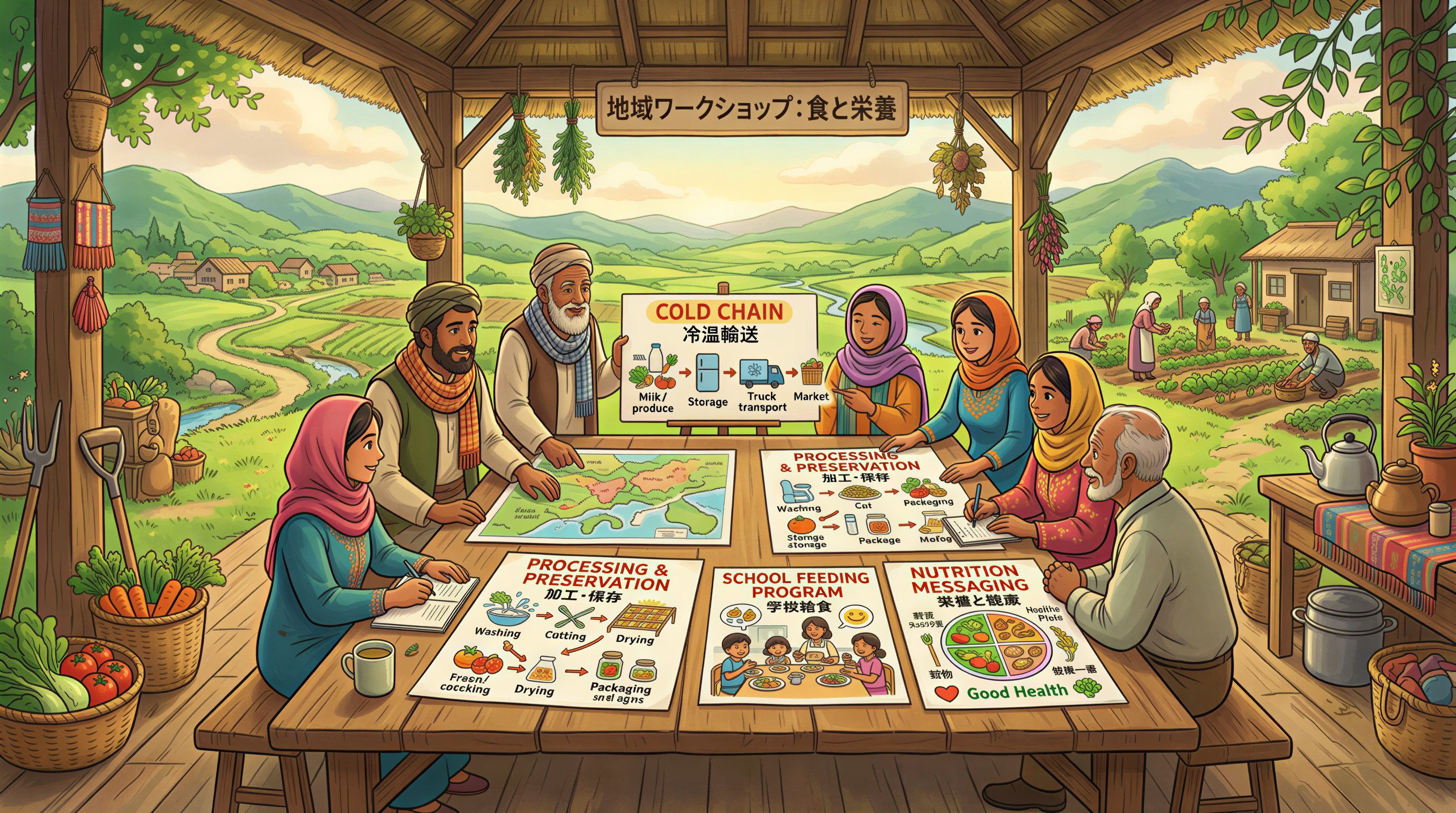
Camel milk is highly perishable in tropical conditions. Without refrigeration within hours of milking, it ferments rapidly (which produces susu, the traditional fermented camel milk — also nutritious, but with a different consumer market). Modern long-distance transport of fresh camel milk requires a cold chain. From a camel boma in Wajir to a Nairobi consumer, that's around 800 km and 12+ hours by road, requiring sustained refrigerated transport.
The cold chain investment per litre transported is substantial. Without subsidy or scale, the per-litre cost approaches the price of cow's milk in supermarkets — and consumers don't yet differentiate enough to pay a premium.
2. The processing capacity is small.
Kenya has a handful of formal camel milk processors. Together they handle a small fraction of national production. Most of these are pilots or small-to-medium enterprises. The capacity to absorb spike production (good rainy season + healthy herds) is limited; the capacity to bridge dry-season scarcity is even more limited.
3. Market regulation is patchy.
KEBS standards for camel milk exist on paper. In practice, much of the market operates informally — which is fine for community health, less fine for scaled urban distribution where consumer trust requires consistent regulation.
4. The donor templates don't fit.
A camel milk supply chain investment doesn't slot neatly into "maternal and child nutrition" or "agricultural development" or "food security" — even though it touches all three. Most donor calls are designed around discrete programme types. A multi-modal investment that integrates livestock health, cold chain, processing, and nutrition messaging across multiple ASAL counties has historically been hard to fund.
5. The pastoralist economy operates with logic donors don't centre.
Pastoralism is itself misunderstood. The herd is a savings account, an insurance policy, a cultural identity, and a daily food system simultaneously. Investment models that treat camels as agricultural-output units miss two-thirds of what the pastoralist is doing. This makes investment design harder, not easier — but skipping the work means continuing to underfund the system.
What A Serious Camel Milk Programme Would Do
Six components. None new. None individually ambitious. The combination is rare.
1. County-level cold chain investment.
Solar-powered milk collection centres in pastoralist hubs. Refrigerated transport links to processing nodes. The capital investment is substantial but the per-litre operating cost is manageable once volumes scale.
2. Processing capacity expansion.
Pasteurisation, fermentation (susu, camel milk yogurt), powder for shelf-stable export to urban markets. Processed camel milk products have premium positioning in Gulf and East African markets that Kenya could capture.
3. Cooperative aggregation.
Pastoralists are not well-served by direct-to-aggregator models. Cooperatives — particularly women-led, since camel milking is largely women's work in most pastoralist cultures — change the bargaining position and the income distribution.
4. Integration with school and clinical feeding.
ASAL school feeding programmes should source camel milk locally. ASAL maternal and child clinical nutrition programmes should integrate camel milk where culturally appropriate. SAM treatment protocols should formally evaluate camel milk as a complement to F-100.
5. Veterinary and herd health investment.
Healthy camels make more milk. Many pastoralist herds are under-served by veterinary services. The marginal investment per camel is small; the milk yield gain per investment is large.
6. Market development for non-pastoralist consumers.
Most urban Kenyan consumers don't drink camel milk. There is a real market opportunity here — premium, health-positioned, well-marketed. The Gulf and India have built sizeable camel milk industries on similar starting points.
The total cost of a national camel milk strategy at meaningful scale would be in the low billions of shillings annually for 5–7 years. The return — in pastoralist income, ASAL child nutrition, urban consumer choice, export earnings — is real and underestimated.
Why It Hasn't Been Funded Properly
Three reasons.
1. ASAL development has historically been crisis-funded, not investment-funded.
The major flows of money into ASAL counties tend to come during droughts, displacement events, or food security emergencies. The investment-mode funding — multi-year, infrastructure-heavy, slow-build — has been chronically smaller than the response-mode funding. You cannot build a cold chain on emergency relief flows. They expire, by definition.
2. The political economy of nutrition funding is urban-biased.
Most Kenyan nutrition policy attention is focused on under-fives and pregnant mothers in urban and peri-urban contexts where data is easier to collect and political interest is higher. ASAL pastoralist nutrition is harder to measure, harder to politic, and quieter. So it gets less political airtime, even when it's a high-leverage intervention.
3. The product has not been positioned correctly to donors.
A camel milk programme is, simultaneously: a livelihoods programme (pastoralist income), a public health programme (child nutrition, SAM recovery, NCD support), a climate adaptation programme (camels are dramatically more climate-resilient than cattle), and an industrial development programme (processing, export). Each donor has framed the opportunity narrowly. None has funded the whole.
This is partly our fault as the partnerships sector. We have not made the unified pitch.
What This Means
Kenya has, in its northern counties, a nutritional asset that:
- Already feeds millions of people
- Has clinical applications under-recognised in maternal, child, and NCD nutrition
- Is climate-resilient, female-led, and pastoralist-rooted
- Could feed substantially more Kenyans with a moderate, well-designed investment
- Is currently being held back primarily by infrastructure and policy choices, not biology
For the broader ASAL nutrition picture, see malnutrition in ASAL communities, Garissa's nutrition story, and feeding children through drought.
The camel was already here. The milk was already here. The pastoralist women were already doing the work.
We have just not yet built the small set of public investments that would let the asset scale to do for the whole country what it already does for a few. That is a choice. Choices can change.
The conversation we should be having starts with the camel boma in Wajir, not the boardroom in Nairobi. We could, if we wanted, design a programme around what is already working at the source. We have not. Yet.