What Kenya's Nutrition Budget Actually Buys (And Doesn't)
Table of Contents
- What The Budget Actually Buys
- What The Budget Misses
- The Comparison That Hurts
- What Better Allocation Would Do
- The Politics Of It
- Why This Matters
What The Budget Actually Buys
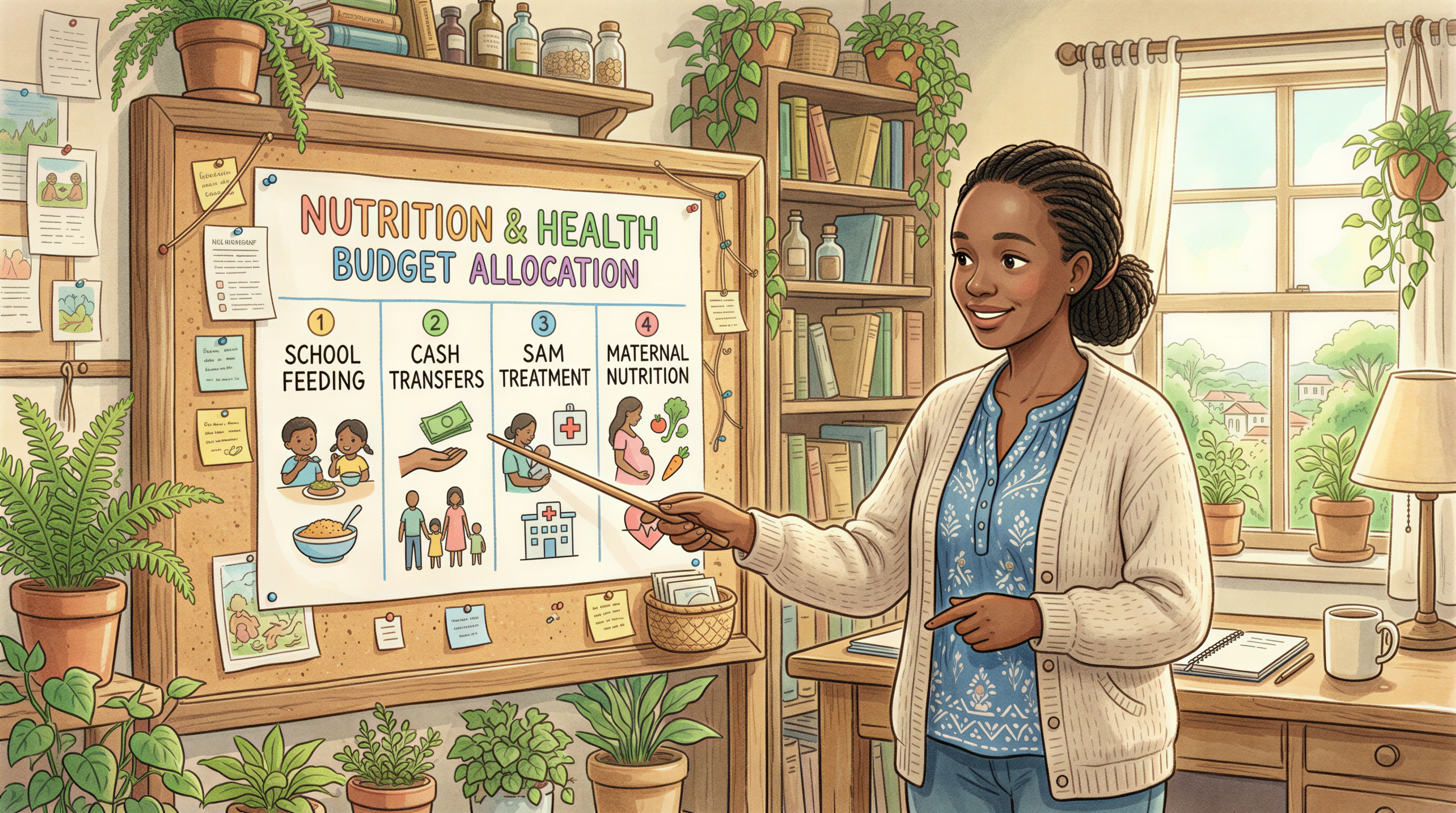
Of that consolidated total, here is the rough split (approximations, drawn from public budget documents and donor reports):
| Category | Approx share | What it covers |
|---|---|---|
| School feeding | 25–30% | Home Grown School Meals, county school feeding |
| Cash transfers | 20–25% | Inua Jamii, vulnerable groups |
| Severe acute malnutrition treatment | 8–12% | RUTF procurement, in-patient stabilisation |
| Maternal & child clinical nutrition | 8–12% | ANC nutrition, growth monitoring, micronutrients |
| County primary care nutrition | 8–12% | CHVs, county-level nutrition staff |
| Donor-funded vertical programmes | 8–12% | UNICEF, WFP, USAID nutrition components |
| Strategic procurement & coordination | 4–6% | MOH HQ, KEBS fortification, NCD strategy |
| Research & evaluation | 1–2% | Universities, institutes, surveys |
What gets less attention than the totals deserve:
1. The cash transfer share is large.
Inua Jamii and adjacent transfer programmes are arguably the most significant nutrition intervention in the budget, even though they are not always counted as "nutrition." When a household receives KSh 2,000 a month, a meaningful share goes to food. Cash transfers move nutrition outcomes more reliably than many vertical health interventions.
2. School feeding is the second-largest line.
But, as covered in school meals when they work, the implementation quality is highly variable.
3. SAM treatment is a small but politically important line.
It is the line that responds to crisis (drought, displacement, severe malnutrition spikes). In bad years, it spikes — meaning the rest of the budget gets squeezed.
4. The "boring" preventive lines — micronutrients, growth monitoring, fortification audit — are chronically underfunded.
This is the structural problem. The most cost-effective interventions are also the ones most likely to be cut when budgets tighten.
What The Budget Misses
Five gaps that are not trivial.
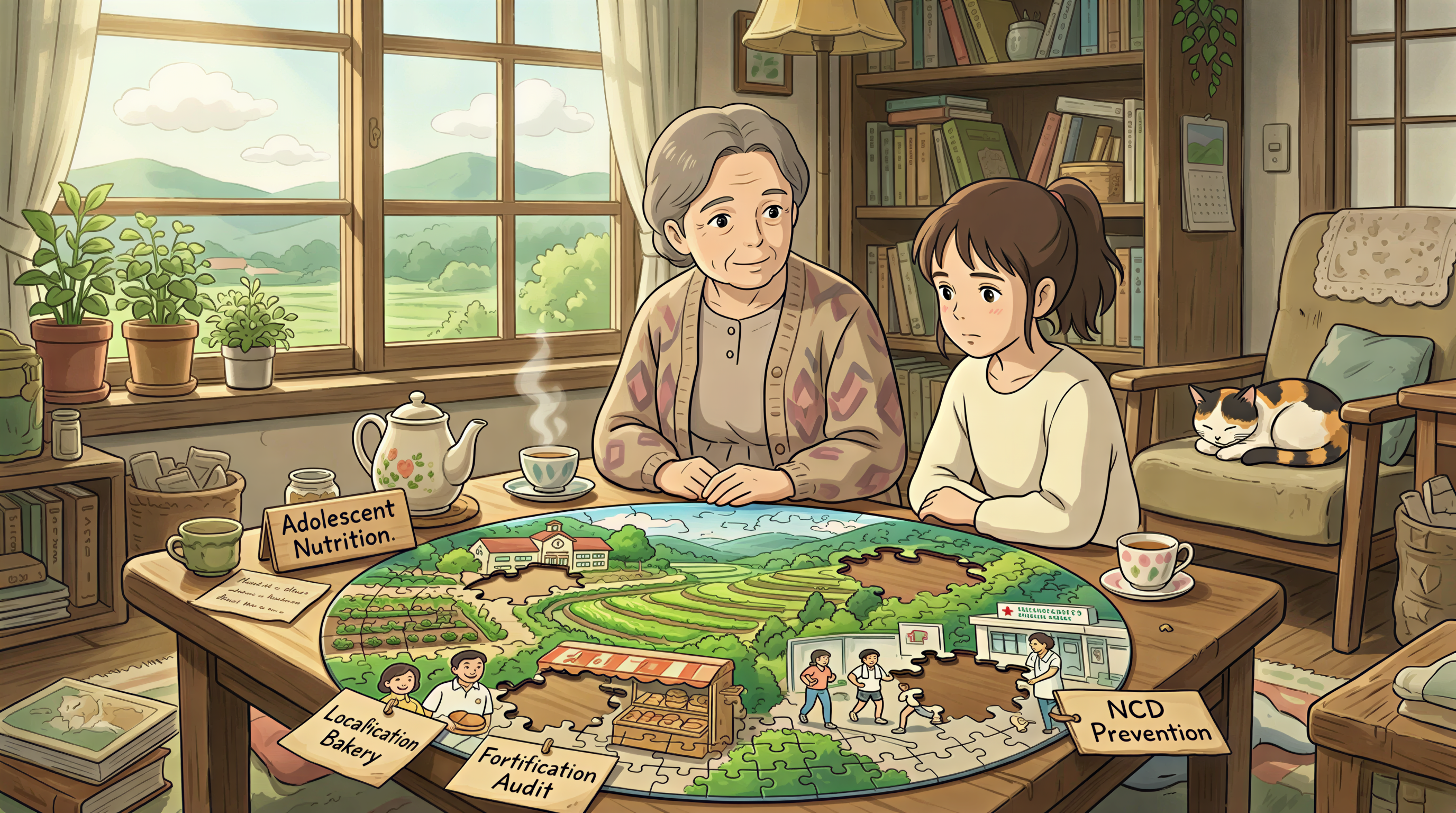
1. Adolescent-girl nutrition.
There is no meaningful national line for it. The total spend across all donor and government programmes for adolescent-girl nutrition specifically is, by my best estimate, under KSh 500 million a year. For the highest-leverage intervention available.
2. NCD prevention through nutrition.
NCDs are now responsible for roughly 40% of all Kenyan deaths. The nutrition-prevention budget for NCDs is a rounding error on the total. We are spending on treatment, not prevention.
3. Fortification audit and enforcement.
As covered, the audit regime is woefully underfunded. The cost of doing it properly is a tiny fraction of the public health benefit. We have not made the spend.
4. Climate-resilient agriculture for nutrition.
We have a climate budget. We have an agriculture budget. The intersection — climate-resilient food production specifically targeted at nutrition outcomes — is not a coherent line.
5. Adequate county capacity.
Devolution moved nutrition implementation to counties. National funding to support the county capacity required has not kept pace. Many county nutrition departments are understaffed and under-resourced relative to the responsibility they carry.
The Comparison That Hurts
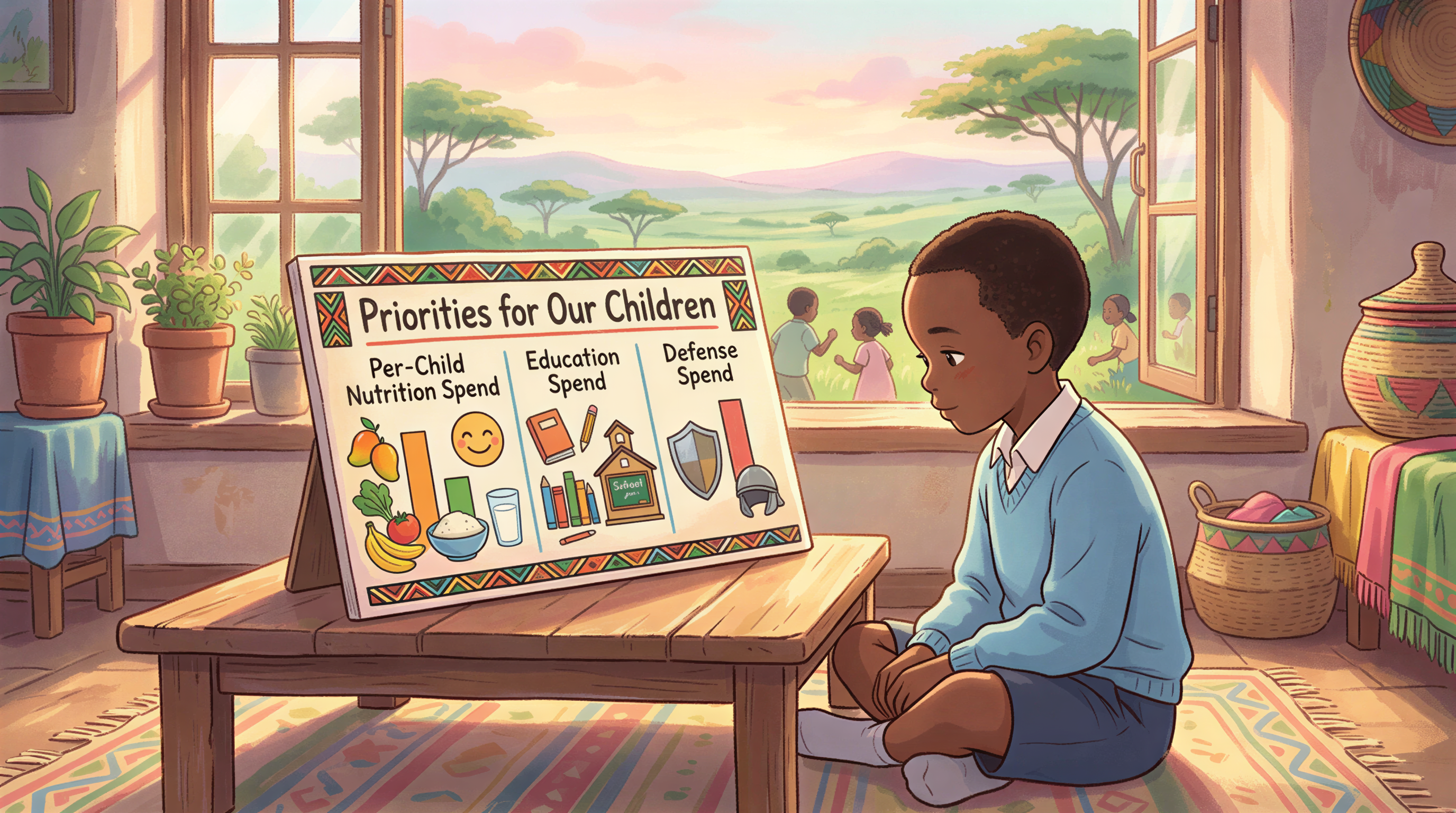
Per under-five child, Kenya spends roughly KSh 4,000–5,500 a year on direct nutrition (excluding cash transfers).
For comparison:
- Per primary school student, Kenya spends roughly KSh 22,000 a year on education
- Per soldier, the defence budget allocates roughly KSh 3.2 million a year
- Per kilometre of new road, the infrastructure budget spends in the tens of millions
I am not arguing those allocations are wrong. I am pointing out the asymmetry. We spend, per child, on the foundational input — adequate nutrition in the first 1,000 days — about 18% of what we spend on the same child's primary education. The order of those investments matters: a stunted child gets less out of every shilling of education that follows.
We are paying for primary school years to do work that adequate early nutrition would have done at a fraction of the cost.
What Better Allocation Would Do
Five reallocation ideas that wouldn't require a larger total budget:
1. Move 5–10% of school feeding into a properly designed adolescent-girl micronutrient programme. Higher impact per shilling than expanding the current school meals model further.
2. Quadruple the fortification audit budget. From a rounding error to a real number. Move funds from less-effective communications budgets if needed.
3. Earmark 2–3% of total nutrition spend for monitoring, evaluation, and adaptive management. Currently chronically underfunded; the loop that improves the rest.
4. Index Inua Jamii transfers to a properly-constructed food-only basket. As discussed in food inflation. The nominal value has been quietly declining in real terms.
5. Create a dedicated NCD-prevention nutrition line. Even at KSh 500 million a year initially. Build the capacity. Scale over a decade.
These are reallocations, not expansions. They do not require fighting Treasury for additional cash. They require the willingness to admit some current line items are doing less work per shilling than alternatives would.
The Politics Of It
There is a reason these reallocations don't happen.
Each existing line has constituents. The county school feeding line has constituent farmers, county officials, vendors, and political actors. The cash transfer line has political beneficiaries. The SAM treatment line has the visibility of crisis response. Cutting any of them produces noise.
The new lines have no constituents yet. Adolescent-girl nutrition has no constituency that lobbies. Fortification audit has no constituency. NCD prevention through nutrition has a future constituency, in the sense that everyone is a future NCD patient — but no current voice.
Politics rewards the present constituents. Public health rewards the future ones. The mismatch is the reason the budget looks the way it does.
Why This Matters
I write about this because most Kenyans, including most people working in the nutrition field, have a vague sense that "nutrition is underfunded" without a specific picture of what better funded would look like. This is a partial picture. It is incomplete. It is far better than the silence that usually fills this space.
For the political-economy companion to this piece, see why Kenya's sugar tax keeps stalling.
The next time you see a politician at a school feeding launch, ask them what's in the BPS for adolescent-girl nutrition. They probably don't know. The answer is depressing. The fact that the question is rare is exactly why the answer doesn't change.
The budget is policy. The line items are choices. Most of the people affected are children who do not vote.
We can do better than this. The numbers exist. The question is whether we will look at them.