When Growth Charts Tell a Story: Understanding Your Child's Progress
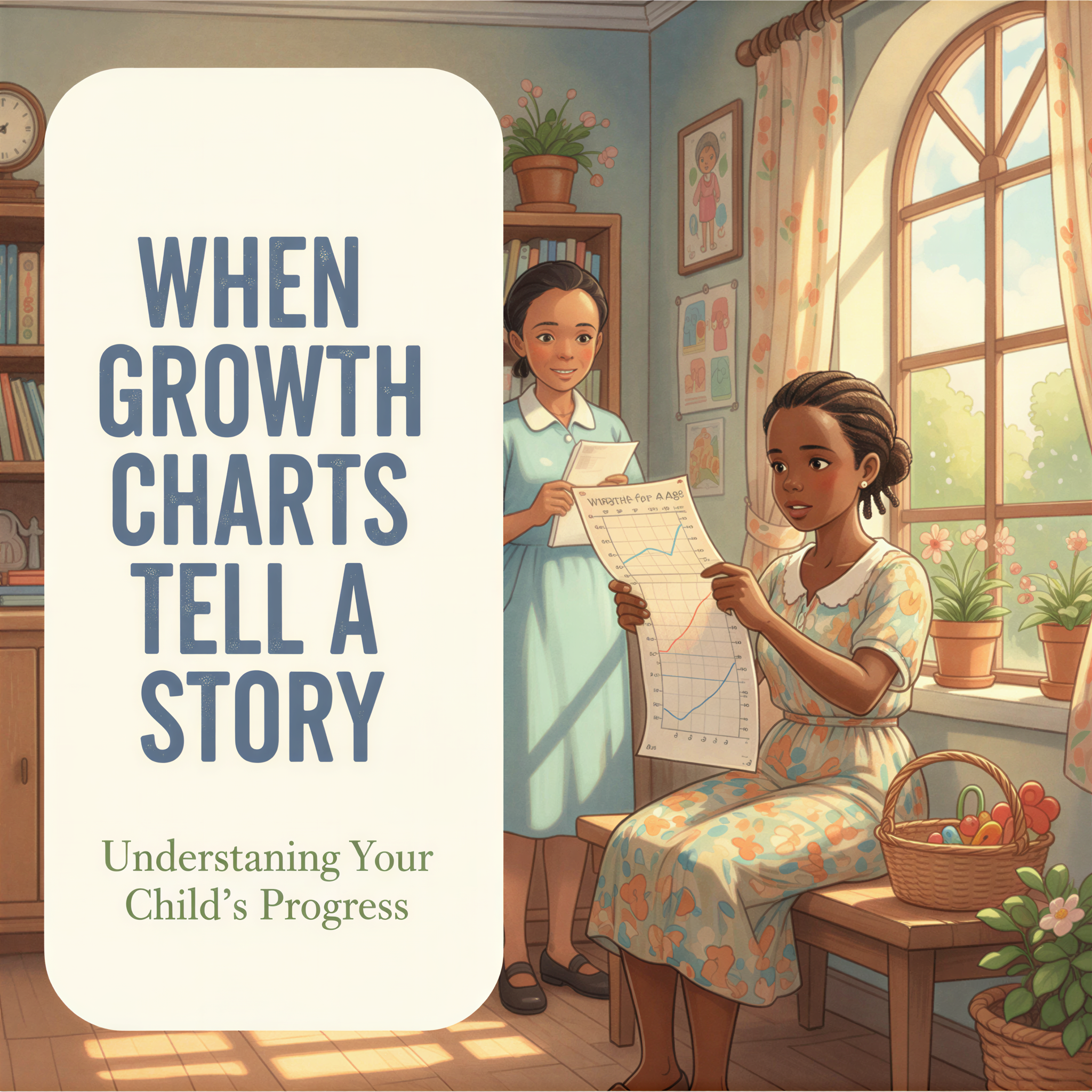
A mother stares at the growth card in her hand.
Lines criss-cross the page. Numbers run along the edges. A dot sits somewhere in the middle, connected to other dots by a wobbly line.
"Is this good?" she asks the nurse. "Is my baby okay?"
The nurse nods quickly and moves to the next patient. The mother walks away, card in hand, still unsure what any of it means.
This happens every day in clinics across Kenya. Growth monitoring happens, but the understanding doesn't follow. Parents leave with cards they can't read about children whose progress they can't track.
Let's change that.
Table of Contents
- Why Growth Monitoring Matters
- Reading the Growth Chart
- What the Colors Mean
- Understanding MUAC
- When to Worry
- What You Can Do at Home
- The Bigger Picture
- Making Sense of It All
Why Growth Monitoring Matters
Your child's growth tells a story.
Steady growth means nutrition is working. The body has enough to build bones, brain, and muscles.
Slowed growth means something is wrong. Maybe not enough food. Maybe frequent illness. Maybe hidden hunger—enough calories but missing key nutrients.
Growth monitoring catches problems before they become crises. A child who's starting to fall behind can be helped. A child who's been malnourished for months is much harder to save.
This is why we measure children every month until age 2, and every three months until age 5. Not because we love paperwork—because early detection saves lives.

Reading the Growth Chart
The Mother-Child Health Booklet (commonly called the clinic card) contains growth charts. Here's how to read them:
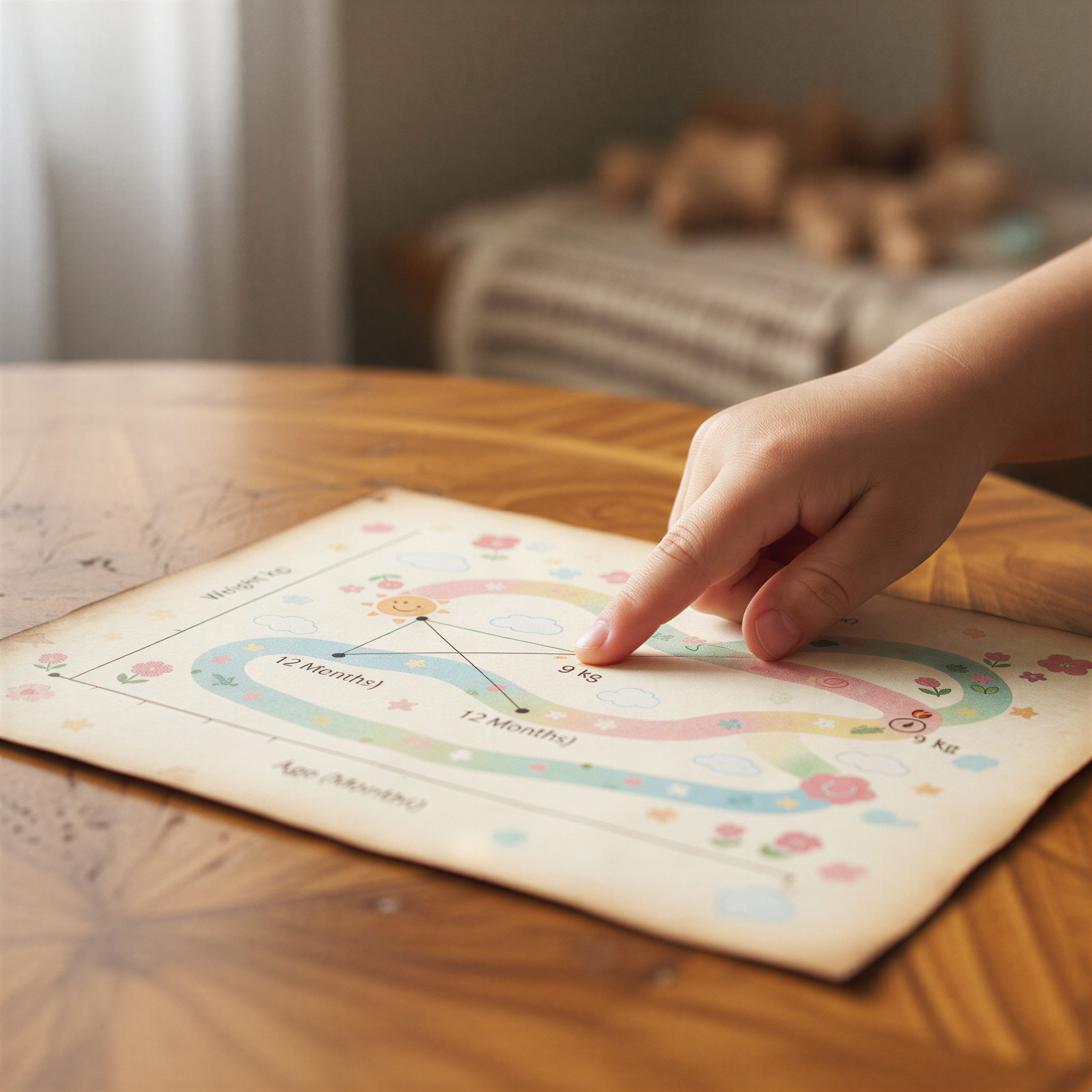
The horizontal axis (bottom): This shows your child's age in months. Find your child's current age here.
The vertical axis (side): This shows weight in kilograms. Find your child's current weight here.
The colored bands: These show the expected range for healthy children. Where the age line and weight line meet—that's where your child's dot goes.
The curve: Each time your child is weighed, a dot is placed. Connecting the dots shows whether your child is:
- Growing well — dots move upward along a curve
- Faltering — dots flatten or go down
- Catching up — dots climb back up after a dip
What the Colors Mean
Most growth charts use color-coded zones:
Green Zone: Your child's growth is in the healthy range. Keep doing what you're doing—breastfeeding, diverse foods, and regular clinic visits.
Yellow Zone: Warning—your child may be at risk. This doesn't mean malnutrition yet, but growth is slowing. Talk to the health worker about feeding practices and potential causes.
Orange/Red Zone: Danger—your child needs immediate attention. This indicates moderate to severe malnutrition. Don't wait. Seek help now.
What matters most isn't a single measurement—it's the pattern.
A child who's always been in the lower green zone is different from a child who dropped from upper green to yellow in two months. The drop matters more than the position.
Understanding MUAC
MUAC stands for Mid-Upper Arm Circumference. It's a quick way to identify acute malnutrition.
How it works: A special tape is wrapped around the upper arm (left arm, between shoulder and elbow). The reading shows color-coded zones.
What the colors mean:
| Color | Measurement | What It Means |
|---|---|---|
| Green | above 13.5 cm | Normal nutrition |
| Yellow | 11.5 - 13.5 cm | Moderate Acute Malnutrition (MAM) |
| Red | under 11.5 cm | Severe Acute Malnutrition (SAM) |
MUAC is especially useful because:
- It's fast (takes 10 seconds)
- It doesn't require scales
- It can be done anywhere—at home, in markets, in mobile clinics
- It directly measures body reserves
If your child's MUAC is in the yellow or red zone, go to a health facility immediately. Don't wait for the next scheduled visit.

When to Worry
Take your child to a health facility if you notice:
On the growth chart:
- Weight has stayed the same for 2 or more months
- Weight has decreased
- The dot has moved from green to yellow
- Growth line is flattening when it should be climbing
Visible signs:
- Clothes that used to fit now seem too big
- Face looks thinner than before
- Ribs are visible
- Skin seems loose
- Less energy and playfulness
Other warning signs:
- Frequent illnesses (more than once a month)
- Diarrhea that keeps coming back
- Hair becoming thin, brown, or falling out
- Swelling in feet, legs, or face
Don't rationalize. Don't wait to see if it improves. Early action makes the difference between quick recovery and permanent damage.
What You Can Do at Home
1. Ask questions at the clinic
Don't leave without understanding:
- Where is my child on the chart?
- Is growth going well or should I be concerned?
- What should I do differently?
2. Keep the card safe
That clinic card is your child's health record. Don't lose it. Bring it to every visit. If it gets damaged, ask for a new one.
3. Know the schedule
- 0-12 months: Monthly visits
- 12-24 months: Monthly or every 2 months
- 2-5 years: Every 3 months
Don't skip visits. Each one is a chance to catch problems early.
4. Watch at home
You don't need a scale to notice changes. Watch for:
- Is my child eating well?
- Does my child have energy to play?
- How do clothes fit compared to last month?
- Is my child meeting developmental milestones?
5. Act on yellow flags
If the health worker says something like "let's watch this" or "come back in two weeks"—go back. These are soft warnings that shouldn't be ignored.

The Bigger Picture
Growth monitoring isn't just about individual children. It's about communities.
When health workers notice many children faltering at the same time, it signals a problem—maybe drought, maybe disease outbreak, maybe an economic crisis affecting food access.
Your child's growth data, combined with others, helps communities and governments respond before crises explode.
Making Sense of It All
That card in your hand isn't just paperwork. It's a story.
A story of the first 1000 days and whether they're being used well.
A story of whether your child is getting enough of the right foods.
A story that you—the parent—can learn to read.
Next time you're at the clinic, don't just let them weigh your child and send you away. Ask:
- "Can you show me where my child is on the chart?"
- "Is this where they should be?"
- "What does this mean for feeding?"
The growth chart speaks. Learn its language. Your child's future may depend on it.