The Community Health Volunteer's Nutrition Toolkit
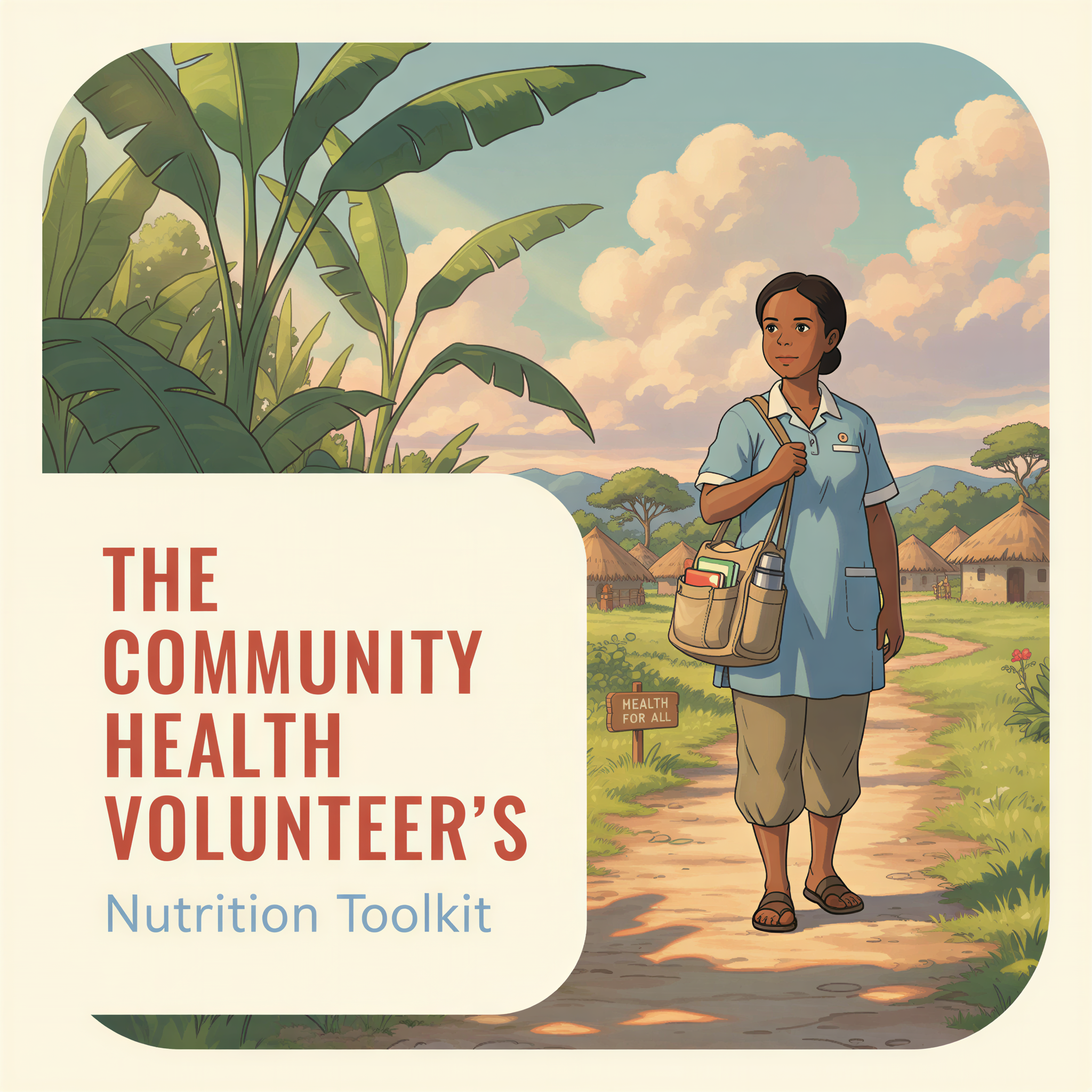
It's 7 AM in Kibera.
Mary pulls her CHV bag onto her shoulder—MUAC tape, register, referral forms, counseling cards. She has 15 home visits today. Fifteen families. Fifteen chances to change a child's life.
Community Health Volunteers like Mary are the backbone of Kenya's nutrition response. No medical degree. No fancy equipment. Just training, commitment, and the trust of their neighbors.

This article is for you—the CHVs who walk the unpaved paths, who knock on doors, who notice when a child is fading before anyone else does.
Here's your nutrition toolkit.
Table of Contents
- Your Role in the Community
- Essential Skills: MUAC Screening
- Key Messages for Different Stages
- Counseling That Works
- Common Myths to Address
- When to Refer
- Tools to Carry
- Taking Care of Yourself
- The Bigger Picture
Your Role in the Community
As a CHV, you are:
The early warning system. You see children before they reach crisis. You catch malnutrition when intervention is still easy.
The trusted advisor. Mothers may not listen to doctors in clinics, but they listen to neighbors who've raised children themselves.
The bridge. You connect families to health services they might not otherwise access.
The eyes of the system. You track who's pregnant, who's delivered, who's struggling.
This is important work. Don't let anyone tell you otherwise.
Essential Skills: MUAC Screening
The MUAC tape is your most powerful tool. Here's how to use it right:
Step 1: Position the child The child should be relaxed. Remove any clothing from the left arm.
Step 2: Find the midpoint Bend the child's elbow at 90 degrees. Find the point halfway between the shoulder and elbow. Mark it if needed.
Step 3: Measure Let the arm hang relaxed. Wrap the tape around the arm at the midpoint. It should be snug but not tight. Read the color where the tape meets zero.
Step 4: Record and act Write down the measurement. Note the color. If yellow or red—refer immediately.
Common mistakes to avoid:
- Measuring the right arm instead of left
- Measuring with elbow bent
- Wrapping the tape too loose or too tight
- Reading at the wrong point on the tape

Key Messages for Different Stages
You don't need to teach everything. Focus on the right message for each situation.
For pregnant women:
- Eat one extra meal each day
- Take iron-folic acid tablets every day
- Attend all antenatal visits
- Deliver at a health facility
For mothers with babies 0-6 months:
- Breastfeed only—no water, no porridge, no other milk
- Breastfeed on demand, day and night
- Let baby finish one breast before switching
- Your breast milk is the perfect food
For mothers with babies 6-12 months:
- Continue breastfeeding AND start complementary foods
- Porridge should be thick, not watery
- Add variety: vegetables, protein, fruits
- Feed 2-3 times per day plus snacks
For mothers with children 1-2 years:
- Continue breastfeeding until age 2
- 3-4 meals per day plus snacks
- Include animal foods when possible
- Child needs their own plate and attention during meals
Keep it simple. One or two messages per visit. Let the mother practice before you add more.
Counseling That Works
Good counseling isn't lecturing. It's conversation.
The GATHER approach:
G — Greet warmly. Build trust. A — Ask before telling. "What does your baby eat?" "How often do you breastfeed?" T — Tell relevant information. Just 1-2 key messages. H — Help choose solutions. Work with what the family has. E — Explain how to do it. Be specific. R — Return visit date. Set expectations for follow-up.

Questions to ask:
- "What did your child eat yesterday?"
- "How many times did you breastfeed in 24 hours?"
- "What foods are available in your home?"
- "What challenges are you facing with feeding?"
- "Who helps you care for the baby?"
What NOT to do:
- Don't lecture or scold
- Don't make mothers feel judged
- Don't give too much information at once
- Don't assume—ask first
- Don't promise what you can't deliver
Common Myths to Address
Families believe many things about feeding. Some help. Some harm. Here are common myths you'll encounter:
"Babies need water in hot weather." Truth: Breast milk is 88% water. Exclusively breastfed babies don't need extra water, even in heat. Water fills the stomach without nutrition.
"Thin porridge is easier for babies to swallow." Truth: Thin porridge fills babies with water, not nutrients. Thick porridge gives calories and energy. If it runs off the spoon, it's too thin.
"My milk isn't enough—it looks too thin." Truth: All breast milk looks thin at the start of a feed. The rich, fatty milk comes later. Let the baby finish one breast fully.
"Eggs are too heavy for young children." Truth: Eggs are one of the best foods for babies—protein, iron, and brain-building nutrients. Safe from 6 months.
"If the child refuses, don't force." Truth: Children may need to try new foods 10-15 times before accepting them. Gentle persistence, not force.
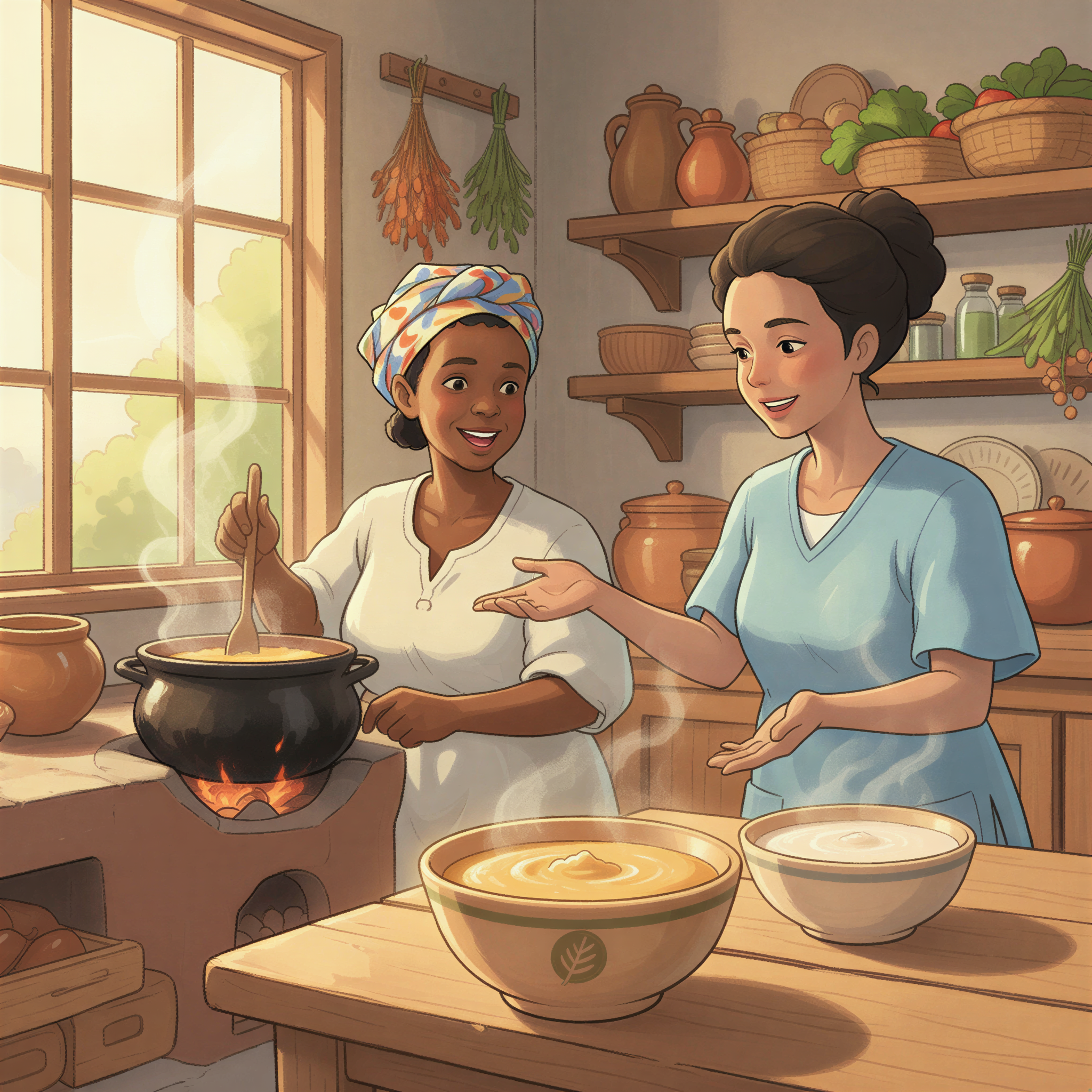
Address myths gently. Don't make families feel ignorant.
When to Refer
Some situations need facility-level care. Refer immediately if you see:
MUAC in red zone (under 11.5 cm) This is Severe Acute Malnutrition. The child needs therapeutic feeding.
Swelling (edema) in both feet Press gently on the top of the foot. If a pit remains for a few seconds, this is edema—a danger sign.
Too weak to eat or breastfeed The child needs urgent medical attention.
Visible severe wasting Very thin, "skin and bones" appearance, baggy pants sign (loose skin on buttocks).

Danger signs of illness:
- Unable to drink or breastfeed
- Vomits everything
- Convulsions
- Unusually sleepy or unconscious
- Severe chest indrawing (difficulty breathing)
Write a referral note with:
- Child's name and age
- MUAC measurement
- What you observed
- Your name and contact
Tools to Carry
Your CHV bag should include:
- MUAC tape (check regularly that it's not stretched)
- Register/notebook
- Referral forms
- Counseling cards or flipchart
- Pen
- Hand sanitizer or soap
- Your phone (if you have one)
- Water for yourself
Taking Care of Yourself
This work is hard. You see suffering. You can't always help. You're often unpaid or underpaid.
Remember:
- You can't save everyone. Do what you can with what you have.
- Take breaks. Burnout helps no one.
- Connect with other CHVs. Share experiences and support each other.
- Celebrate wins. When a child recovers, that's your win too.
- Ask for support. If something is beyond your ability, refer or ask your supervisor.
The families you serve are grateful, even when they don't say it. The system depends on you, even when it doesn't show it.
You matter.
The Bigger Picture
You're not just checking MUAC measurements. You're building a generation.
Every mother you counsel makes better choices for years to come. Every child you screen might be saved from permanent damage. Every referral you write could save a life.
When people ask about breaking the cycle of malnutrition, you're the answer.
Keep walking those paths. Keep knocking on those doors. Keep doing the work that matters most.