Why Kenya's Sugar Tax Keeps Stalling — and What That Costs Us
Every two years, a sugar tax bill quietly enters Parliament.
Every two years, it quietly dies.
A different MP. A different committee. A different budget cycle. Same outcome.
Meanwhile, the average Kenyan now consumes around 22 kg of sugar a year. Type 2 diabetes diagnoses among under-40s are rising in every county hospital with a working lab. And a 2-litre soda still costs less than a litre of milk.
This is not an accident. It is a policy outcome.
Table of Contents
- What A Sugar Tax Actually Is
- The Three Reasons It Keeps Stalling
- Who Pays For The Stall
- What A Working Tax Would Look Like
- The Conversation We Should Be Having
What A Sugar Tax Actually Is
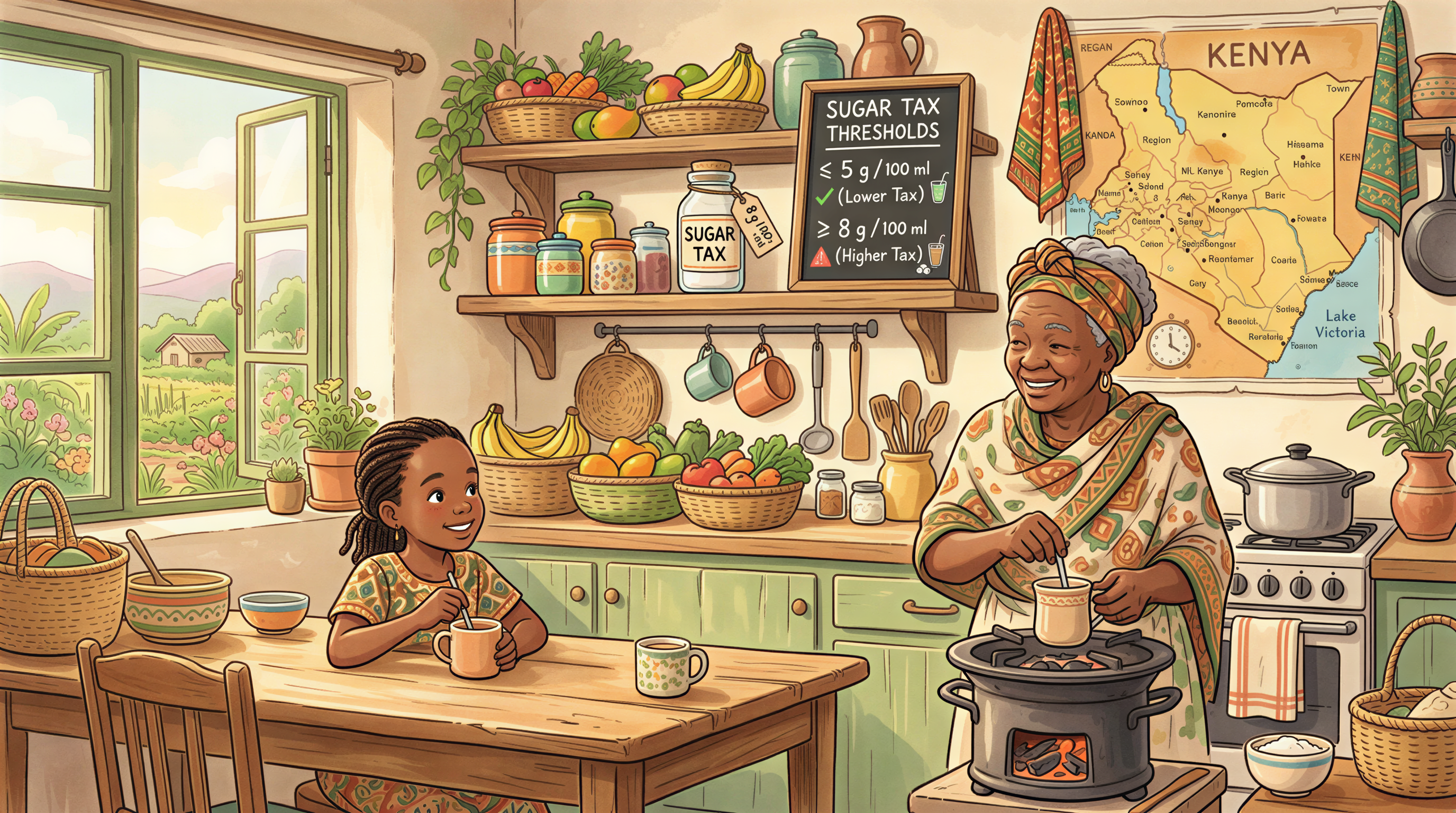
A sugar-sweetened beverage (SSB) tax is a per-litre or per-gram excise applied to drinks above a sugar threshold — typically 5 g or 8 g per 100 ml.
The WHO has recommended SSB taxes since 2016. The evidence is no longer thin. Mexico (2014), the UK (2018), South Africa (2018) and Saudi Arabia (2017) all show measurable drops in sugar purchases — between 6% and 30% — within two years.
In every case, two things happened:
- Manufacturers reformulated. Sugar content fell.
- Consumers shifted, particularly in lower-income households where the tax bites hardest.
A well-designed sugar tax in Kenya could plausibly cut SSB consumption by 10–15% within three years and generate KSh 6–9 billion in annual revenue, ring-fenced for the NCD strategy that the Ministry of Health currently funds with hopes and prayers.
So why doesn't it pass?
The Three Reasons It Keeps Stalling
1. The bottling lobby is well-organised and well-funded.
The major bottlers in Kenya employ thousands directly and tens of thousands indirectly through distribution. Every time a sugar tax bill gets traction, the talking points appear in op-eds within ten days: jobs at risk, regressive tax on the poor, government overreach. The op-eds are not coincidences.
2. The framing is consistently lost.
Sugar tax proponents talk about "obesity" and "lifestyle disease." This frames it as a personal-failure problem and invites a personal-freedom rebuttal. The right frame is: the cost of treating diabetes in this country is paid by all of us, through public hospitals, lost productivity, and household catastrophic spending. A sugar tax is a partial recovery of those costs from the products that generate them.
We've never won the framing fight. The bill dies in committee on "freedom" grounds while the bills for amputations and dialysis quietly grow on the next ledger.
3. The Treasury wants the revenue but doesn't want the politics.
Off the record, several Treasury officials I have spoken to support the tax. On the record, none of them will spend political capital pushing it. So it gets pencilled into draft Finance Bills, lobbied out before second reading, and re-pencilled in two years later. The cycle is the policy.
Who Pays For The Stall
Let me be specific about what "the cost of inaction" actually means. It is not abstract.
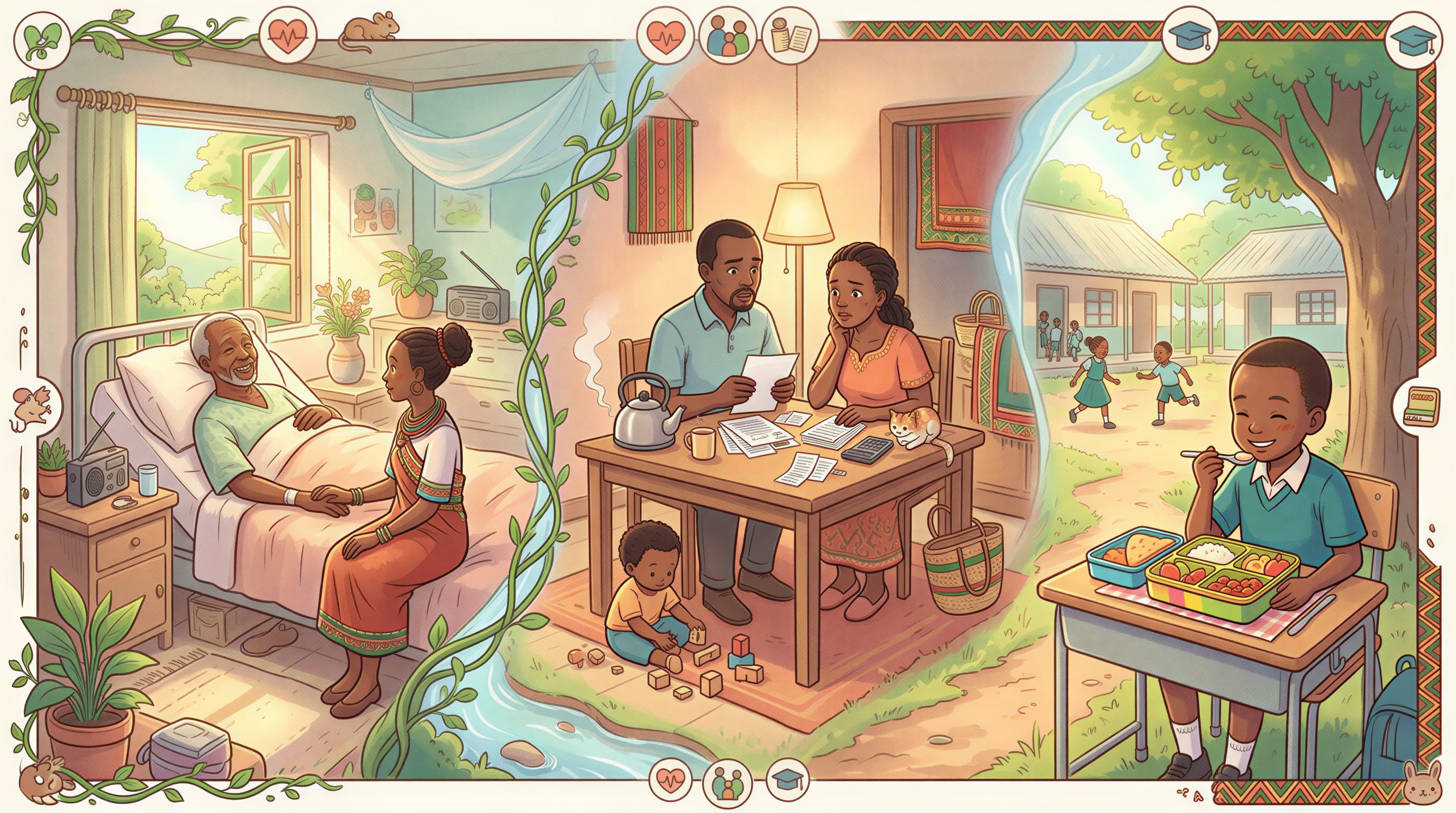
- County hospitals. The MOH estimates NCDs already consume around 30% of all hospital admissions. The trajectory is up, not down.
- Households. A diabetic Kenyan on insulin spends KSh 4,000–8,000 a month before food, rent, and school fees. Most stop treatment within a year.
- Children. Childhood obesity rates among urban Kenyan school-children have crossed 10%. We are stunting some children for too little food and others for too much sugar — sometimes in the same county. See the hidden hunger problem.
- Productivity. Lost work days due to diabetes-related complications cost the economy an estimated KSh 90 billion a year. The sugar tax we keep failing to pass would generate roughly a tenth of that.
We are not "weighing trade-offs." We are choosing to absorb a known cost so a small lobby can keep selling the same product at the same price.
What A Working Tax Would Look Like
If we are going to do this, do it right.
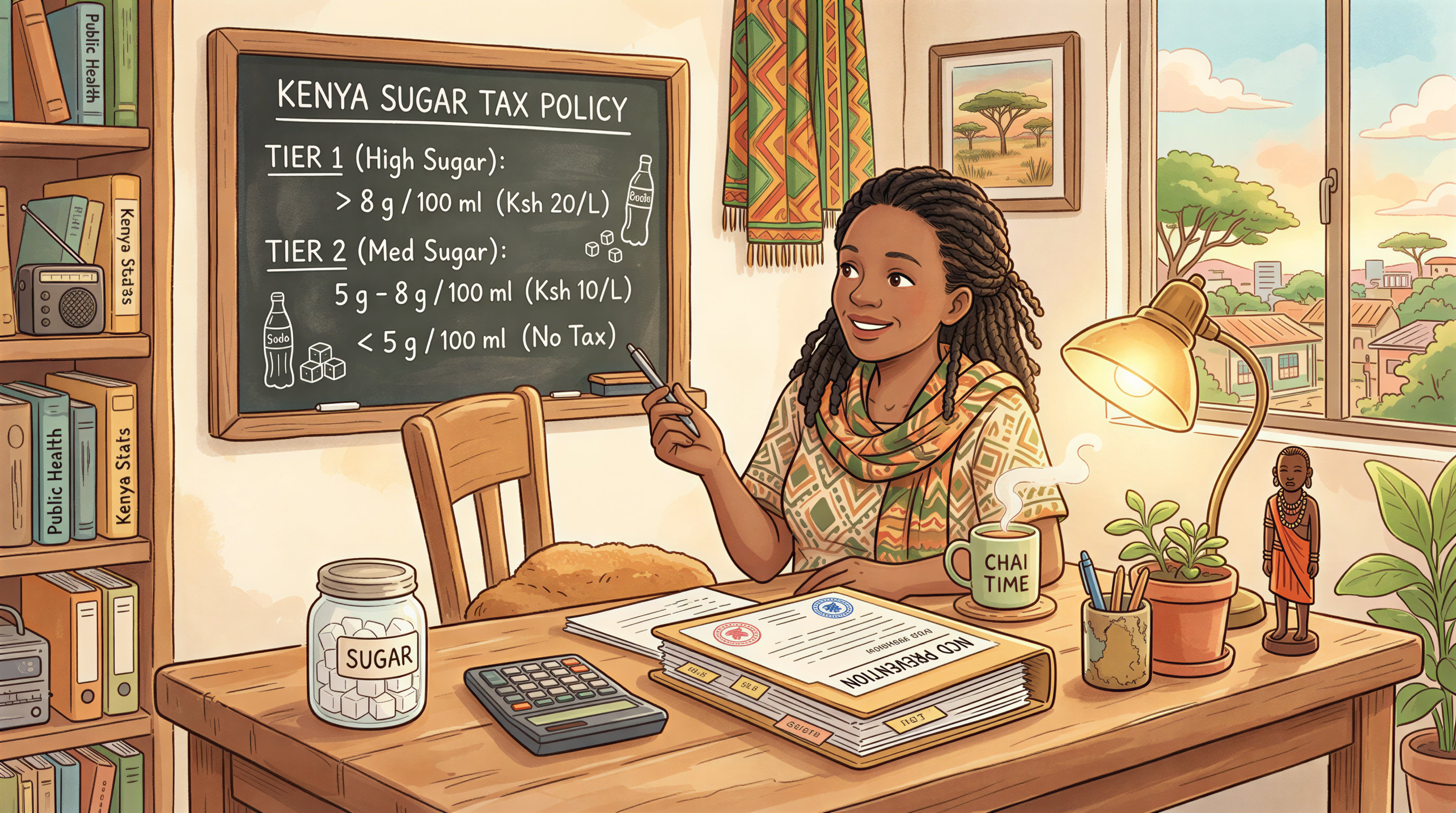
- Tiered, not flat. Drinks above 8 g sugar / 100 ml taxed at one rate. Drinks above 5 g / 100 ml taxed at a lower rate. Below 5 g, no tax. This rewards reformulation, which is where the public health win lives.
- Apply to all SSBs. Sodas, energy drinks, ready-to-drink teas, sweetened juices, flavoured milks. No carve-outs.
- Ring-fence the revenue. NCD prevention, school nutrition, and primary care diabetes programs. Make the trade transparent.
- Reformulation incentive. Five-year sunset on the threshold so manufacturers know they must keep reducing.
- Front-of-pack warning labels alongside, so consumers can see what they are buying. Chile's experience shows the combination — tax plus warning label — is more effective than either alone.
None of this is novel. The blueprint exists. We are simply choosing not to use it.
The Conversation We Should Be Having
I am not anti-soda. I drink one occasionally. I am not anti-business. I work with private partners every week.
I am against pretending we don't know what's happening. We have the data. We have the policy template. We have the revenue case.
What we don't have is the political courage to admit that a 50 ml shift in liquid consumption is not "lifestyle" — it is the difference between a generation that develops diabetes at 35 and one that doesn't.
The sugar tax keeps stalling because the people it benefits don't yet realise it benefits them, and the people it costs are organised. That asymmetry will not fix itself.
If you are an MP, a health journalist, or a county health director reading this: ask better questions next time the bill comes around. Ask who is funding the op-eds. Ask whose hospital bills are paying for our delay. Ask which jobs we're "protecting" — and which ones we're letting diabetes quietly delete.
This is what the price of a plate looks like at national scale.
We can keep pretending. Or we can pass the bill.