School Meals — Why the Program Works (When It Works)
A teacher in Lodwar can tell which children ate by 9 AM.
So can the test scores.
Kenya runs one of Africa's larger school feeding programmes. It reaches around two million primary school children, mostly through the Home Grown School Meals Programme and a handful of donor and county-run initiatives. The headline numbers are real. The implementation reality is more textured than the headlines suggest.
Some school feeding works. Some school feeding is photo-op infrastructure. The difference between the two is not subtle, and it is not random. This is what separates the programmes that move learning, attendance, and nutrition outcomes from the ones that don't.
Table of Contents
- What School Feeding Is Actually Trying To Do
- What Separates The Working Programmes
- What's Holding The National Programme Back
- What Better Policy Would Do
- What This Means For Kenya
What School Feeding Is Actually Trying To Do
Three goals, in roughly equal weight:
1. Education. A child who has eaten by 11 AM concentrates. A hungry child does not. School meals lift attendance, retention, and performance — particularly in regions where household morning food is precarious. See breakfast shapes Kenya's future.
2. Nutrition. A daily school meal can deliver up to a third of a primary-age child's caloric and micronutrient needs, especially when fortified or designed with deliberate diversity.
3. Social safety net. In food-insecure households, school meals are a quiet income transfer — they reduce the daily food-cost burden on the family, which can stabilise household budgets and reduce other deprivation.
A well-run programme delivers on all three. A poorly-run programme delivers a photo opportunity, a procurement bill, and disappointing data.
What Separates The Working Programmes
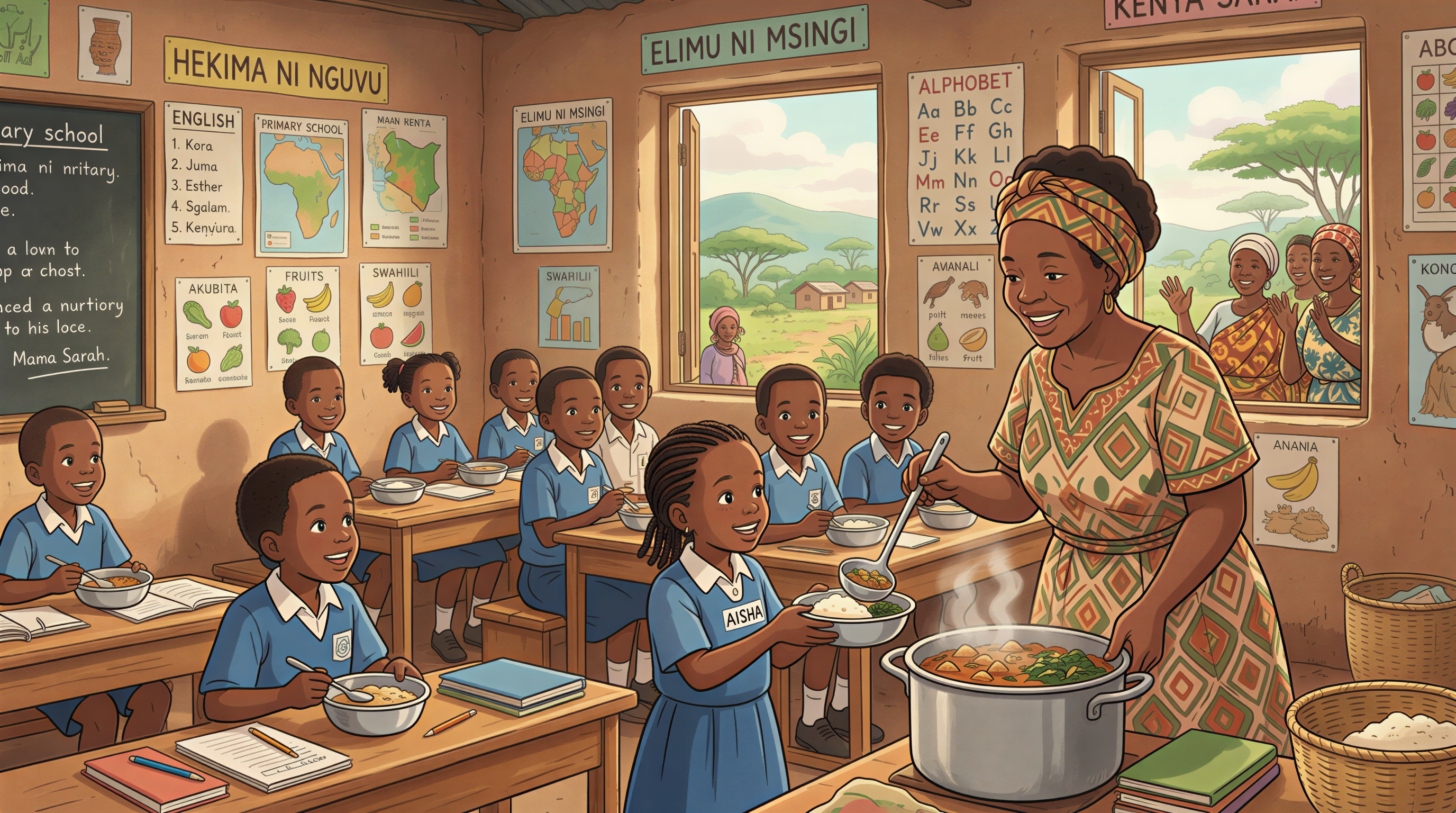
Across the literature and across what I have seen on the ground in Kenyan counties, six things consistently differentiate school feeding programmes that move outcomes from those that don't.
1. Reliability
A school meal that arrives every day, on time, all term, every term — across years — does the work. A programme that misses 30% of school days because of supply chain failures, late funding, or political weather, does not.
This sounds obvious. It is the most violated rule in real-world implementation. The mental model that matters: a child's growth and learning is built on consistency. Five great meals followed by three weeks of nothing is worse than three average meals every week, every term.
The working programmes have:
- Multi-source procurement (one supplier failure doesn't stop meals)
- A working budget that doesn't gap-out at term boundaries
- A storage and stock-rotation system that survives one bad week
2. Local procurement done well
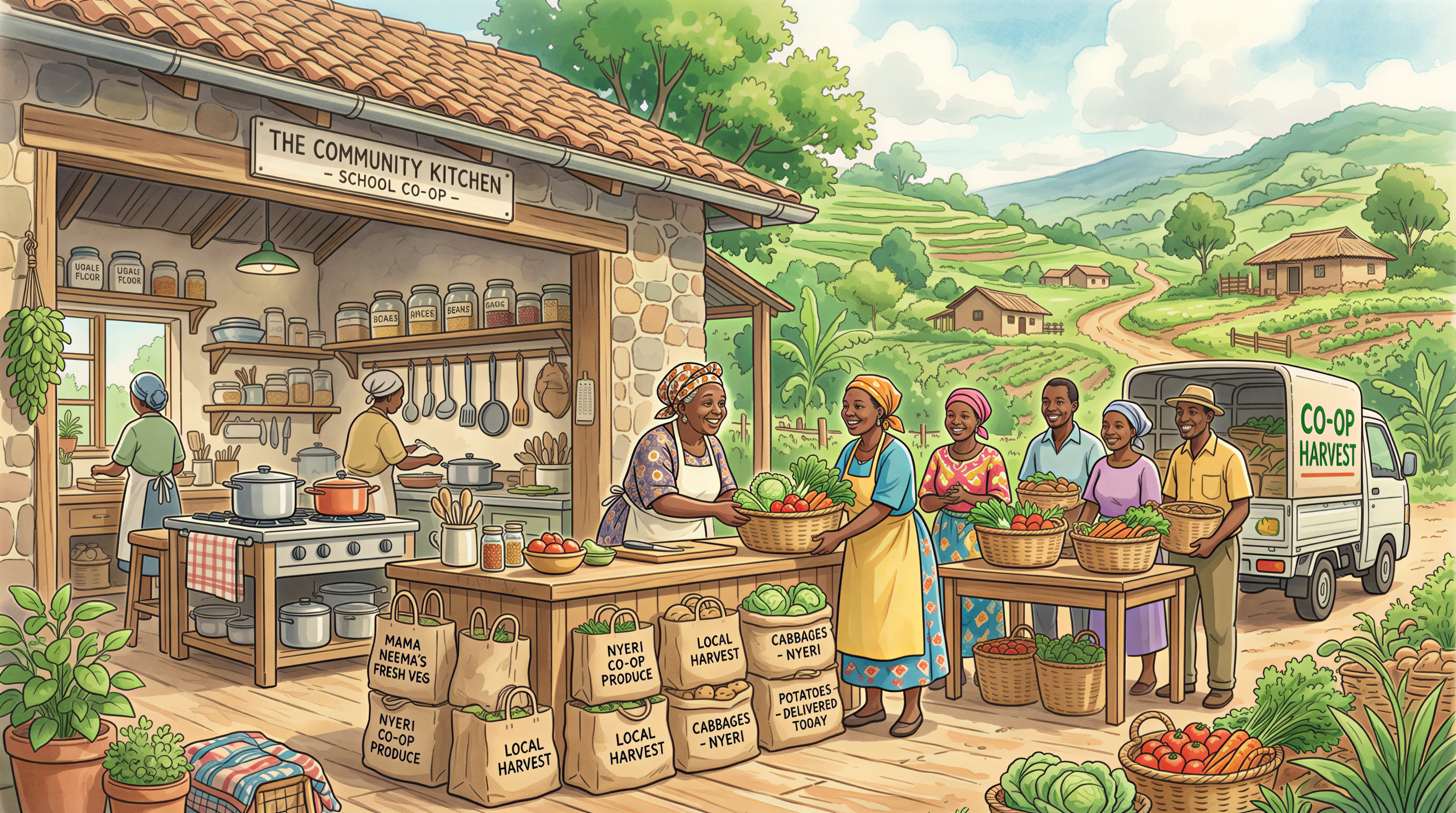
The Home Grown School Meals model — where food is procured from local smallholder farmers — is intuitively appealing. Done well, it is excellent. Done poorly, it is a disaster.
What "done well" means:
- Aggregation through cooperatives or county warehouses, not direct school-by-school purchase
- Clear quality and food-safety standards, audited
- Transparent pricing that pays farmers fairly without inviting collusion
- Multiple participating farmers per school, not single-supplier dependence
- A complaint and reporting channel that catches problems before they hit children's plates
When these are absent, local procurement degrades into local-political patronage. The programme's nutrition mission gets traded against a procurement chief's network. The food on the plate becomes whatever this month's politics allowed.
3. Nutrition design, not just calorie delivery
A working programme designs the meal for protein, micronutrient, and energy adequacy — not just stomach-filling carbohydrate. This means:
- Beans, omena, eggs, or another protein source most days, not weekly
- Indigenous vegetables and other dense greens — see the AIV piece
- Fortified foods where applicable
- Iodised salt, oil, and other fortified inputs as standard
The default Kenyan school meal — githeri, mostly — is a calorie hit and a partial protein hit. It can be much better with marginal cost increases. The programmes that engage a real nutritionist in menu design rather than a procurement officer alone deliver substantially more nutrition per shilling.
4. Adolescent-girl-aware design
This is the gap I keep pointing at — see adolescent girl nutrition. A primary school feeding programme can be excellent for under-13s and quietly fail the upper-primary girls who need iron, calcium, and protein in different proportions.
The working programmes either extend into early secondary or specifically design upper-primary meals around adolescent needs. The Indian and Indonesian models have specific adolescent micronutrient additions worth borrowing.
5. Community and parental investment
Programmes embedded in parent-teacher structures, where parents contribute (small fees, in-kind food, cooking labour, oversight), perform consistently better than top-down externally-funded ones — even when total resources are lower.
This is uncomfortable for funders who want a "free" programme that solves the problem from above. The evidence is clear: skin in the game improves quality and durability. Programmes built like vending machines (food appears, parents passive) tend to fail when the funding cycle ends.
6. Honest measurement and adaptation
The best school feeding programmes I have seen run quarterly outcome reviews — attendance, weight, anthropometric data, teacher survey — and adjust. Menu changes when a meal is consistently rejected. Procurement changes when supply fails. The boring, iterative loop is the actual work.
The worst run on annual or biennial cycles where decisions are made far above the school level, with feedback that takes 18 months to inform anything.
What's Holding The National Programme Back
Five structural issues, in rough order of damage:
1. Funding gap-outs at term boundaries. Treasury cycles do not match school cycles. Schools regularly run out of food for 3–6 weeks of any given year while funds are reauthorised. The "programme reaches 2 million children" stat hides the fact that those 2 million don't get fed every day.
2. County variation in implementation. Devolved health and education means school feeding implementation quality varies enormously by county. The same national policy produces different programmes in Nyandarua and Tana River.
3. Procurement integrity. Across counties, procurement integrity ranges from excellent to deeply troubled. The single biggest implementation issue, in my reading.
4. Menu inertia. Most school programmes serve roughly the same menu they served fifteen years ago. The nutrition science has moved on. The procurement model has not.
5. Insufficient adolescent extension. As above. The under-13 focus has been the historical default. The adolescent extension has been slow.
What Better Policy Would Do
Five interventions, none of them large, all of them tested elsewhere:
- Multi-year ring-fenced funding for the national programme so term-boundary gap-outs stop.
- County-level public scorecards — meals served, nutrition design quality, attendance impact, audit compliance. Quarterly.
- A central nutrition design unit at the Ministry of Education, with real nutritionists, that revises menus annually based on outcome data.
- Mandatory iron-folate weekly supplementation in upper primary in the highest-anaemia counties. Cheap. Proven.
- Smallholder integration done properly — through cooperatives, with quality standards, with audit. Not the loose "buy from someone local" model.
These are not exotic. The blueprints exist. The execution gap is the policy problem.
What This Means For Kenya
A working school feeding programme is one of the highest-return public health and education investments Kenya can make. The cost is moderate. The impact compounds across decades — better-fed children grow into better-educated adults who earn more and pay more in taxes and live healthier and pass less stunting to the next generation.
We are doing a partly-working version. We could be doing a much better version. The gap is not technical. It is procurement integrity, funding consistency, and menu modernisation.
For the related programmes that intersect with this — particularly stunting, breakfast, and adolescent girls — the school is the most powerful single delivery channel we have. We should treat it accordingly.
The teacher in Lodwar already knows which children ate. We should make sure the answer is "all of them" — not because the budget allowed it, but because the system was designed to deliver it.