The First Meal of the Day: Why Breakfast Shapes Kenya's Future
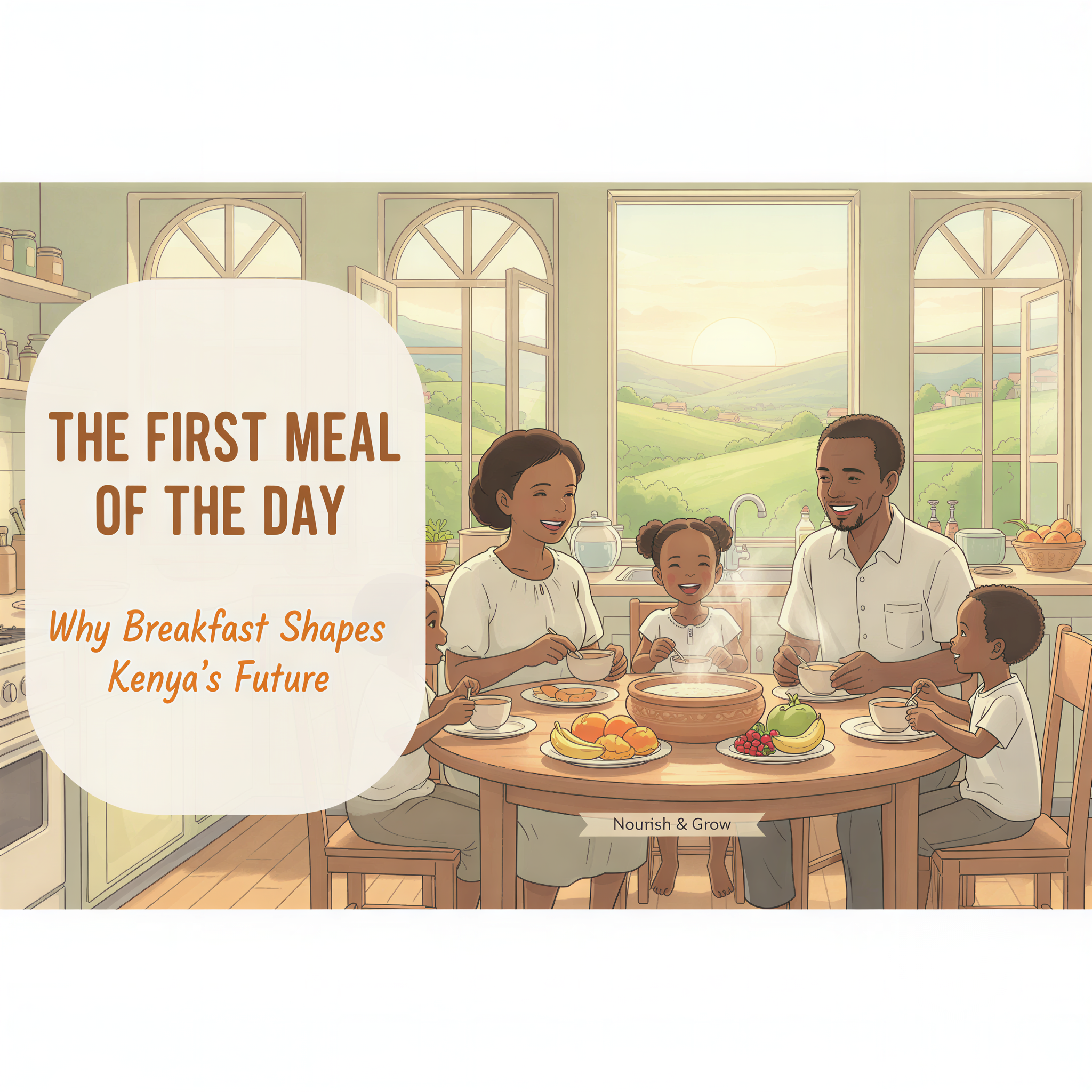
It's 6:30 AM.
A mother rushes to get three children ready for school. There's no time. There's barely enough money. Tea and bread will have to do.
At 10 AM, her son stares at the chalkboard. The teacher is explaining fractions. The words float past him. His stomach growls. His head aches. He can't concentrate.
This scene repeats across Kenya every school day. Millions of children starting their day on empty—or nearly empty—stomachs. And paying for it with their futures.
Breakfast isn't just a meal. It's an investment. And Kenya can't afford to keep skipping it.

Table of Contents
- Why Breakfast Changes Everything
- The Current Reality
- Affordable Breakfast Ideas
- Quick Preparation Strategies
- What to Avoid
- Making It Work on a Budget
- School Meal Programs: Not Enough
- Creating a Breakfast Habit
- The Bigger Picture
Why Breakfast Changes Everything
The science is clear: children who eat breakfast perform better. Not a little better—significantly better.
Academic performance:
- Better concentration and attention spans
- Improved memory and problem-solving
- Higher test scores
- Lower rates of tardiness and absenteeism
Physical health:
- Steadier energy throughout the morning
- Better behavior and fewer discipline problems
- Lower risk of obesity (yes, eating breakfast helps maintain healthy weight)
- Stronger immune function
Nutritional impact:
- Breakfast eaters get more vitamins and minerals overall
- Better iron and calcium intake
- More dietary fiber
- Improved diet quality for the entire day
What happens without breakfast:
A child who skips breakfast is running on empty. Blood sugar drops. The brain—which uses 20% of the body's energy—can't function optimally. Attention wanders. Learning stalls. Irritability rises.
By mid-morning, this child is working at a fraction of their capacity. And the damage compounds: missing today's lesson makes tomorrow's lesson harder to understand.
The Current Reality
Let's be honest about why Kenyan children skip breakfast.
Time pressure. Morning routines are rushed. Parents leave for work early. Children must travel far to school. There's simply not enough time.
Money. Food prices keep rising. When budgets are tight, breakfast often gets cut. There's a perception that lunch and dinner matter more.
Habit. In some families, adults don't eat breakfast and don't think children need it either.
Lack of knowledge. Parents may not know how much breakfast matters or what makes a good breakfast.
School feeding gaps. Where school meal programs exist, they often provide lunch—but nothing in the morning when children arrive hungry.
These are real barriers. But they can be overcome with the right strategies and information.
Affordable Breakfast Ideas
Good breakfast doesn't mean expensive breakfast. Here are options that work on a Kenyan budget:
Best Options (Under 30 KSH per child)
1. Uji with a protein boost
Plain porridge fills stomachs but doesn't provide complete nutrition. Add:
- Groundnut paste (1-2 tablespoons)
- Milk or milk powder
- Egg (stirred in while cooking)
- Omena powder
This transforms cheap uji into a nutritious breakfast.
2. Sweet potato and tea with milk
Boiled sweet potato provides energy that releases slowly. Orange-fleshed varieties add vitamin A. Add milk to the tea for protein.
3. Leftover beans and ugali
Last night's supper makes an excellent breakfast. Beans provide protein and iron. This is actually more nutritious than bread and tea.
4. Egg and bread
One egg costs about 15-20 KSH. Split between two children with bread, this provides affordable protein.
5. Fermented porridge (uji wa unga)
Traditional fermented porridge is more nutritious than fresh porridge—fermentation increases nutrient availability and adds beneficial bacteria.

Good Options (30-60 KSH per child)
6. Chapati with beans or eggs
More filling than bread, provides better nutrition, especially with a protein filling.
7. Githeri (maize and beans)
A complete protein combination. Prepare the night before and warm in the morning.
8. Rice and beans
Similar to githeri—complete protein, filling, affordable.
9. Boiled eggs with fruit
Two boiled eggs with a banana or piece of pawpaw provides protein, energy, and vitamins.
10. Smocha (egg sandwich) at home
Make your own instead of buying on the street—cheaper and more hygienic.
Nutrient-Boosting Add-Ins
Small additions that make any breakfast better:
- Groundnut paste (protein, healthy fat)
- Milk powder (protein, calcium)
- Fruit (vitamins, fiber)
- Leafy greens in eggs (iron, vitamins)
- Seeds like pumpkin or sesame (zinc, iron)
Quick Preparation Strategies
Time is the enemy of breakfast. Here's how to win:
The night before:
- Boil eggs and store in fridge or cool place
- Soak beans for faster morning cooking
- Prepare githeri or beans for reheating
- Set out bowls, cups, and utensils
- Measure out porridge ingredients
Batch cooking:
- Cook a large pot of beans on Sunday
- Portion and store for the week
- Reheat portions each morning
Two-minute breakfasts:
- Pre-boiled eggs + fruit
- Leftover supper + tea
- Bread with groundnut paste
- Banana + milk
Prep while children dress:
- Start porridge before waking children
- Reheat leftovers while they wash up
- Have ready-to-eat options for the slowest mornings
Involve older children:
- Teach them to boil eggs
- Let them prepare their own simple breakfasts
- This builds life skills AND saves time
What to Avoid
Not all breakfast is good breakfast. Some common choices do more harm than good:
Plain tea only
Tea alone provides almost no nutrition. It fills the stomach temporarily but leaves children hungry within an hour. The tannins in tea also block iron absorption from other foods.
Sugary biscuits and sweets
These cause blood sugar to spike and crash. Children get a brief energy burst followed by fatigue and difficulty concentrating.
Soda or sweet drinks
Liquid sugar. No nutrition. Contributes to dental problems and obesity.
Mandazi alone
Deep-fried flour provides calories but few nutrients. Acceptable occasionally, but not as a daily breakfast foundation.
Skipping entirely
Worse than any of the above. Even a small, imperfect breakfast is better than nothing.
The sugar trap:
Many parents think sweet = energy for children. In reality, sugar without protein and fiber causes energy swings. A child who eats sugary breakfast will crash mid-morning—exactly when they need to be learning.

Making It Work on a Budget
Nutrition doesn't have to be expensive. Here's how to afford breakfast:
1. Prioritize breakfast in your budget
If you can only afford two full meals, make them breakfast and supper. Children need morning fuel more than they need a large lunch.
2. Use leftovers strategically
Cook extra at dinner specifically for morning. This costs nothing extra and saves morning preparation time.
3. Buy in bulk
Groundnuts, beans, flour, and eggs are cheaper in larger quantities. If storage is a concern, share bulk purchases with neighbors.
4. Choose nutrient-dense foods
Eggs are more expensive per unit than bread—but they're cheaper per unit of nutrition. Think nutrition per shilling, not shillings per item.
5. Grow what you can
Even in small spaces, you can grow:
- Sukuma wiki in containers
- Sweet potatoes in sacks
- Tomatoes in pots
- Fruit trees if you have land
6. Take advantage of programs
School feeding programs, if available, help. But don't rely on them entirely—children need food BEFORE they arrive at school.
Weekly breakfast budget example:
| Item | Weekly Cost | Servings |
|---|---|---|
| Eggs (tray of 30) | 450 KSH | 30 eggs |
| Flour (2kg) | 200 KSH | 20+ porridge servings |
| Groundnut paste | 150 KSH | 20+ additions |
| Milk (1L) | 80 KSH | 10+ servings |
| Bananas (bunch) | 100 KSH | 7-10 fruits |
| Total | 980 KSH | Week of family breakfast |
That's about 140 KSH per day for a family—often less than the cost of skipping breakfast and buying snacks mid-morning.

School Meal Programs: Not Enough
Kenya's school feeding program reaches millions of children. This is good. But there's a gap:
Most programs provide lunch, not breakfast. By the time lunch arrives at 12:30 or 1 PM, children who skipped breakfast have already lost the morning. Four to five hours of potential learning, compromised.
Some solutions being explored:
- Take-home rations for morning meals
- Breakfast programs in the most vulnerable schools
- Community-supported morning feeding
Until these expand, families must fill the gap themselves.
Creating a Breakfast Habit
Behavior change is hard. Here's how to make breakfast stick:
Start small
If your family doesn't eat breakfast now, don't expect full meals immediately. Start with something small—even tea with milk is better than nothing—and build from there.
Make it routine
Same time every day. Same sequence of activities. Habits form through repetition.
Involve children
Let them help prepare. Let them choose between options. Children who participate are more likely to eat.
Eat together when possible
Even 10 minutes of family breakfast builds connection and models good habits.
Plan ahead
Decide tonight what tomorrow's breakfast will be. Eliminate morning decision fatigue.
Celebrate successes
Notice improvements in children's energy and focus. Point them out. Connect them to breakfast.
The Bigger Picture
Every morning, Kenyan parents make a choice. Tea and maybe bread, or a nutritious breakfast. A few minutes of preparation, or sending children to school hungry.
These small daily choices aggregate into something enormous.
A generation of children who can concentrate, learn, and reach their potential.
Or a generation handicapped by morning hunger, struggling to absorb education that could transform their lives.
Breakfast isn't about food. It's about opportunity. It's about whether today's children become tomorrow's doctors, engineers, entrepreneurs—or whether they never quite reach the heights they could have.
For the price of an egg and some porridge, we can change Kenya's future.
One breakfast at a time.