The Instagram Diet Advice That Won't Die in Nairobi
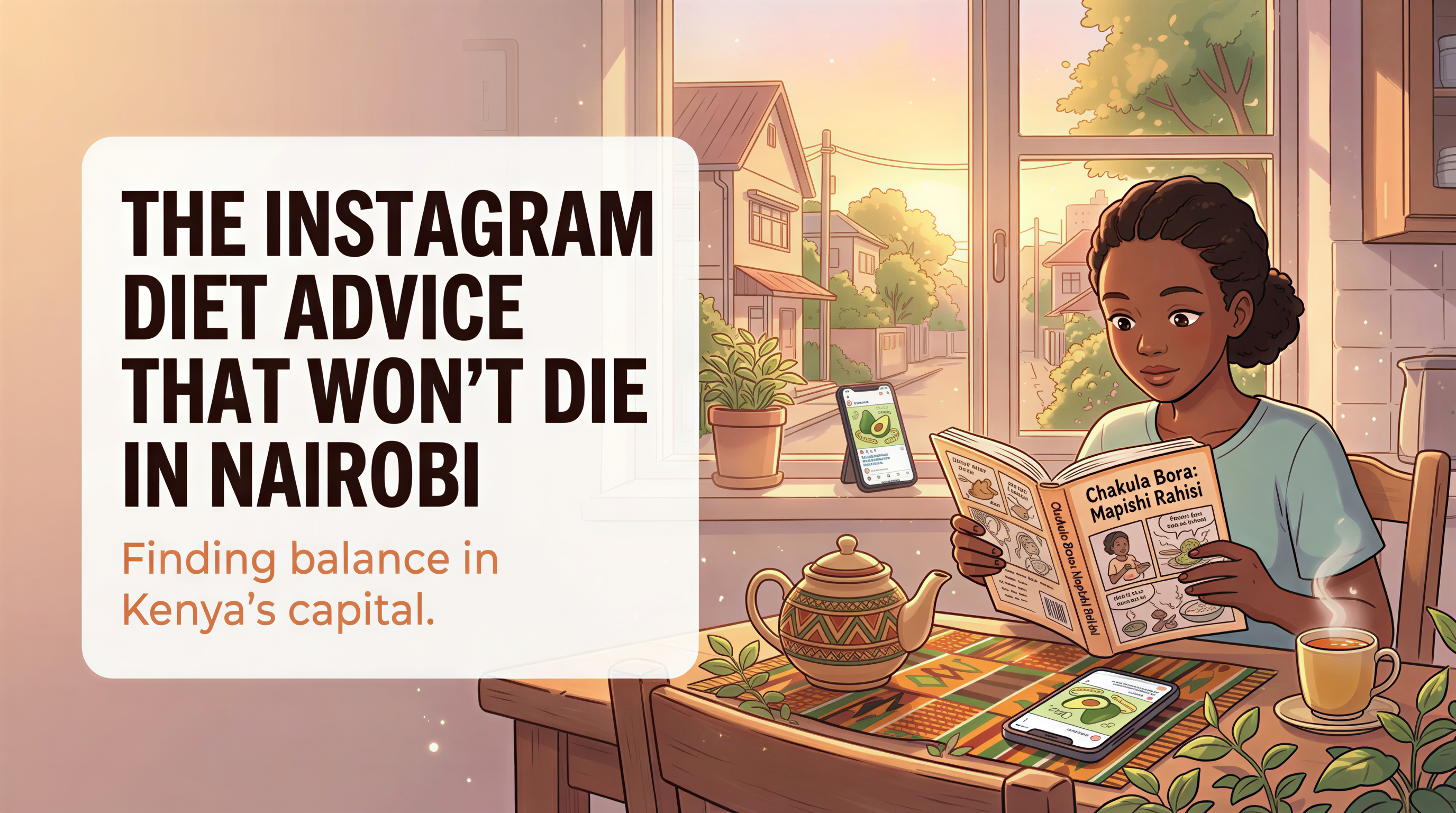
Detox tea. Slim trim. "Belly fat" smoothies sold at KSh 4,500 a bottle.
The Instagram nutrition economy in Nairobi is bigger than you think — and quietly more harmful than the snack aisle at Naivas.
I see the receipts in my inbox most weeks. A 26-year-old in Lavington who lost three kilos and a regular menstrual cycle on a "fasting cleanse." A 35-year-old who developed gout after a high-protein influencer plan that was 80% beef. A pregnant woman who stopped taking iron because a TikTok told her supplements were "synthetic."
Let's name the most popular advice making the rounds, what's wrong with it, and what to do instead.
Table of Contents
The Six Hits I See Every Month
Six pieces of "advice" account for most of the damage I see in private practice. These are real, repeated, and often costing real money.
1. "Detox teas" and 14-day cleanses
The pitch: drink this tea morning and night, lose 5 kg in two weeks, "reset your gut."
The reality: most contain senna or other laxatives. You lose water weight and intestinal contents, not fat. You also disrupt your electrolyte balance, occasionally land in casualty for dehydration, and develop a real laxative dependency that takes months to unwind.
Your liver and kidneys do not need a tea to do their job. They need water, sleep, and you not vomiting up your dinner.

2. The "lemon water on empty stomach" cure
The pitch: morning lemon water "alkalises the body," "burns fat," "boosts metabolism."
The reality: lemon water is fine. It is not magic. The body's pH is tightly regulated and does not care about your lemon. The fat-burning claim has no clinical support. The one real risk: lemon acid erodes enamel if you sip it slowly. Drink it through a straw or rinse with plain water after.
Drink it because you like it. Stop selling it as a cure.

3. The "no carbs" Instagram coach
The pitch: cut all carbs, eat only protein and vegetables, the weight melts off.
The reality: in the short term, you lose water weight as glycogen depletes — about 3 kg in the first week. Then progress stalls, your training feels terrible, your sleep suffers, and your relationship with ugali becomes pathological. Most people abandon the plan in 6–8 weeks and regain everything plus a small tax.
Carbohydrates are not the problem. Quantity, sugar, and timing are.

4. Apple cider vinegar as a meal
The pitch: a tablespoon before meals "controls blood sugar," "burns belly fat," "balances pH."
The reality: ACV may modestly slow gastric emptying and slightly reduce post-meal blood glucose spikes. The effect is small, real, and not weight-loss. The bottle in your fridge is not doing what the influencer's caption says it is doing.
If you have diabetes, eat better and consult your doctor. If you don't, save the KSh 600 bottle for vinaigrette.

5. "I haven't eaten gluten in three years"
The pitch: gluten causes bloating, fatigue, brain fog, "leaky gut."
The reality: about 1% of any population has coeliac disease. Maybe another 5% have non-coeliac gluten sensitivity that's poorly defined. The remaining 94% feel better on a gluten-free diet because they cut bread, biscuits, mandazi, and beer at the same time. The gluten was a coincidence; the calorie reduction did the work.
If you suspect coeliac, get tested before going gluten-free. Going gluten-free first invalidates the test.

6. Pregnancy "natural" advice
This is the one that scares me most. A pregnant client of mine was told by a doula on Instagram that prenatal vitamins were "synthetic" and to drink moringa tea instead. By her 28-week visit she was anaemic. We fixed it. Many women's pregnancies don't have someone to fix it.
If you are pregnant, take the prenatal vitamins your clinic gives you. Eat the foods that support iron absorption. Treat Instagram as entertainment, not antenatal care.

Why It Sells
It sells because real nutrition advice is boring.
"Eat protein at every meal, vegetables at lunch and dinner, two fruits a day, drink water, sleep eight hours, walk a lot, cook on Sundays" is what works. It is also unpostable. There is no thumbnail. There is no transformation reel. There is no affiliate link.
The detox tea is exciting. The transformation is dramatic. The sponsored post is everywhere.
We are competing against an algorithm trained on novelty, against influencers who get paid by impression, in a country where the average disposable income is small enough that KSh 4,500 for a bottle of tea feels like a serious decision deserving serious belief.
That is the market. It will not self-correct.
What To Actually Do
If you are reading this and you want to stop falling for it, three filters:
Ask: who profits if I believe this?
If the person posting also sells the product, the post is an ad. That doesn't make it wrong, but it raises the bar of evidence. Ads from the cooking-oil industry would not be accepted as nutrition advice. Ads from a wellness brand are subject to the same scepticism.
Ask: where's the evidence not from the seller?
A claim that "studies show" without a citation is not a study. The genuinely useful nutrition science papers are mostly free to read. If a 60-second reel can't summarise a real source, it isn't summarising one.
Ask: how does this fit a sustainable Kenyan kitchen?
If the advice requires imported powders, expensive supplements, or foods you can't get at sokoni, it isn't a Kenyan health solution. It is a Kenyan retail solution.
Who I'd Follow Instead
I will not name accounts here because the wellness market shifts every six months and any list is out of date by next quarter. But the meta-rule:
- Follow people who eat in your country.
- Follow people who admit they are wrong sometimes.
- Follow people whose feed is mostly food, not bodies.
- Avoid anyone whose link tree is a checkout page.
For practical Kenyan eating, see eating well on a Nairobi salary and what I actually eat in a week. I'll keep writing this kind of stuff. It will not go viral. It will not need to.
The job is to make eating well so boring that it stops being a content niche.
We're a long way off. But here we are.