What a Kenyan Nutritionist Actually Eats in a Week
Everyone asks me. So here's the boring, real answer.
What does a Kenyan nutritionist actually eat in a week?
Not the Instagram version. Not the textbook version. The real one — including the day I had nyama choma and a Tusker, and slept like a baby anyway.
I'm publishing this because too much nutrition advice in Kenya is performed, not lived. If I'm going to ask you to eat better, you should at least see what better looks like in my own kitchen.
Table of Contents
- The Setup
- Monday
- Tuesday
- Wednesday
- Thursday
- Friday
- Saturday
- Sunday
- What This Actually Costs
- The Rules That Run In The Background
- What I'd Tell A Younger Me
The Setup
I'm 31. I run, lift twice a week, sit at a desk a lot, travel to the field once a month. I cook my own meals at home about 80% of the time. The other 20% is street food, family meals, work lunches, social plans.
My weekly food budget runs at around KSh 4,500. That's higher than the median I wrote about last week because I eat more eggs, more meat, and more fish than the baseline plan. Adjust to your own context.
I aim for: protein at every meal, vegetables at lunch and dinner, fruit at least twice a day, and not making a fuss when life happens.

Monday
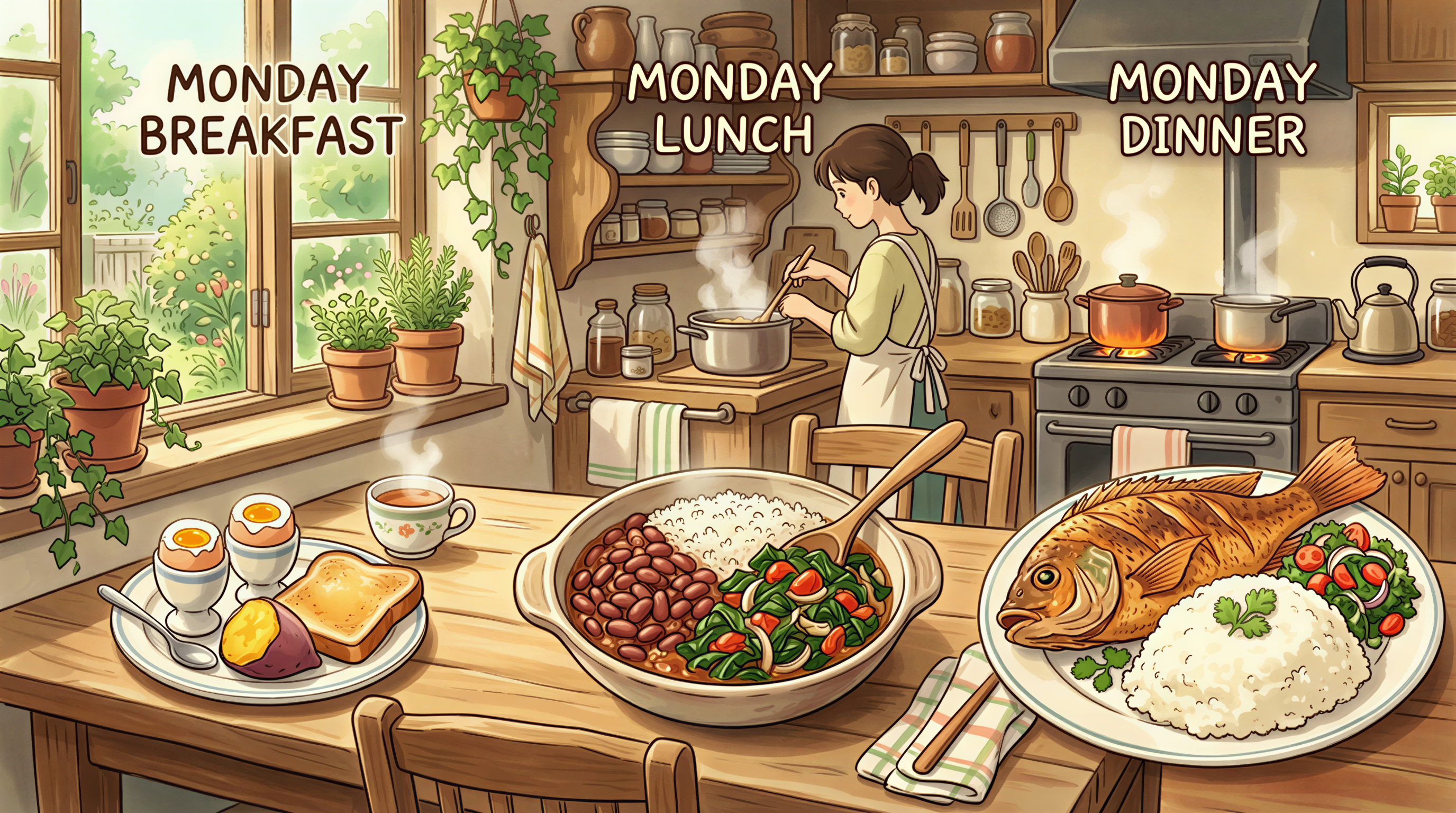
- Breakfast: Two boiled eggs, one sweet potato, black coffee.
- Lunch: Beans, rice, sukuma. Cooked Sunday, reheated.
- Snack: Banana and a handful of groundnuts.
- Dinner: Fried tilapia, ugali, kachumbari.
A solid Monday. The kind that makes Tuesday possible.
Tuesday
- Breakfast: Uji wa wimbi with milk and a spoon of groundnut paste.
- Lunch: The remaining tilapia + brown rice + steamed managu.
- Snack: Two oranges, water.
- Dinner: Chapati + ndengu stew.
Wimbi is the most underrated breakfast in Kenya. Slow energy, mineral-dense, fills you for four hours.
Wednesday
- Breakfast: Two eggs, one slice of brown bread, half an avocado.
- Lunch: Lentil curry over rice (a friend cooks this on Wednesdays — I get a lunchbox).
- Snack: Apple and tea.
- Dinner: Omena with ugali and traditional greens.
Wednesday is omena day. About KSh 220 for 500 g. Calcium, iron, omega-3, B12. Nothing beats it on a per-shilling-of-nutrition basis.
Thursday
- Breakfast: Fermented uji and a banana. Clinic morning, eat fast.
- Lunch: Office canteen — beans, rice, kachumbari.
- Snack: Roasted maize from a vendor on Argwings Kodhek.
- Dinner: Stir-fried chicken thighs with carrots, capsicum, garlic, served over the last of the brown rice.
I am not a kitchen purist. Office canteen food is fine. Roasted maize on the way home is part of being Kenyan and being human.
Friday
- Breakfast: Two eggs, two whole-wheat toasts, a cup of tea.
- Lunch: Skipped intentionally — long meeting, too tired to eat properly.
- Snack 4 PM: Mandazi and tea at a roadside kiosk. (See? Honest.)
- Dinner: Nyama choma with friends. Three Tuskers. Kachumbari. Roast banana.
Friday is the day the textbooks pretend doesn't exist. It exists. I drink water before bed, sleep eight hours, and Saturday is fine.
Saturday
- Brunch: Fried eggs, leftover nyama choma, fried tomatoes, coffee. 11 AM.
- Snack: A massive mango.
- Dinner: Beans + sukuma + ugali. Quiet evening.
Saturday is the day I cook for the week. Beans for Monday and Tuesday. Boiled eggs for the fridge. Chopped onions, garlic, capsicum in jars.
Sunday
- Breakfast: Pancakes (yes, with sugar) and fruit.
- Lunch: Family meal — pilau, kachumbari, watermelon.
- Snack: None, I am full.
- Dinner: A bowl of vegetable soup at 8 PM.
Sunday is family. I eat what is served. I do not lecture my mother about her pilau.
What This Actually Costs
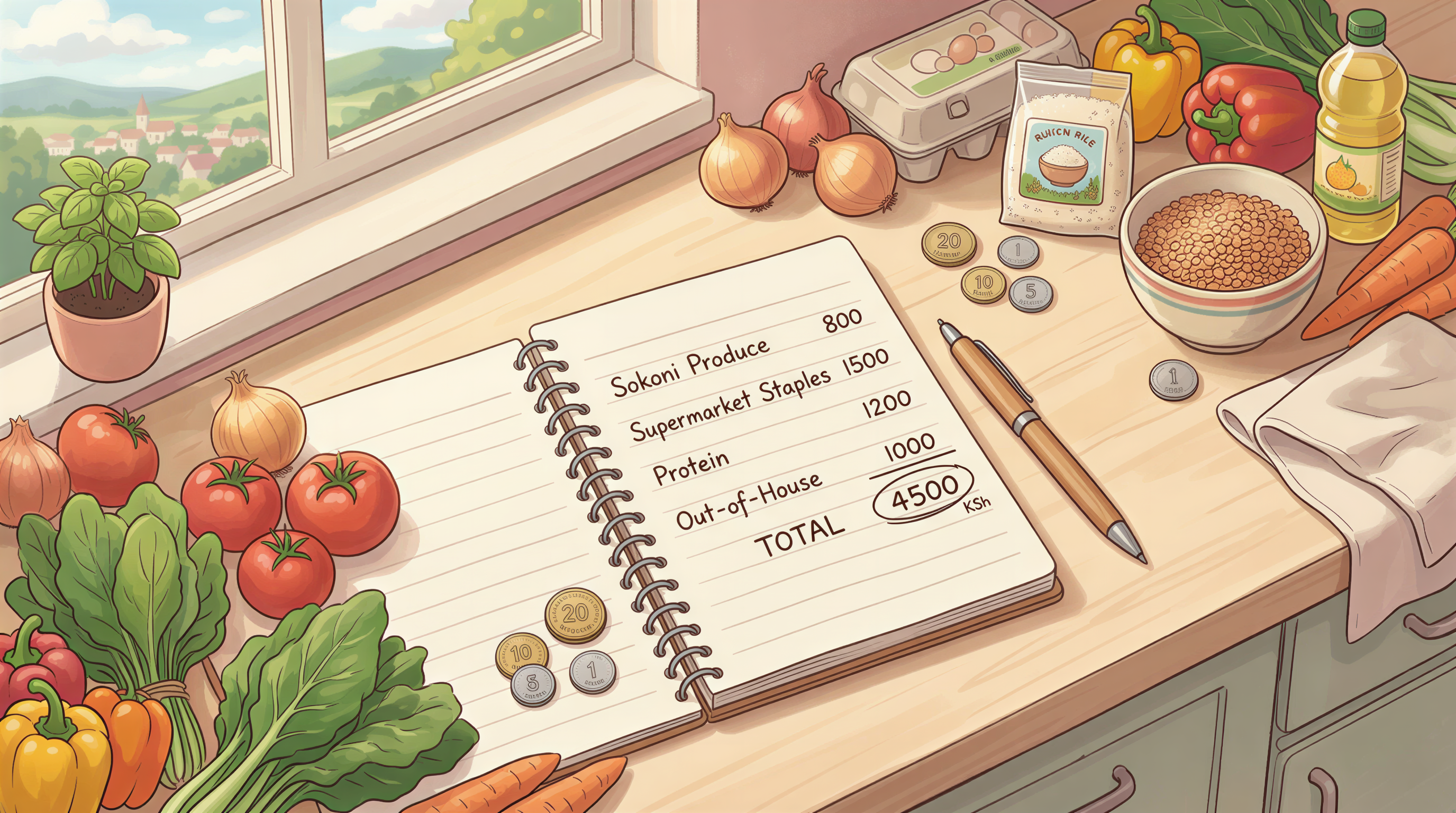
| Category | Approx cost (week) |
|---|---|
| Sokoni produce | KSh 800 |
| Supermarket staples (eggs, oil, rice, unga) | KSh 1,500 |
| Protein (fish, chicken, omena, beans) | KSh 1,200 |
| Out-of-house meals + treats | KSh 1,000 |
| Total | KSh 4,500 |
Roughly KSh 18,000 a month. Which is more than the salary plan, but I earn more now than I did at 24 and I make conscious choices about where the extra goes. Mostly into protein quality and fruit.
The Rules That Run In The Background
I don't track macros. I don't weigh anything. But these rules run quietly:
- Protein at every main meal. Eggs, beans, fish, omena, chicken — something.
- Two fruits a day, minimum. Cheap, filling, fibre, vitamins.
- Vegetables at lunch and dinner. Sukuma, managu, terere, kunde — rotate.
- No daily soda. I drink water, tea, coffee. Soda is a Friday-night thing if it happens at all.
- I cook on Sunday for the first three days of the week. Removes Tuesday-evening hunger panic.
- I don't moralise the meal I'm eating. If it's chapati and beans, I eat it. If it's nyama choma and beer, I eat it. The week is the unit, not the meal.
That last one is the most important. People wreck their relationship with food trying to make every plate perfect. Let some plates be good and others be fun.
What I'd Tell A Younger Me
If I could send one note to the version of me who started studying nutrition science at twenty-one:
The job is not to eat perfectly. The job is to make eating well boring enough that you don't think about it.
That's the goal. A boring kitchen. A predictable shopping list. A Friday where the rules go on holiday for one evening, and a Saturday morning where you wake up clear-headed and hungry for eggs.
Try it for a month. Tell me how it goes.