Ultra-Processed Food Creep: What Your "Healthy" Cereal Box Hides
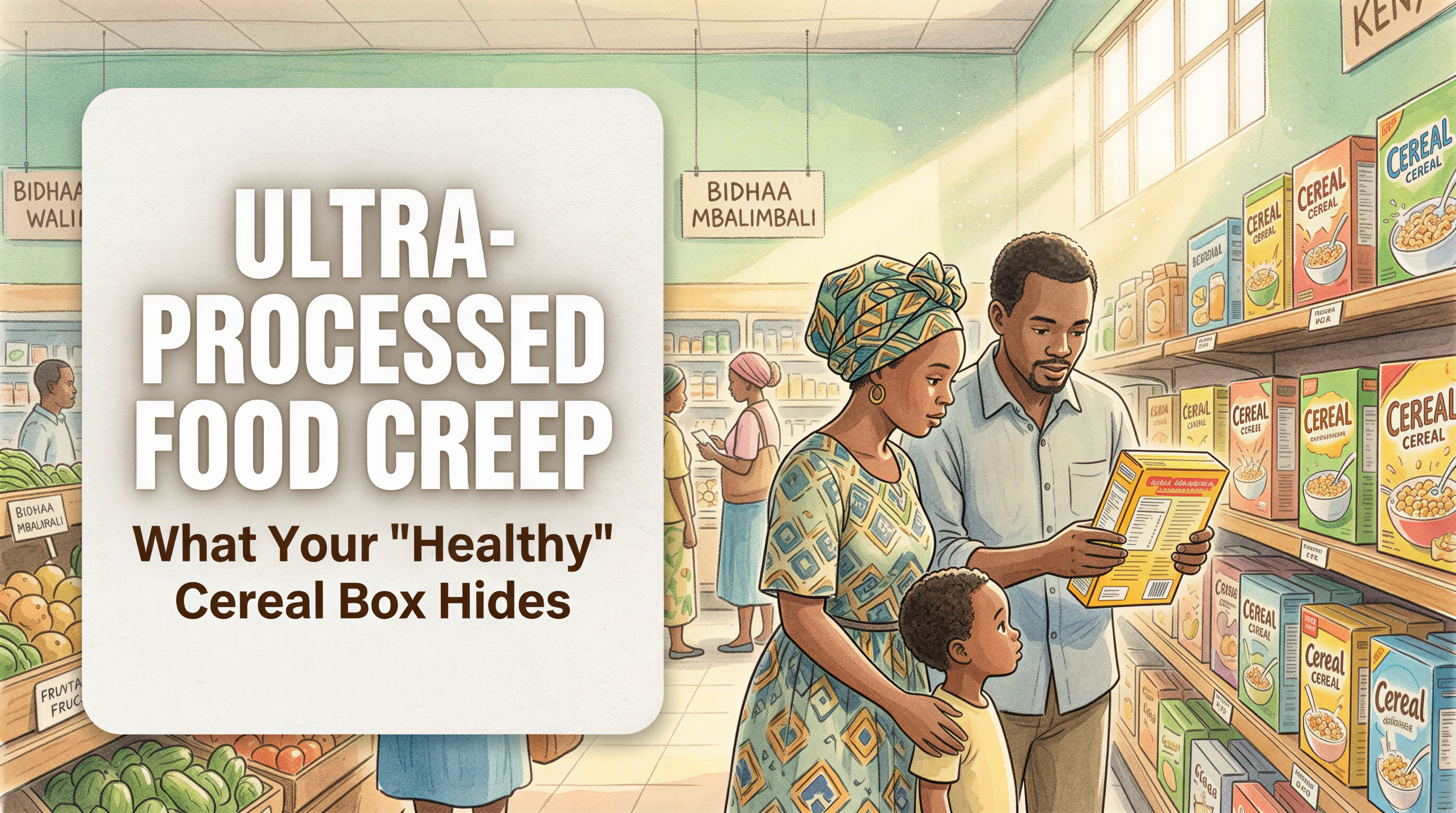
A box of cereal sits on the supermarket shelf in Westlands.
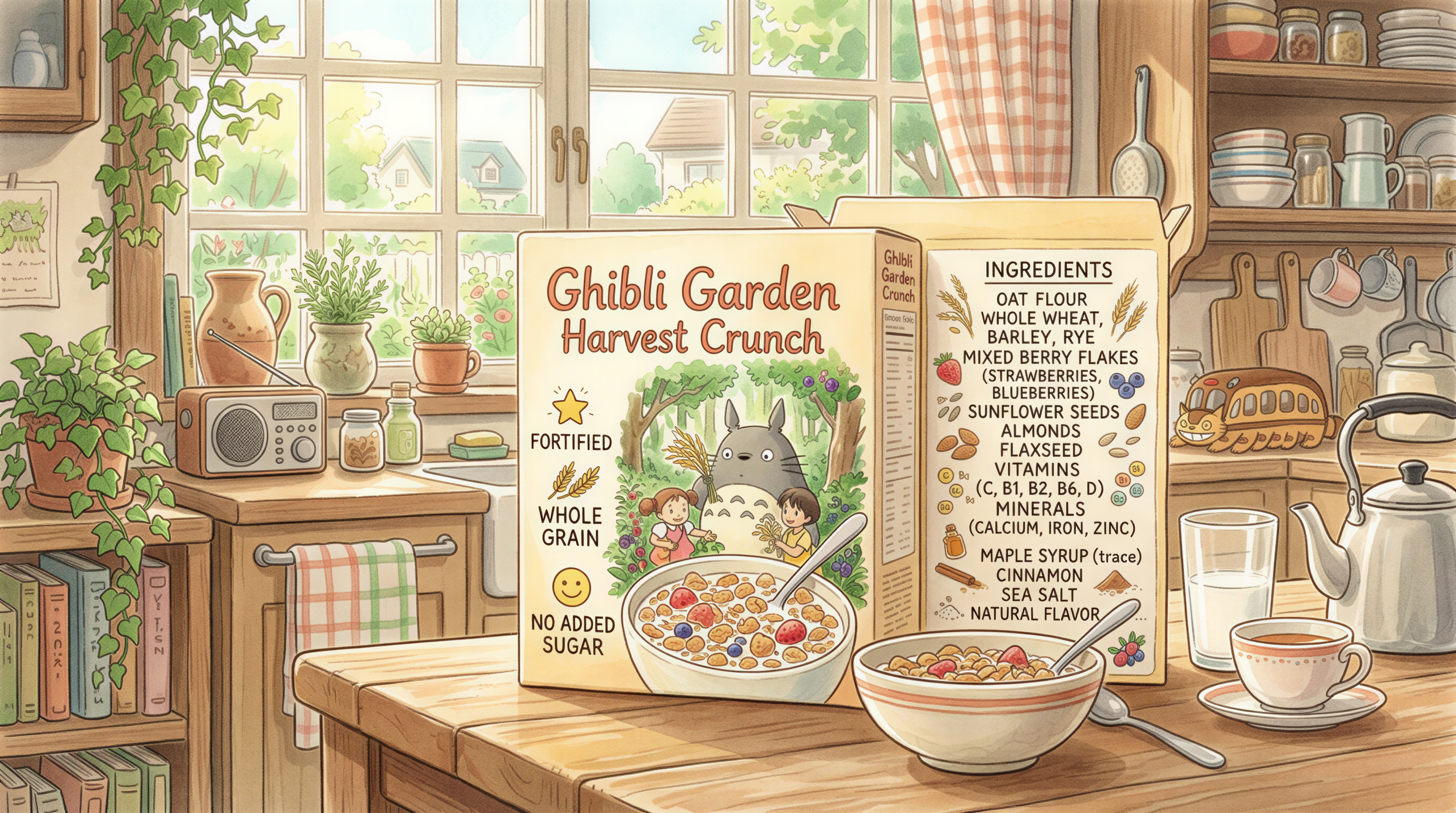
The front says: "fortified," "whole grain," "high fibre," "no cholesterol." There is a smiling child on the box. The brand is owned by a multinational with a marketing budget bigger than Kenya's nutrition strategy.
You turn the box. The ingredient list runs nine lines. Sugar appears three times under three different names. The whole grain content is real but tiny. The fortification adds 15% of the iron RDI per serving — the same amount you'd get from a teaspoon of beef liver.
Both of those things — the front of the box and the back — are factually true. Together, they are a marketing magic trick that has redrawn the Kenyan plate.
This is ultra-processed food (UPF) creep. It is the most underdiscussed shift in Kenyan nutrition this decade.
Table of Contents
- What "Ultra-Processed" Actually Means
- The Kenyan Trajectory
- The "Healthy" Label Trick
- Why It Matters For Children
- What Better Policy Would Look Like
- What To Do This Week
What "Ultra-Processed" Actually Means
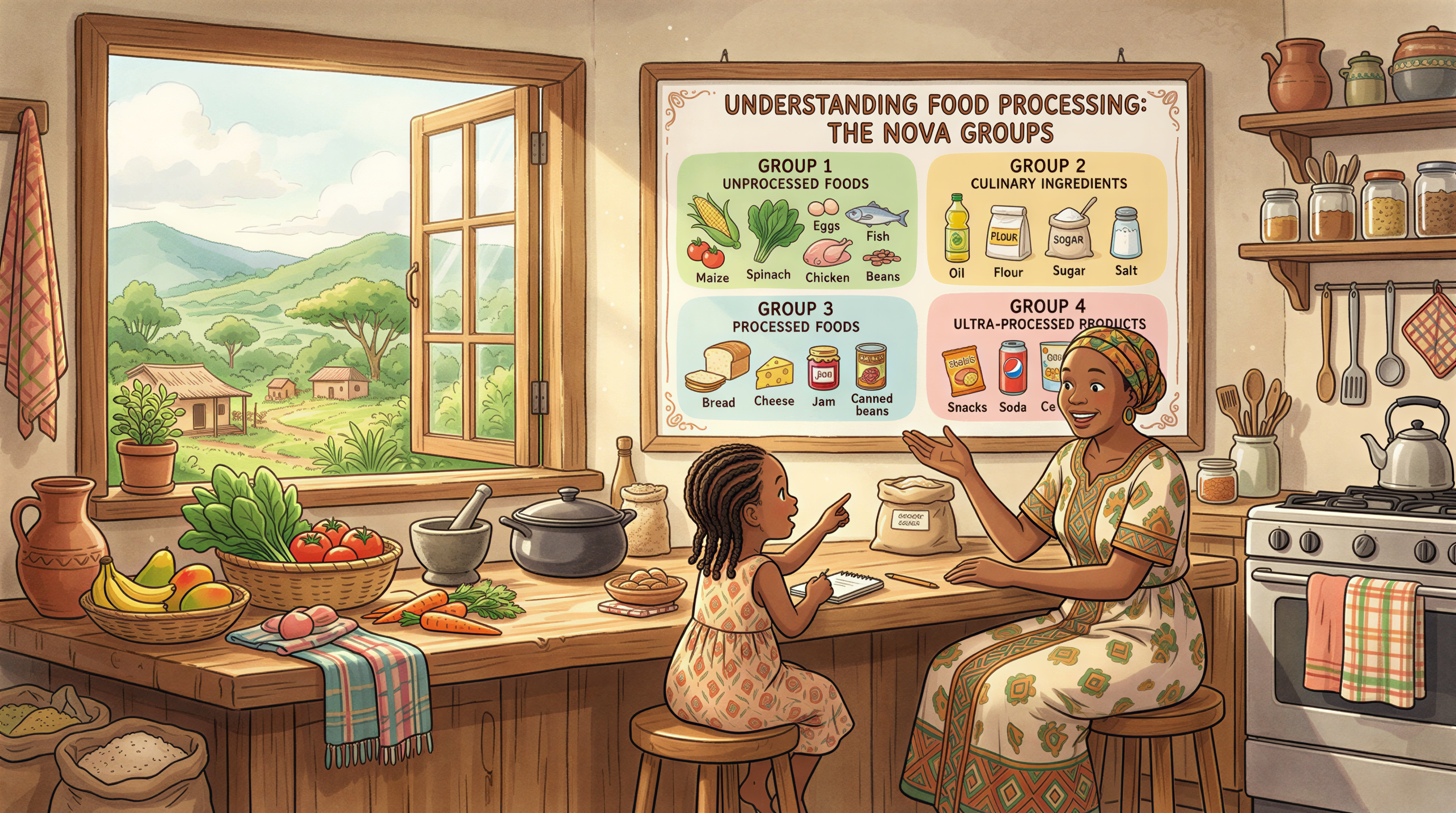
The NOVA classification is the cleanest framework here. Four groups:
- Group 1: Unprocessed or minimally processed. Maize, beans, eggs, milk, fresh fruit, dried fish, tea leaves, raw meat. The food your grandmother recognised.
- Group 2: Culinary ingredients. Salt, sugar, oil, spices. Things you cook with.
- Group 3: Processed foods. Bread, cheese, salted nuts, beer. Food + Group 2 = processed.
- Group 4: Ultra-processed. Industrial formulations made primarily from substances extracted from foods (oils, fats, sugars, starches, protein isolates) plus additives most kitchens don't have (emulsifiers, flavourings, colourings, stabilisers).
Group 4 is where the action is. Soft drinks. Most supermarket cereals. Flavoured yoghurts. Packaged "healthy" snacks. Instant noodles. Margarines. Most biscuits, most chocolates, almost all "kids' foods."
The defining test: if it has more than five ingredients, several of which you wouldn't keep in your kitchen, it is probably ultra-processed.
The Kenyan Trajectory
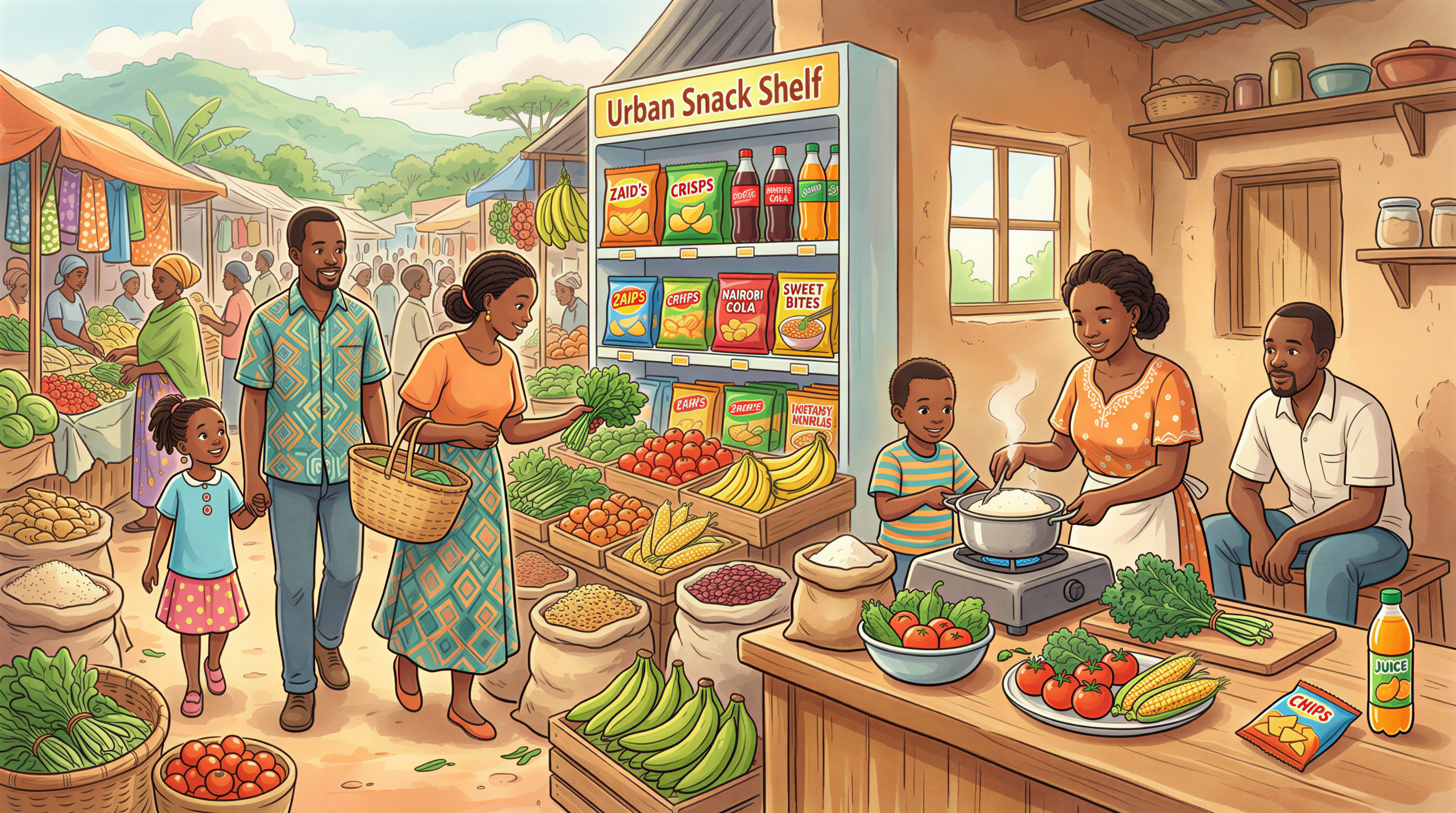
Twenty years ago, the Kenyan supermarket was a small section of urban shopping. Today, the typical urban Kenyan child gets between 25% and 40% of their daily calories from UPFs by some county-level surveys. In rural areas, the share is rising fast as distribution networks reach further into Western, Eastern, and ASAL counties.
The pattern is now familiar globally:
- UPFs become cheaper than fresh food, calorie for calorie.
- UPFs become more available than fresh food in dense urban areas (closer kiosks, longer shelf life).
- UPFs become normalised — the default snack, the default breakfast, the default celebration food.
- Diet-related NCDs follow within a generation.
We are in step 3, accelerating into step 4.
The "Healthy" Label Trick
Here is what makes UPF creep insidious in Kenya specifically: the labelling rules give cover.
A product can claim "fortified" if it adds any micronutrient at any level. It can claim "whole grain" if it contains a single whole-grain ingredient at any percentage. It can claim "low fat" while being 35% added sugar. None of these claims are illegal. All of them are misleading.
A working scan for any packaged item:
| What the front says | What to actually check |
|---|---|
| "Fortified" | Per-100g iron and zinc on the back. Compare to a real food. |
| "Whole grain" | Whole grain percentage in ingredients. If it's third or lower, it's marketing. |
| "Natural" | Means almost nothing legally. Ignore it. |
| "No added sugar" | Read for fruit concentrates, syrups, and total sugars. They are often present. |
| "High fibre" | Compare to a banana (3 g fibre). Anything claiming "high" should beat it. |
| "Kid-approved" | Almost certainly heavy in sugar, salt, or both. |
This is not paranoia. This is reading.
Why It Matters For Children
The strongest evidence on UPFs comes from cohort studies that follow people over years. The signal is consistent: higher UPF intake correlates with higher risk of obesity, type 2 diabetes, cardiovascular disease, and some cancers.
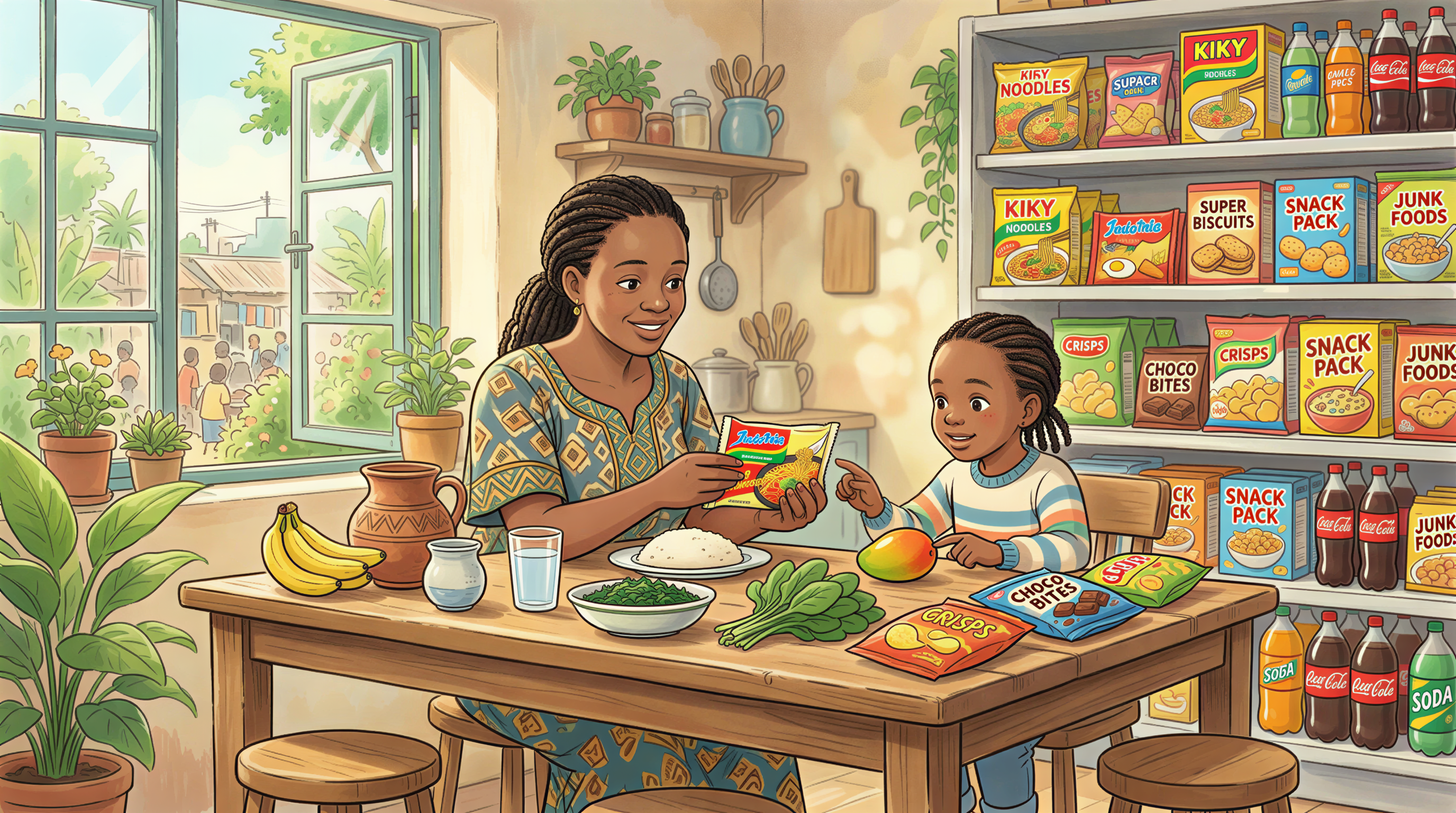
For children the picture is sharper. UPFs are engineered to be hyper-palatable — high salt, sugar, and fat in combinations that don't occur in nature. The childhood palate adapts. Once a five-year-old's normal is a sweetened cereal at breakfast, plain uji feels boring forever. The taste preference, once set, lasts decades.
We are in the middle of a quiet experiment, in real time, on a generation of Kenyan children. The control group is the rural household still cooking ndengu and ugali. The treatment group is everyone else. It will be obvious in twenty years what the result was. By then it will be too late to design a different policy.
What Better Policy Would Look Like
The international evidence is now strong enough that a competent national policy would include:
1. Front-of-pack warning labels. Black octagons saying "high in sugar," "high in saturated fat," "high in sodium," like Chile and Mexico. Not advisory. Mandatory and prominent.
2. School food restrictions. No UPFs sold within or to school feeding programs. No marketing of UPFs in school environments. Simple, enforceable, popular.
3. The sugar-sweetened beverage tax that we keep failing to pass.
4. Restrictions on marketing UPFs to children under 12. Brazil and the UK have pieces of this; Kenya has none.
5. Procurement standards for public institutions. Hospitals, prisons, ECD centres should not be serving the products their nutrition strategies are warning citizens about.
None of this is exotic. The blueprint exists. We are not using it.

What To Do This Week
If you are reading this with a household budget rather than a policy desk:
- Cook one more meal at home this week than last. Move the dial slowly.
- Replace one packaged item with a real-food version. Cereal → uji. Soda → water with lemon. Biscuit → fruit.
- Read the back of one box you currently buy. Just one. You will be surprised. Some of what you thought was a "healthy" item is the opposite. Some of what you thought was junk is fine.
- Recognise the manipulation. "Healthy," "natural," "fortified" — these are marketing words. Treat them with the same suspicion as any other ad copy.
For the bigger picture on what Kenyan plates are quietly becoming, see the price of a plate.
UPF creep is not coming. It is here. The only question is whether we recognise it in time to stop the next decade looking like the last twenty years of Mexico and South Africa — and we still have a window.
The window is closing. The cereals are not.