Eating Well on a Nairobi Salary: What KSh 30k Actually Buys
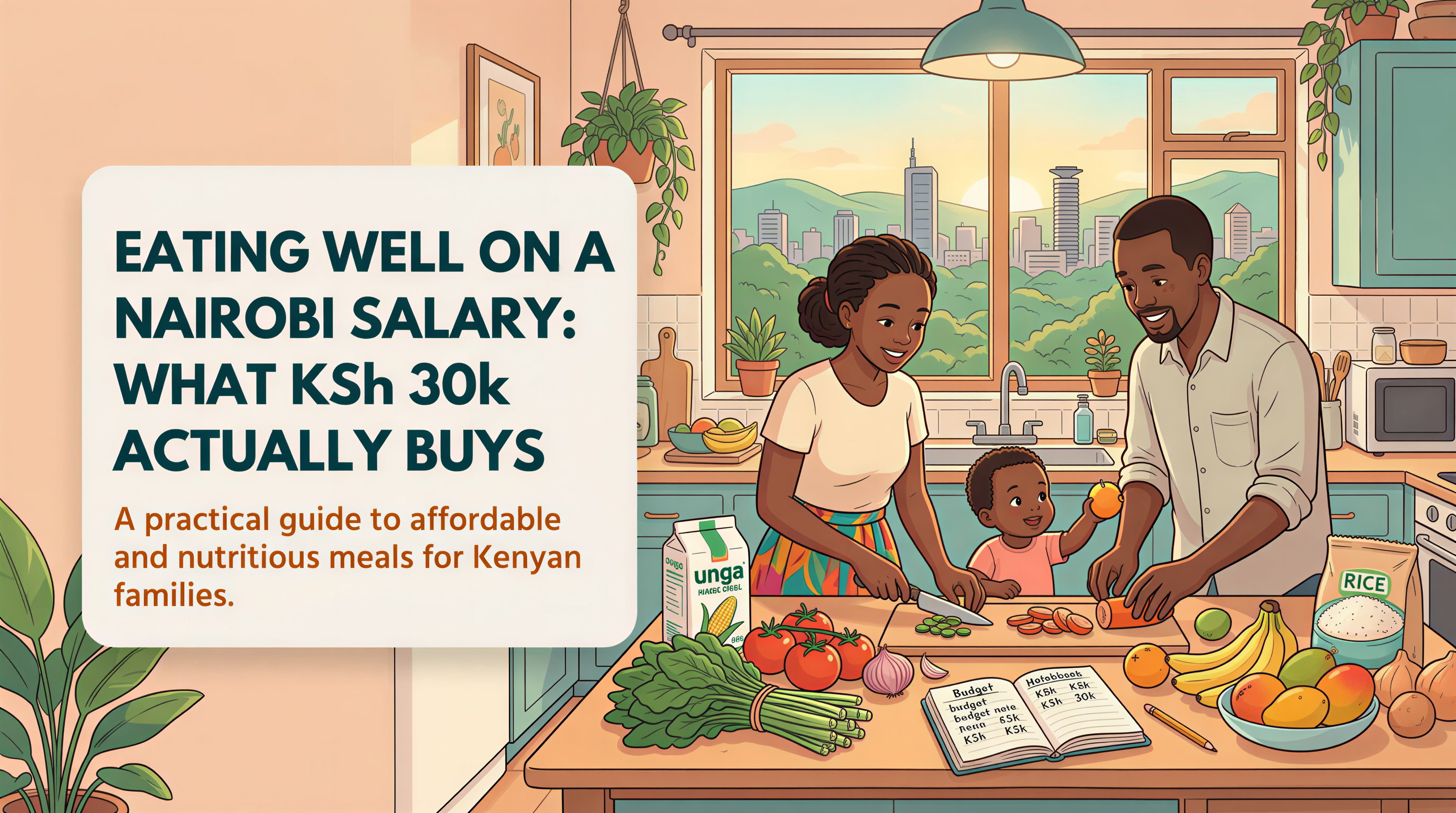
It's the 22nd of the month.
Table of Contents
- What "A Normal Salary" Actually Is
- Where The Money Quietly Leaks
- The Sokoni-Plus-Supermarket System
- Five Plates Under KSh 80 At Home
- What I'd Actually Stop Doing
- Where This Connects
What "A Normal Salary" Actually Is
KNBS puts the median formal-sector wage in Nairobi at roughly KSh 30,000–40,000 net. That's not "broke." It's also not "cushion." It's the wage of most of the people you know who post brunch photos on the weekend.
This article is for them. The 27-year-old in a one-bedroom in South B. The QA engineer in Ruaka. The teacher in Donholm. The graphic designer who pays KSh 18,000 for a bedsitter in Kileleshwa because the commute kills her otherwise.
If your salary is KSh 30k, your food budget has to:
- Feed you three meals a day, thirty days a month
- Survive at least one social event a week
- Cover one "I'm tired, let me just order" night without guilt
- Not crush you on the 25th
That's KSh 6,000–9,000 a month for groceries. About KSh 200–300 a day. It is doable. It is also not the way most people are doing it.

Where The Money Quietly Leaks
Before we talk about what to buy, let's talk about where the money disappears.
1. Kiosk economics. A loaf of bread at your local duka is KSh 75. The same loaf at Naivas Westgate, on a Saturday haul, is KSh 65. You buy bread eleven times a month at the duka because you "didn't plan." That's KSh 110 wasted on the most boring item on your list.
2. The 1 PM CBD lunch. KSh 250 for a plate of beans and rice. Eight times a week, that's KSh 8,000 a month — for food you'd never voluntarily eat at home.
3. Saturday market emotional shopping. You go to City Park "to get fresh stuff." You leave with two avocados, three managu, one inexplicable bunch of celery, and two passion fruit. You will eat the avocados. The rest will rot quietly behind the milk.
4. The "I deserve this" delivery. Glovo on a Friday. KSh 1,200 for a meal you could have made for KSh 180.
The math is brutal once you write it down.

The Sokoni-Plus-Supermarket System
Here is the system I use myself and have given to about forty people over the last three years. It survives.
Sunday morning: sokoni.
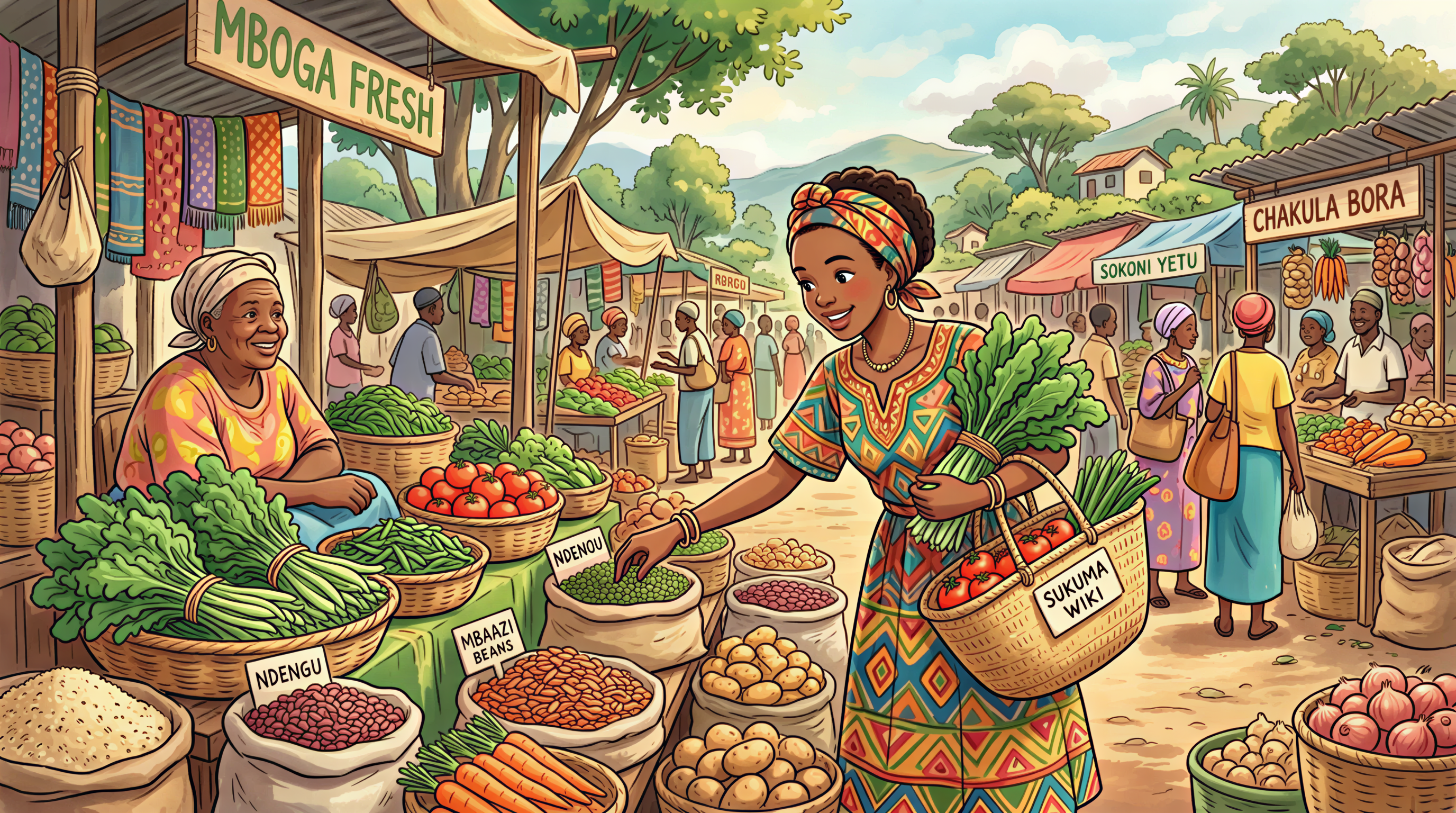
- 1 kg sukuma — KSh 50
- 1 bunch managu — KSh 30
- 1 kg tomatoes — KSh 80
- 1 kg onions — KSh 100
- 1 kg sweet potato — KSh 80
- 6 bananas — KSh 60
- 6 oranges — KSh 60
- 1 kg ndengu — KSh 180
That's KSh 640 for the produce backbone of the week.
Sunday afternoon: Naivas / Carrefour.
- 2 kg unga — KSh 240
- 1 kg rice — KSh 200
- 1 tray eggs — KSh 450
- 500 g omena — KSh 220
- 1 L cooking oil — KSh 320
- 1 kg beans — KSh 180
That's KSh 1,610 for staples.
Total for the week: KSh 2,250. Add a Wednesday top-up of KSh 400 (more eggs, more sukuma, milk) and you land at KSh 2,650 for the week. Around KSh 11,000 a month, comfortably inside what a 30k salary actually allows.
What you don't buy: any product whose marketing budget exceeds its calorie count. Cereals. Yoghurts in tiny cups. Imported snacks. Bottled juice. Anything that says "wellness" on the label.
Five Plates Under KSh 80 At Home
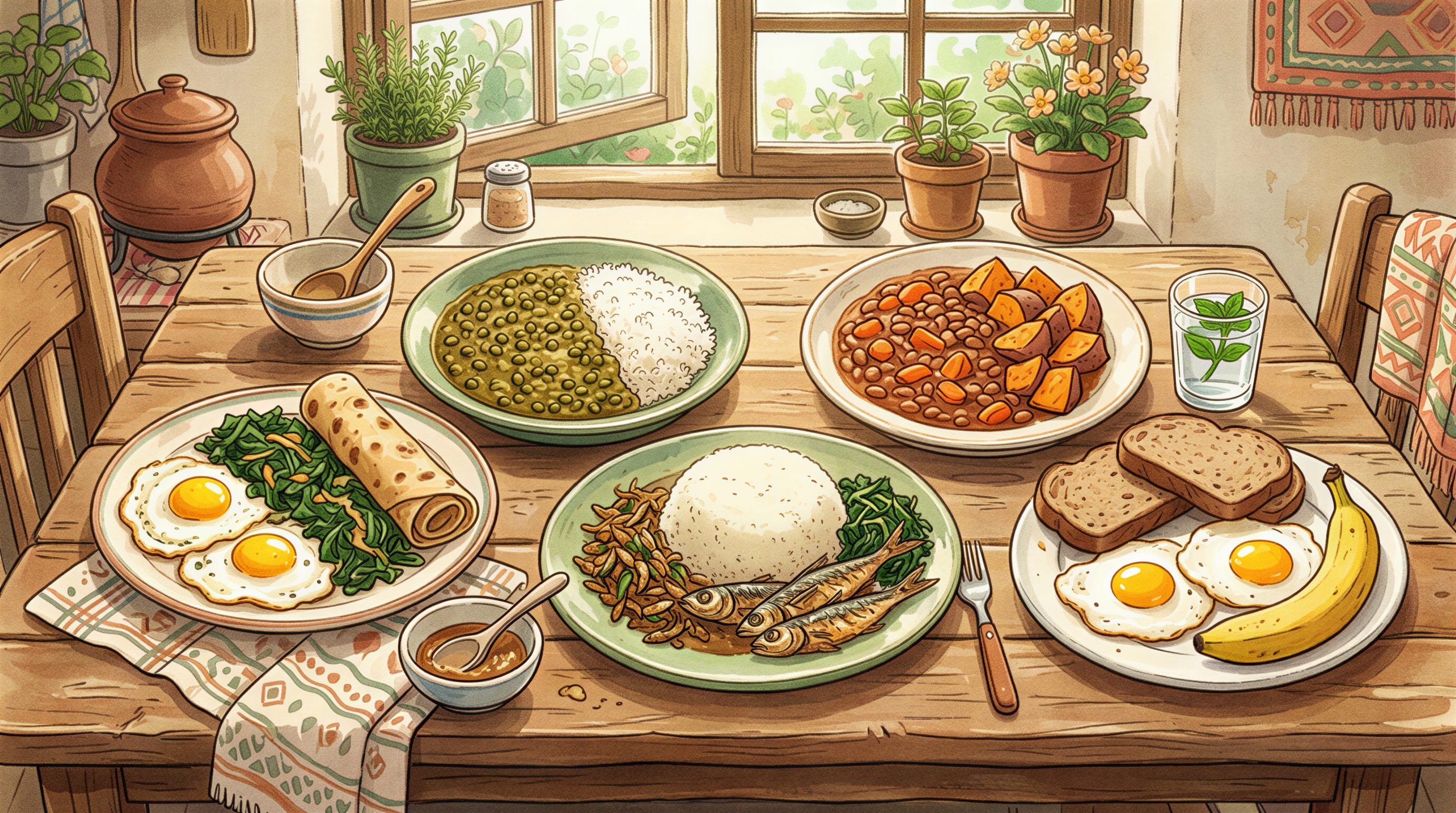
| Plate | Approx cost | Why it works |
|---|---|---|
| Eggs + sukuma + chapati | KSh 70 | Protein, iron, satisfaction. Two eggs is enough. |
| Ndengu + rice + tomato | KSh 60 | Complete protein. Fills you for hours. |
| Omena + ugali + greens | KSh 65 | Calcium, omega-3, iron. The most underrated plate in Kenya. |
| Beans + sweet potato | KSh 55 | Slow carbs, fibre, protein. Athlete fuel. |
| Eggs + bread + banana | KSh 45 | Lazy day. Still beats anything from a kibanda. |
Notice none of these involve red meat. Meat in this budget is a Saturday thing, not a Tuesday thing. Two times a week. Buy from your local mama-choma's roast, not a restaurant — KSh 250 for 200 g, eat with kachumbari, done.
What I'd Actually Stop Doing
If I had to give one person one piece of advice, it would be this: cook on Sunday for Tuesday.
Most Nairobi salary earners eat poorly because they decide what to eat at 7:30 PM, when they are tired, hungry, and forty metres from a duka. The decision is rigged. You will buy bread and butter. You will heat it with tea. You will be hungry again at 10 PM.
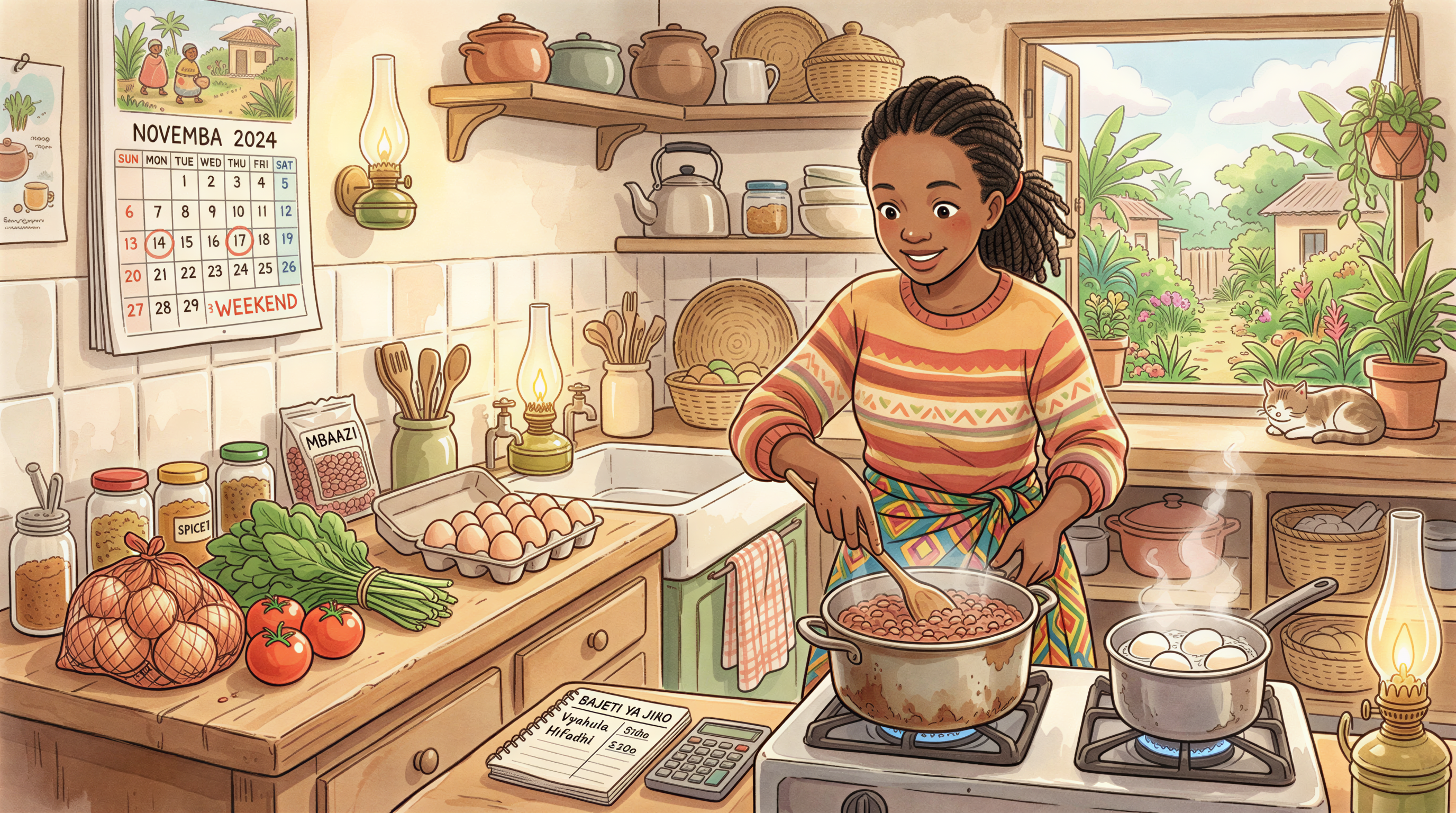
The fix is not motivation. It's removing the decision. Cook beans on Sunday. Boil eggs on Sunday. Chop onions on Sunday. By Tuesday at 7:30 PM you are twelve minutes away from a real plate, not an emergency snack.
That's the whole game.
Where This Connects
I write about this because I see the price-of-a-plate conversation everywhere — and it's rarely about the price. It's about where the money leaks, and which choices we are quietly making forty times a month.
A follow-up is coming: my own week of meals, on the same salary band, in the same kitchen. Including the day I had nyama choma and a Tusker.
Eat well. It costs less than you think.