The Runner's Plate: Fuelling Your First 10K Around Karura
You signed up for the Stanchart 10K.
Six weeks. You bought new shoes and downloaded a training app. You ran 3 km on Tuesday and your calves are still angry.
Now what.
Most first-time 10K runners in Nairobi train for the run and ignore the plate. Then on race day they hit the wall at kilometre seven, blame their fitness, and don't sign up again.
The plate matters. Let's get specific.
Table of Contents
- What 10K Training Actually Demands
- The Pre-Run Plate
- Race-Day Morning
- Mid-Run Fuel: Gels vs Ndizi
- The After-Run Plate
- The Iron Question (Especially For Women)
- Hydration In Nairobi
- A Sample Training Week
- What I'd Tell A First-Time Runner
What 10K Training Actually Demands
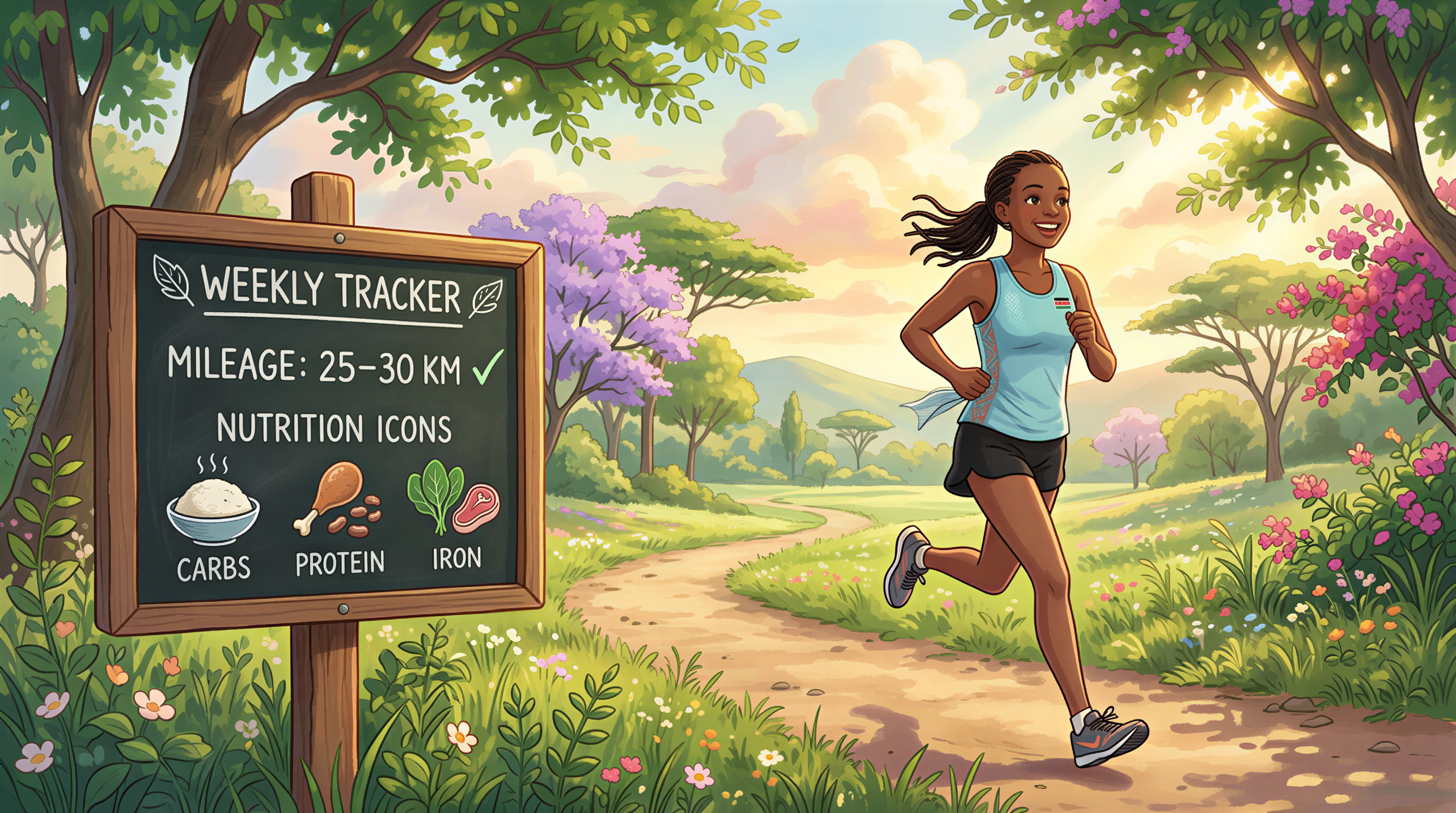
A 50 kg woman running 25–30 km a week burns roughly 1,500 extra calories beyond her baseline. A 75 kg man, around 2,300. Not enormous numbers — but the kind of fuel matters more than the total.
You need:
- Enough carbohydrate to run hard sessions without falling apart
- Enough protein to repair muscle between sessions (1.4–1.6 g per kg of body weight)
- Enough iron to keep oxygen moving (a non-negotiable for new female runners especially)
- Enough water and electrolytes to survive Nairobi's altitude and dust
Most beginner runners get the carb side roughly right by accident — Kenyan diets are carb-rich. The protein, iron, and hydration are where the wheels fall off.
The Pre-Run Plate
For a morning run before 7 AM, eat 60–90 minutes before. Keep it small, simple, and familiar.
| Run length | Pre-run option | Why |
|---|---|---|
| 5–8 km easy | One banana + tea | Glucose, light, no GI drama |
| 8–12 km steady | Two slices brown toast + groundnut paste + half banana | Slow + fast carbs together |
| 12–18 km long | Sweet potato or uji + one egg | Sustained energy, protein primer |
Avoid: full ugali, eggs and chapati, anything fried. Your stomach will not forgive you on a hill.
For evening runners after work — your last meal at 1 PM is too far. Have a small snack (banana, dates, two boiled-egg whites) thirty minutes before.

Race-Day Morning
The Stanchart starts at 6:30 AM. You should be eating at 5 AM.
What works for almost everyone:
- One banana
- One slice brown bread with groundnut paste
- One small cup of tea or black coffee
- 300 ml water with a pinch of salt
That's it. Race day is not the day to try a new thing. Eat exactly what you ate before your longest training run that went well.
If you can't stomach solids that early, two dates and a glass of milk will hold.

Mid-Run Fuel: Gels vs Ndizi
For a 10K, you don't need mid-run fuel. You have enough glycogen to finish without it. A water station at km 4 and km 7 is plenty.
For half-marathons and longer, the gel question matters. A typical gel costs KSh 350–500 in Nairobi running shops and delivers about 25 g of carbohydrate. A ripe banana costs KSh 10 and delivers 27 g. The science of "what your stomach absorbs" is roughly the same. The science of "what your wallet absorbs" is not.
I tell new runners: practise with bananas first. Move to gels only if you go long enough that bananas become impractical.

The After-Run Plate
The 30-minute window after your run is when the plate does the most work.
Aim for: 20–30 g protein + a real carbohydrate within 30–45 minutes.
Real options at home:
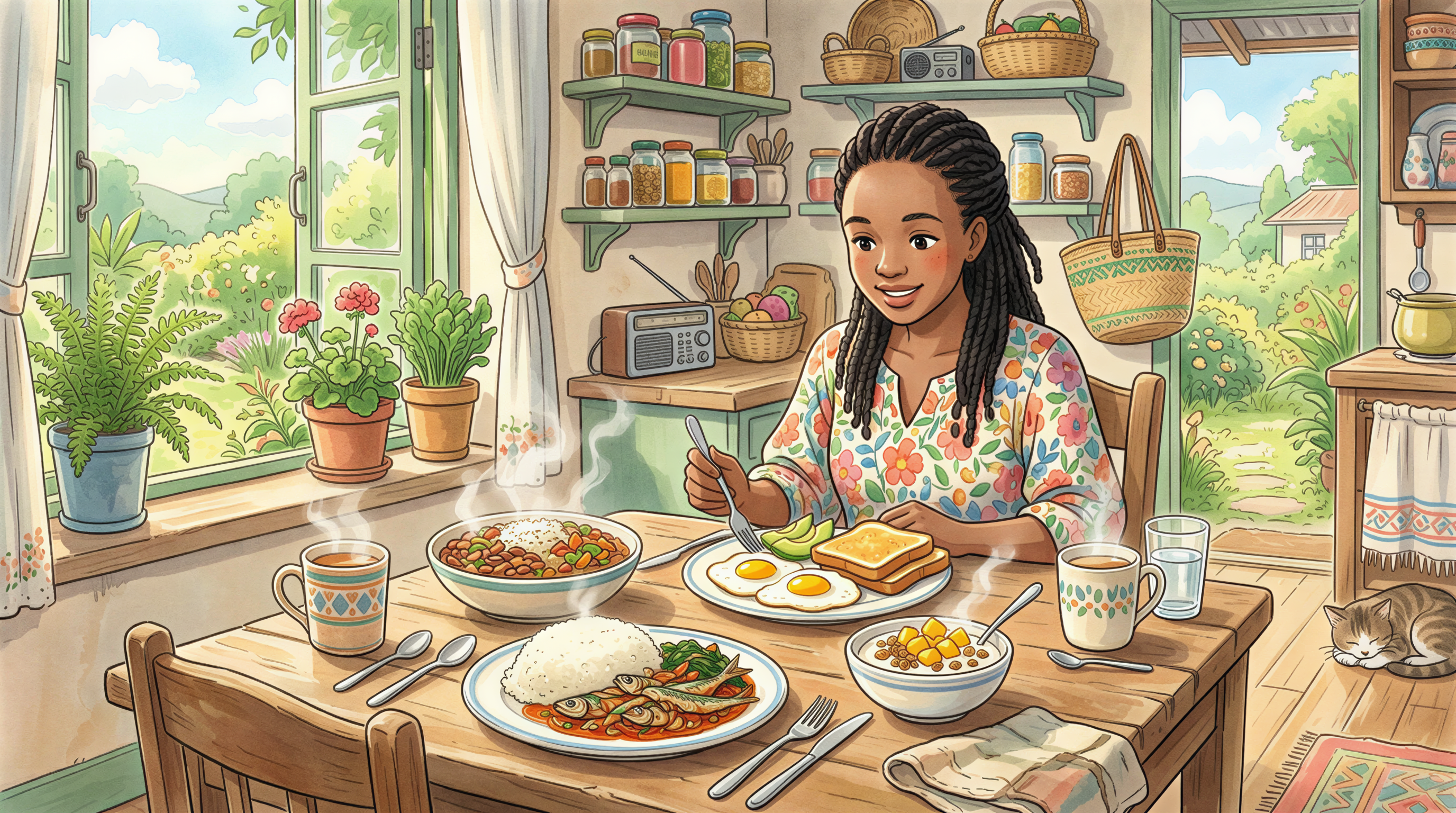
- Two eggs, brown toast, a banana
- Beans, rice, sukuma, half avocado
- Greek-style yoghurt, granola, mango
- Omena, ugali, kachumbari (yes, post-long-run)
If you're picking up something on the way home: a chapati and beans plate at any kibanda gets you there for KSh 80.
The Iron Question (Especially For Women)
Female runners are the highest-risk group for low ferritin in Kenya. Combine menstrual losses with sweat losses and a diet often light on red meat, and you get the chronic fatigue that gets misdiagnosed as "I just need to push harder." You don't. Your iron is low.
If you are a female runner training more than 25 km a week, get your ferritin checked at six weeks of training and again at twelve. A simple finger-prick test costs KSh 800–1,200 at most labs.
In the meantime, eat: omena, beef liver (once a week), beans, kunde, fortified flour. Drink your tea between meals, not with them — tannins block iron absorption by up to 60%. The classic Kenyan combination of "ugali and tea with the meal" is quietly anti-runner.
For more on iron specifically, see iron, zinc, and vitamin A.
Hydration In Nairobi
We sit at 1,795 metres altitude. The air is dry. You sweat more than you think and rehydrate less than you should.
A working rule: 500 ml water 90 minutes before, 200 ml fifteen minutes before, sip during anything over 8 km.
For training runs in heat, add a pinch of salt and a squeeze of lemon to a 600 ml bottle. Or buy ORS at any chemist for KSh 30. You don't need imported electrolyte powders.
Hyponatremia (low blood sodium from over-drinking plain water) is rare in 10K runners but real in marathoners. Salt with water is the answer. Plain water alone over hours is the problem.
A Sample Training Week
| Day | Run | Plate notes |
|---|---|---|
| Mon | Rest | Normal eating, focus on protein |
| Tue | 5 km easy | Banana before, real lunch after |
| Wed | Rest or cross-train | Iron-rich dinner (omena or liver) |
| Thu | 4 × 800 m intervals | Sweet potato + egg before, big plate after |
| Fri | Rest | Hydrate, normal eating |
| Sat | 8–12 km long run | Pre-run: toast + groundnut paste, post-run: full plate within 45 min |
| Sun | 30 min easy or rest | Family meal, do not panic about pilau |
That's it. No supplements. No imported powders. Local food, sequenced right.
What I'd Tell A First-Time Runner
You will not run a 10K on willpower. You will run it on rest, plate, and showing up four times a week for six weeks.
Of those three, the plate is the cheapest fix and the most ignored.
Get the iron right. Eat protein at every meal. Eat a real plate within 45 minutes of every long run. Drink salted water on hot days. Do this for six weeks and your race-day collapse won't happen.
See you at the start line.