Plant-Based on a Kenyan Budget: The Honest Version
Tofu costs more than goat at most Nairobi supermarkets.
So when an Instagram coach tells you "going plant-based is cheap," ask them where they shop.
Done honestly, plant-based eating in Kenya is cheaper than meat-heavy eating — but only if you ignore the imported version of plant-based and use the one the country has been eating since long before the word existed.
This is the honest plant-based playbook. No Beyond Burger. No imported almond milk. Just the Kenyan plant-based pyramid that already feeds the country.
Table of Contents
- What "Plant-Based" Should Mean Here
- The Cost Reality
- The Protein Question
- The Combinations Your Grandmother Knew
- What's Actually Cheaper Than Meat (And What Isn't)
- A Plant-Heavy Week That Still Feels Kenyan
- Where People Get It Wrong
- Why I Wrote This
What "Plant-Based" Should Mean Here
Forget the imported version. The functional Kenyan plant-based plate looks like:
- Beans, ndengu, mbaazi, kunde — the protein backbone
- Ugali, rice, sweet potato, arrowroot, chapati — the carbohydrate base
- Sukuma, managu, terere, kunde leaves, cabbage, spinach — the green half-plate
- Avocado, groundnut paste, sunflower seeds, sesame — the fat
- Banana, mango, pawpaw, orange, watermelon — the fruit
- Eggs and dairy if you want to go vegetarian rather than vegan; both are still plant-leaning compared to a typical Kenyan meat plate
That is plant-based. It is also cheaper than nyama-every-day eating.
\n\n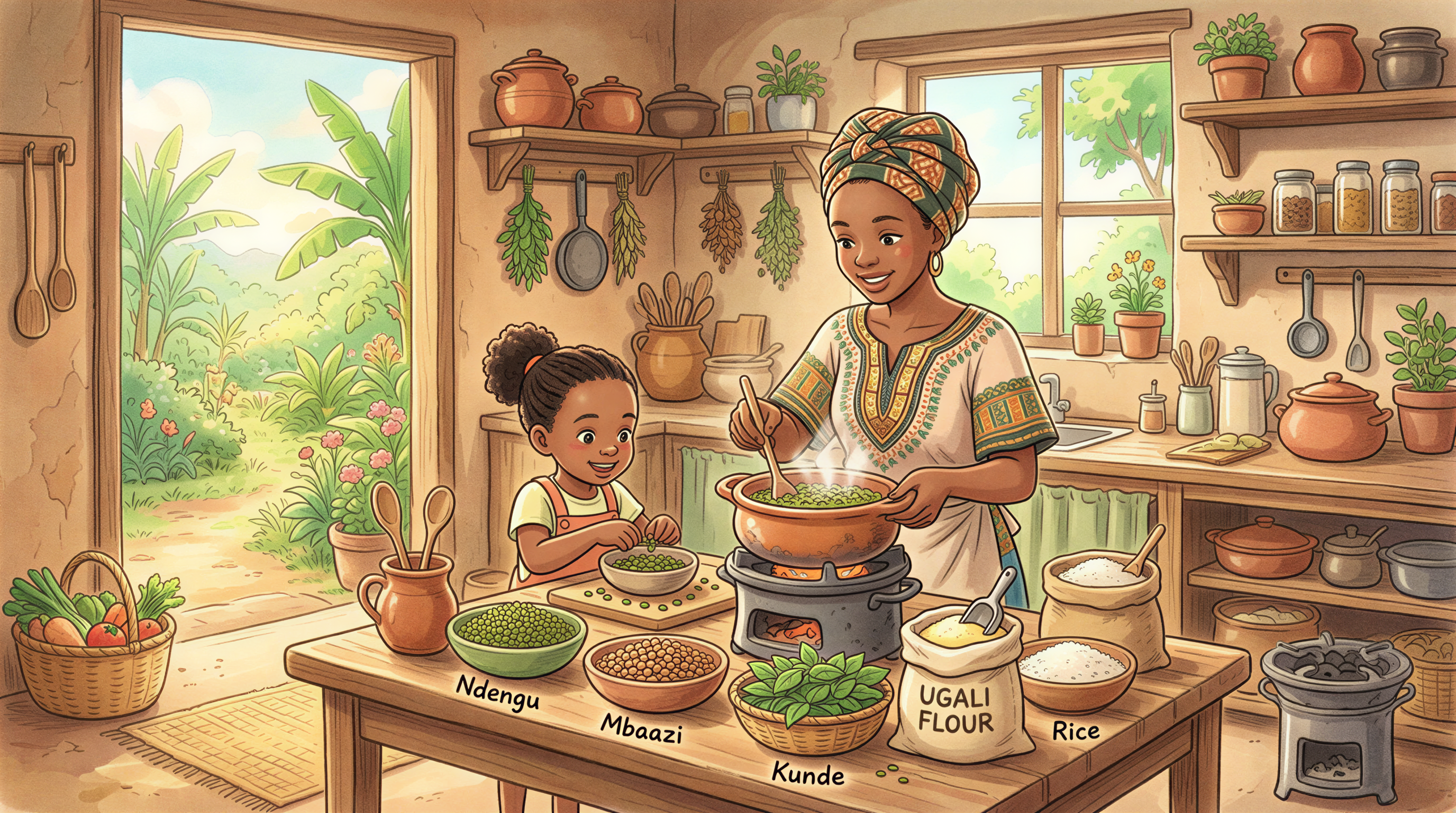 \n\n***
The Cost Reality
Let's compare the same meal, made two ways.
| Meal | Meat version | Plant-based version |
|---|---|---|
| Lunch plate (1 person) | Beef stew + rice + sukuma — KSh 180–220 | Ndengu + rice + sukuma — KSh 70–90 |
| Dinner plate (1 person) | Chicken + ugali + cabbage — KSh 200–250 | Beans + ugali + cabbage — KSh 60–80 |
| Soup base (1 L) | Beef bone broth — KSh 250 | Lentil/ndengu base — KSh 60 |
| Protein per 100 g cooked | Beef 28 g — ~KSh 220 | Beans 9 g — ~KSh 30 |
For the same protein delivery, beans cost roughly a quarter to a third of beef in 2026 prices. The challenge is volume — you eat more grams of beans to hit the same protein. You also get more fibre, more potassium, and a fraction of the saturated fat.
The math is clear once you take the imported aisle out of the equation.
\n\n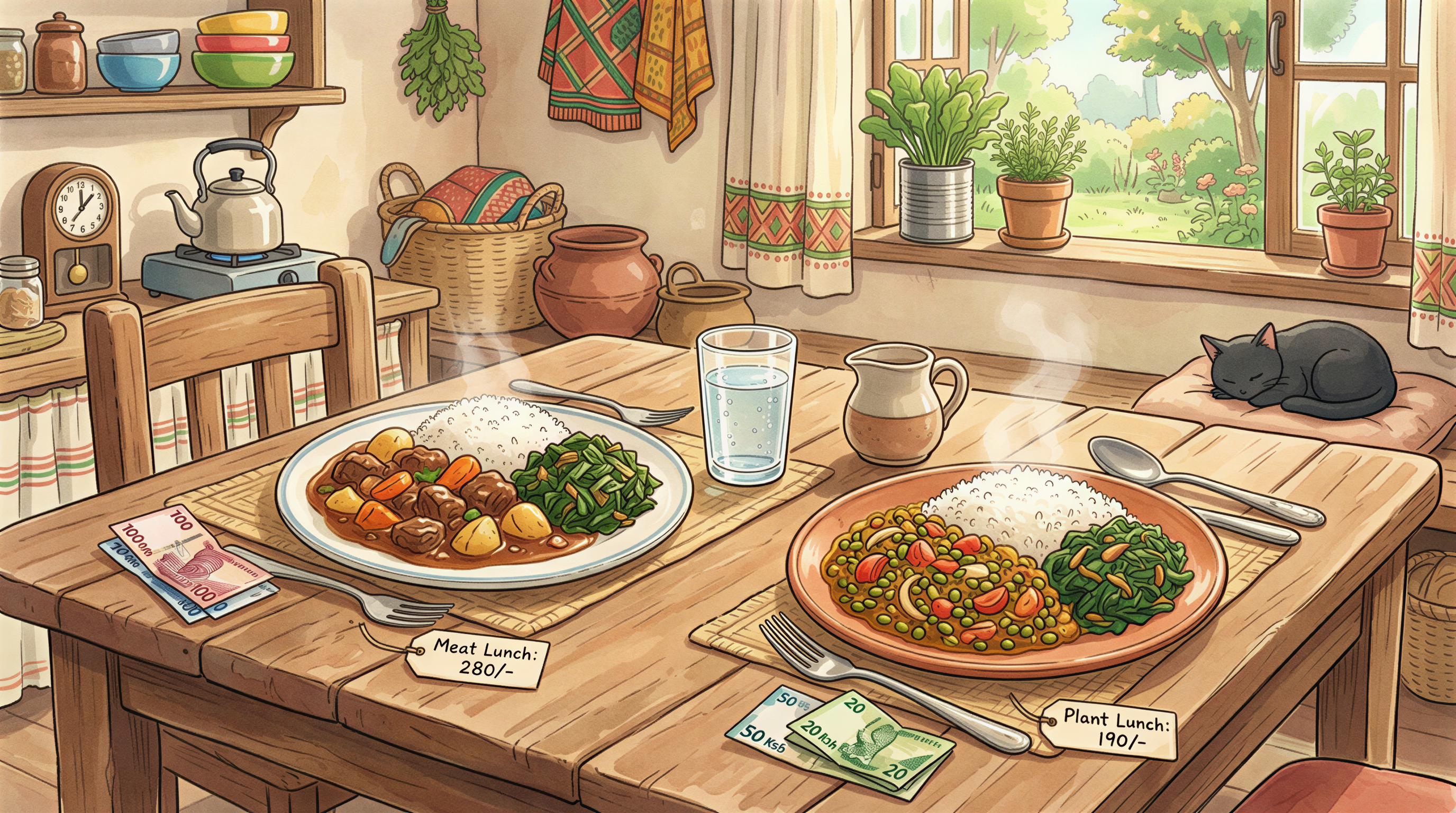 \n\n***
The Protein Question
The biggest worry I get from clients considering a more plant-based diet is protein.
The honest answer: a plant-based Kenyan plate hits 60–80 g of protein a day without trying, which is enough for a desk worker and most casual gym-goers. For a strength-training gym-goer, you may need to consciously add more, but the path is straightforward.
A working day on Kenyan plant proteins:
| Meal | Protein source | Approx grams |
|---|---|---|
| Breakfast | Uji + groundnut paste + 1 boiled egg | 18 |
| Mid-morning | A handful of groundnuts | 6 |
| Lunch | Ndengu + rice + sukuma | 18 |
| Snack | Banana + tea | 2 |
| Dinner | Beans + ugali + kachumbari + half avocado | 22 |
| Total | ~66 g |
Drop the egg and you are vegan at ~60 g. Add a second boiled egg or a small piece of fish at dinner and you are at 75 g.
For a 60 kg adult that's 1.0–1.2 g per kg, in the recommended range. For a 75 kg adult who lifts, push protein at lunch and dinner up by adding more beans, more groundnuts, or returning eggs to the picture.
\n\n \n\n***
The Combinations Your Grandmother Knew
Most Kenyan plant proteins are not "complete" on their own — they are low in one or two essential amino acids. Combine them, and the gap closes. The classic combinations:
- Beans + ugali — beans are low in methionine, maize is low in lysine. Together: complete.
- Rice + ndengu — same logic, lentils + cereal.
- Mbaazi + chapati — pigeon peas with wheat, complete.
- Groundnut + maize porridge — uji wa nguvu.
- Omena + sukuma (vegetarian, not vegan) — fish + greens.
- Eggs + greens (vegetarian) — for those who keep eggs.
The "complete protein" rule is slightly oversold scientifically — your body pools amino acids over the day, not the meal — but the cultural wisdom maps neatly onto the science. The combinations that taste right also nutrition right. We have known this for centuries. We can stop apologising for it.
\n\n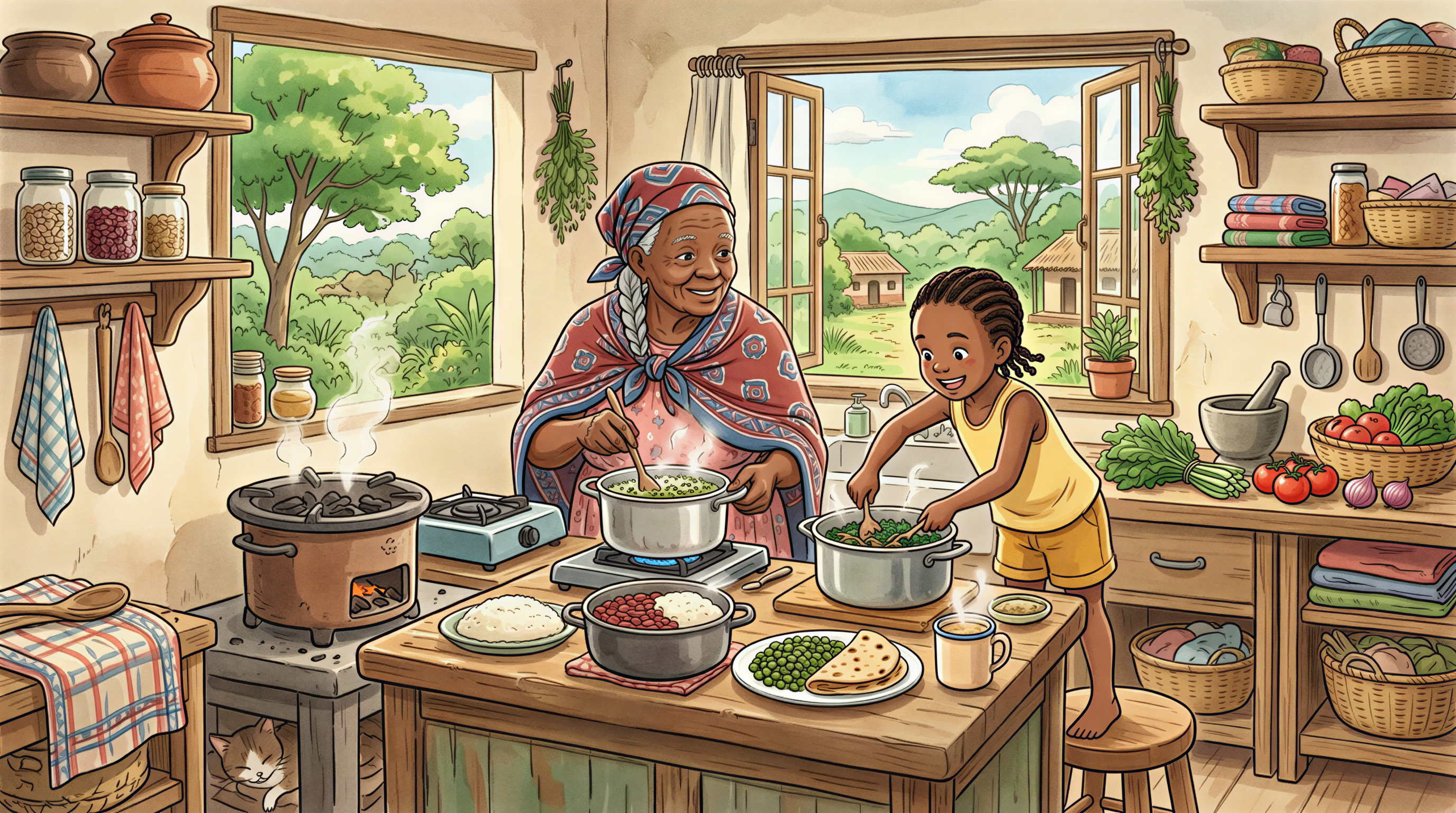 \n\n***
What's Actually Cheaper Than Meat (And What Isn't)
The honest table:
| Cheaper than meat | Comparable | More expensive than meat |
|---|---|---|
| Beans, ndengu, mbaazi, peas | Eggs (sometimes) | Tofu (imported), tempeh |
| Sukuma, managu, terere | Mushrooms | Beyond Meat, plant-based burgers |
| Sweet potato, arrowroot | Greek yoghurt | Almond milk, oat milk |
| Bananas, mangoes in season | Avocado in season | Imported berries |
| Groundnut paste | Cashews | Pine nuts, walnuts |
| Sunflower seeds | Sesame | Chia, flaxseed (imported) |
If your plant-based plan requires the right column, it is not cheaper. If it is built from the left column, it is significantly cheaper.
\n\n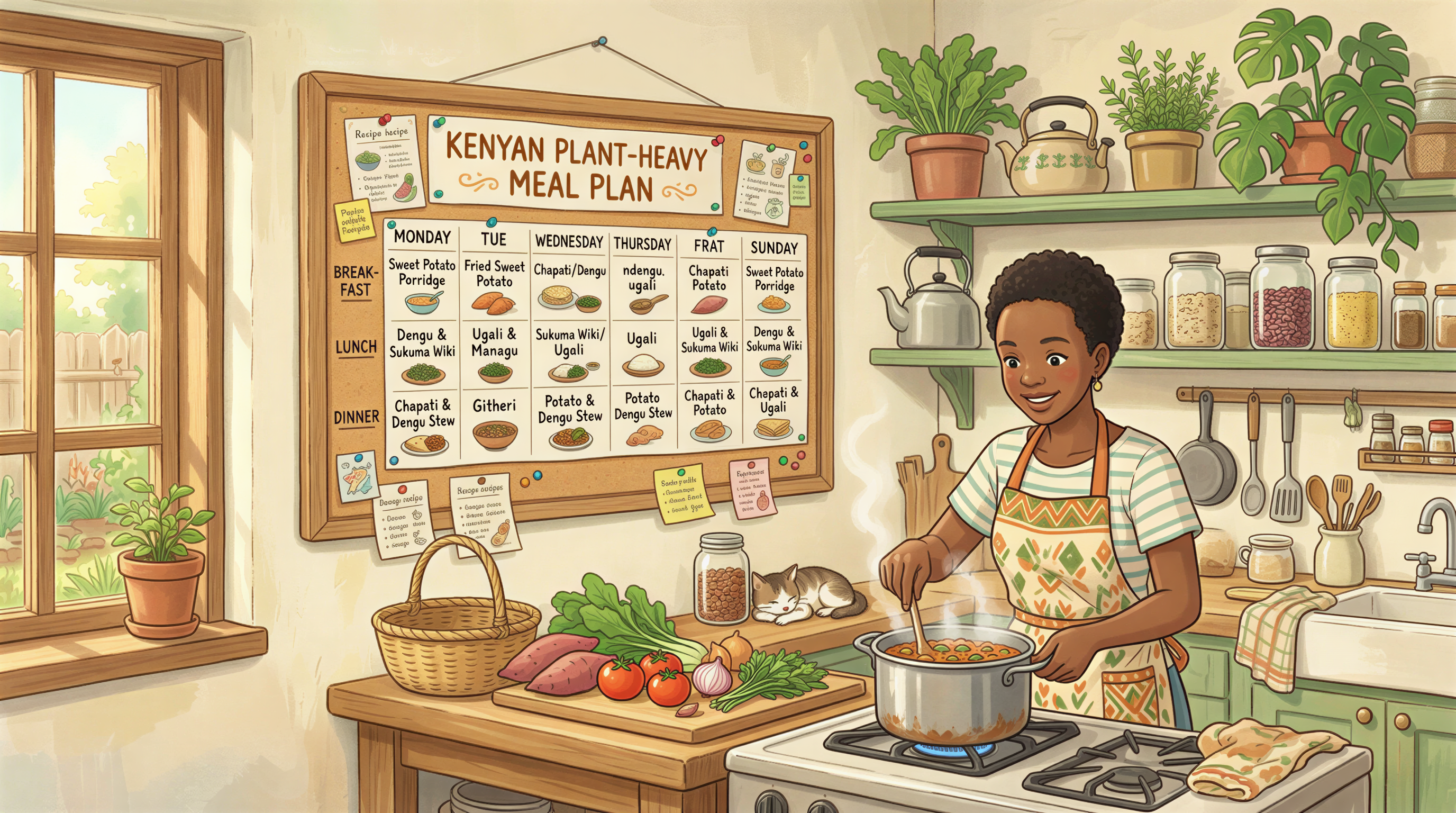 \n\n***
A Plant-Heavy Week That Still Feels Kenyan
This is not a vegan week. It is a "two days fully plant-based, three days plant-heavy with eggs/fish, two days social/meat" framework that survives Nairobi life.
| Day | Breakfast | Lunch | Dinner |
|---|---|---|---|
| Mon | Uji + groundnut paste + banana | Beans + rice + sukuma | Ndengu stew + chapati |
| Tue | 2 eggs + brown toast + half avo | Mbaazi + ugali + kachumbari | Vegetable curry + rice |
| Wed | Sweet potato + tea | Lentil soup + bread | Omena + ugali + greens |
| Thu | Pawpaw + groundnuts | Beans + rice + cabbage | Stir-fried tofu (occasional) + rice |
| Fri | Uji + 1 egg | Githeri | Family meal — eat what is served |
| Sat | Pancakes + fruit | Ugali + sukuma + roast meat (the social one) | Light soup |
| Sun | Eggs + sweet potato | Pilau + kachumbari | Beans + chapati |
Not perfect. Not pure. Sustainable.
\n\n\n\n***
Where People Get It Wrong
Three traps I see weekly.
1. Going fully vegan overnight.
Almost nobody sticks. Start with two plant-based days a week, hold for a month, then add. Habit beats purity.
2. Replacing meat calories with refined carbs.
The "plant-based" lunch that is two chapatis and tea is not plant-based — it is just under-nourished. If you are removing meat, you have to add the bean, the lentil, the egg, the groundnut. Otherwise you crash.
3. Importing the lifestyle wholesale.
The Western plant-based aisle (almond milk, vegan cheese, plant burgers) is overpriced and largely processed. Stick to whole-food Kenyan plants. They are the win.
Why I Wrote This
Because every other month a client tells me they want to "try plant-based but it's too expensive." I want to gently correct the frame. The expensive version is the one being sold to you in fancy packaging. The cheap version is the one already in your sokoni stall.
For the foundational case on affordable Kenyan eating, see eating well on a Nairobi salary and traditional foods, modern nutrition.
Plant-based is not new. We invented it. We just need to stop importing it back at four times the price.